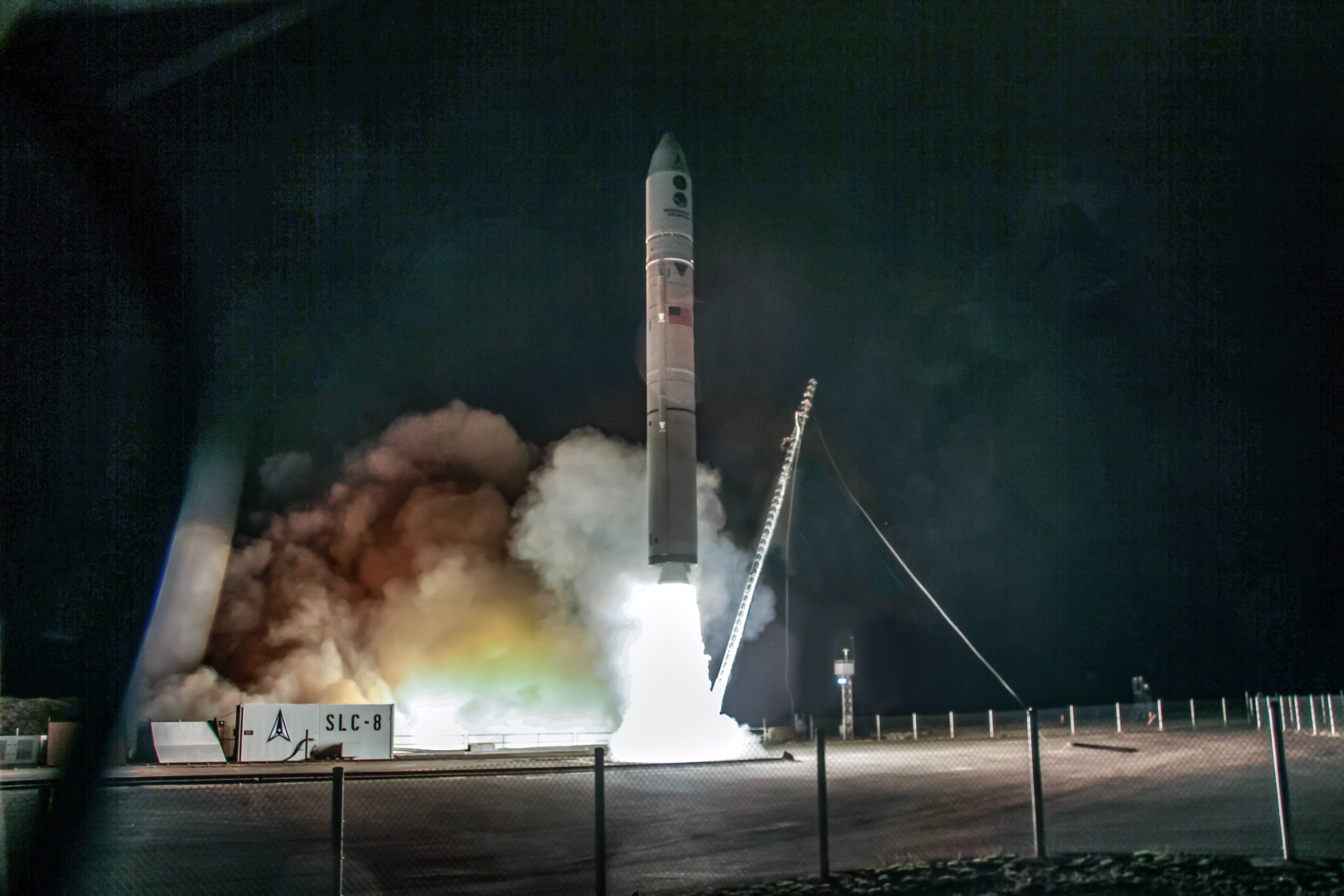
Northrop Grumman has launched the US Space Force’s Space Test Program (STP)-S29A mission module aboard its Minotaur IV rocket, deploying multiple experimental payloads into low Earth orbit.
The mission lifted off from Space Launch Complex 8 at Vandenberg Space Force Base, California, carrying several capabilities as part of the joint force’s broader space-based research and development efforts to maintain awareness in the domain and support warfighters on the ground.
The event marked the 31st successful flight of the Minotaur launch vehicle family since its inauguration in 2000.
Minotaur IV integrates government-supplied Peacekeeper rocket motors with commercial launch systems to deliver cost-effective access to space.
The launch was procured through the Rocket Systems Launch Program, which provides flexible, rapid launch services for experimental and operational tasks.
Experimental Satellite
STPSat-7, the STP-S29A’s primary payload, hosts five experiments designed to test emerging space technologies.
It uses a standard avionics platform previously flown on missions to the International Space Station and will be operated from NASA’s Johnson Space Center in Houston, Texas.
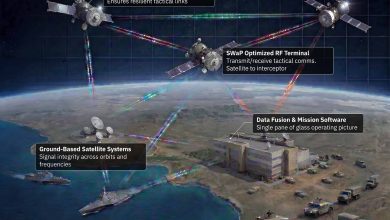
STPSat-7’s onboard experiments are a US Navy-backed Lightsheet Anomaly Resolution and Debris Observation instrument to track small orbital debris undetectable by ground sensors, as well as the Nano Ultra High Frequency Communications payload for beyond-line-of-sight military satellite communications for low Earth orbit constellations.
Other payloads include the GNSS Orbital Situational Awareness Sensor and the Gadolinium Aluminum Gallium Garnet Radiation Instrumentation-1C to study space weather effects, the global navigation satellite environment, and tools to detect radiation, nuclear, or specialized threats.
The mission also carried two US Army-sponsored Rawhide CubeSats, which are miniature satellites built to extend legacy space communication missions for the service.
Auxiliary Payloads
Alongside the STPSat-7, the STP-S29A is fitted with secondary payloads such as the US Special Operations Command’s Modular Intelligence, Surveillance and Reconnaissance 16U Cubesat (MISR-C), and NASA and the University of Colorado Boulder’s Climatology of Anthropogenic and Natural VLF wave Activity in Space (CANVAS).
Moreover, the mission module is equipped with the US Army and Auburn University’s Auburn Satellite Testbed for Retrodirective Array – Hybrid Retrodirective Array in X-band (ASTRA-HyRAX), and Texas A&M University’s AggieSat6 6U CubeSat, all supporting defense and academic research objectives.