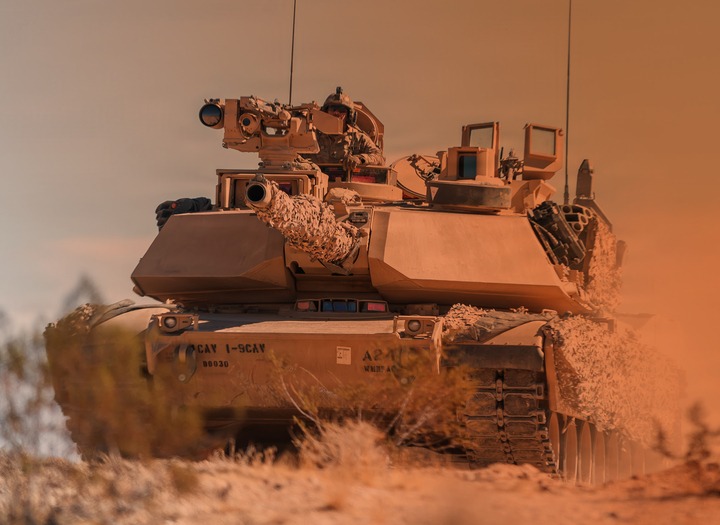
Born out of Cold War urgency to outclass Soviet armor and designed with innovation at every turn, the M1 Abrams tank has since become one of the most formidable main battle tanks in the world.
It combines firepower, protection, and mobility in a package that has evolved continuously for more than four decades.
In this guide, we’ll take you from its origins to its global use, dissect its strengths and weaknesses, and look ahead to its future.
Origins of the Abrams Tank: Who Built It and Why
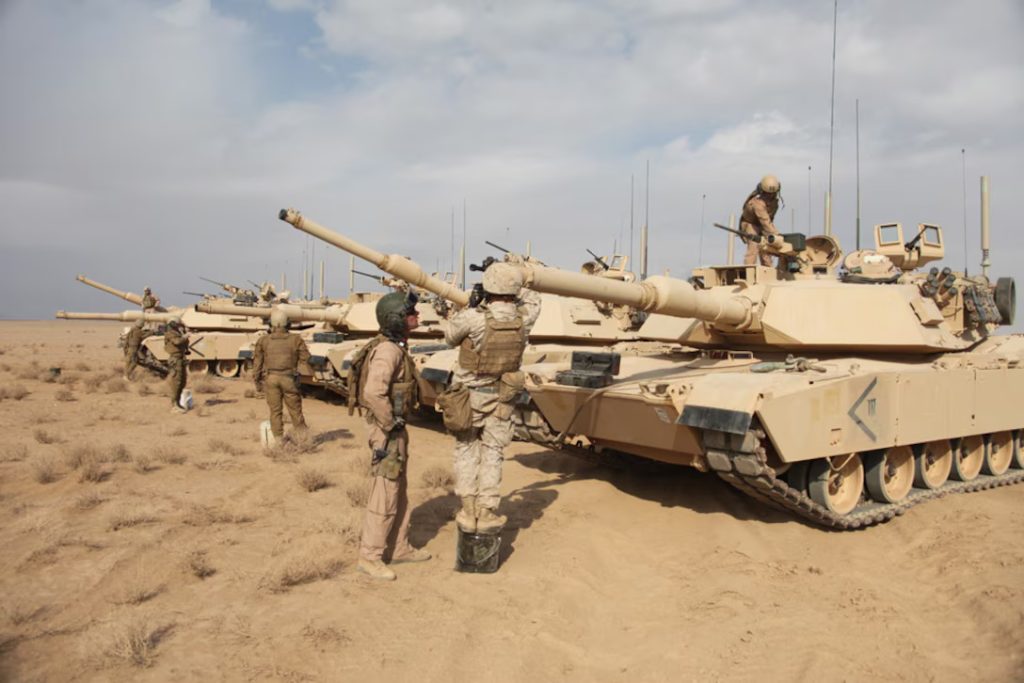
The M1 Abrams was developed in the late 1970s by Chrysler Defense, later absorbed into General Dynamics Land Systems, to replace the aging M60 Patton tank.
It emerged after the cancellation of the ill‑fated MBT‑70 project and was designed specifically for modern armored combat, emphasizing survivability, mobility, and firepower.
Its design featured then‑cutting‑edge elements, including composite armor, a powerful turbine engine, and advanced fire‑control systems.
Variants Over Time
1. M1 (Original)
The first production version entered service in 1980 with a 105mm gun and basic composite armor.
2. M1A1
Introduced in 1985, this variant brought the more powerful 120mm smoothbore main gun and enhanced armor — greatly boosting firepower and protection.
3. M1A2 Series
Production began in 1992, adding advanced digital fire control, improved sights, panoramic commander optics, and depleted uranium armor for maximum survivability.
Later improvements under the System Enhancement Package included upgraded sensors, networking capabilities, and support for active protection systems such as Trophy.
Variant development continues, with future programs aiming at digital integration, improved lethality, and adaptation to emerging threats.
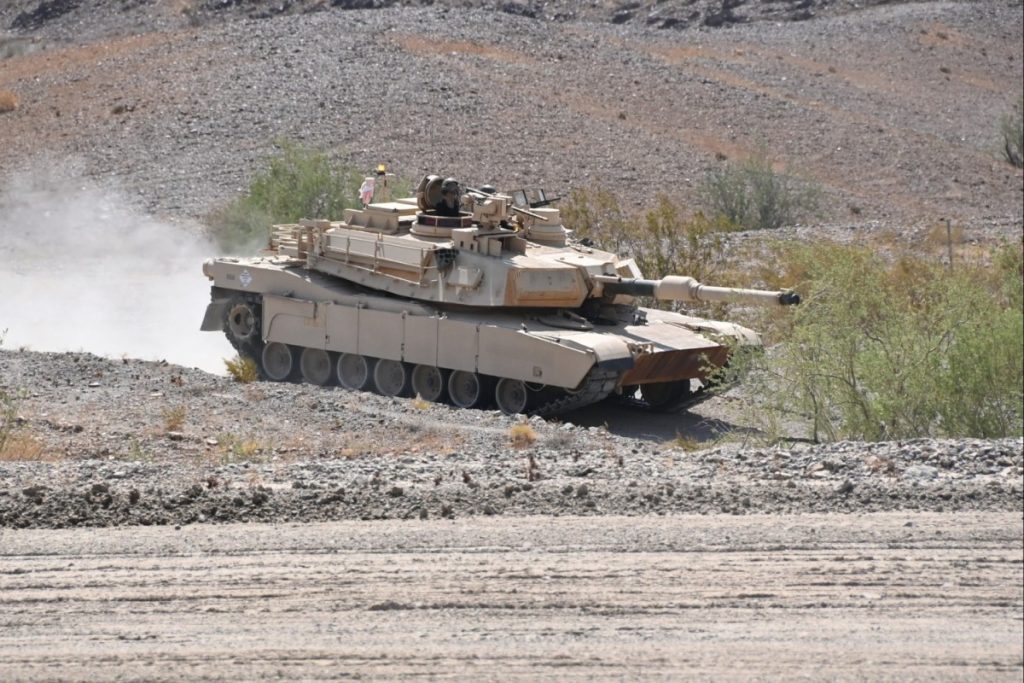
How the Abrams Works
Firepower
At its heart is a 120mm smoothbore cannon capable of firing advanced armor‑piercing and high‑explosive rounds.
Paired with laser rangefinding and thermal sights, the Abrams can reliably engage targets as far as 265 miles (426 kilometers) with first‑shot lethality.
Protection
Composite armor (layered steel, ceramics, and depleted uranium) offers outstanding defense against kinetic penetrators and shaped charges.
Ammunition is stored in blow‑out compartments to protect the crew in case of detonation.
Mobility
Powered by a 1,500 hp turbine engine, the Abrams is fast for its weight class, clocking a speed of 42 miles (67 kilometers) per hour.
Its multi‑fuel capability allows operation on a range of fuels, though logistics and fuel consumption remain significant considerations.
| Category: | Details: |
| Type | Main Battle Tank |
| Manufacturer | General Dynamics Land Systems |
| Country of Origin | United States |
| Crew | 4 (commander, gunner, loader, driver) |
| Weight | ~62 to 73 tons (variant dependent) |
| Main Armament | 120mm M256 smoothbore cannon |
| Secondary Armament | 1× .50 cal MG, 2× 7.62mm machine guns |
| Engine | Honeywell AGT1500 gas turbine |
| Power Output | 1,500 horsepower |
| Top Speed | ~67 kilometers (42 miles) per hour |
| Range | ~426 kilometers (265 miles) |
| Armor | Composite (Chobham-type) with depleted uranium layers (later variants) |
| Fire Control | Advanced targeting with thermal imaging and laser rangefinder |
| Variants | M1A1 and M1A2 series |
| Combat History | Gulf War, Iraq War, Ukraine-Russian War |
| Operators | US, Egypt, Saudi Arabia, Poland, Taiwan, Ukraine, Australia, among others |
Abrams’ Strengths and Limitations
Strengths:
- Exceptional protection and crew survivability.
- Lethal firepower with modern optics and fire‑control systems.
- Proven in multiple combat environments from deserts to urban zones.
Limitations:
- High fuel consumption and logistics footprint due to the turbine.
- Weight complicates air transport and operations on soft terrain.
- Evolving threats (drones, loitering munitions) demand layered defenses beyond traditional armor.
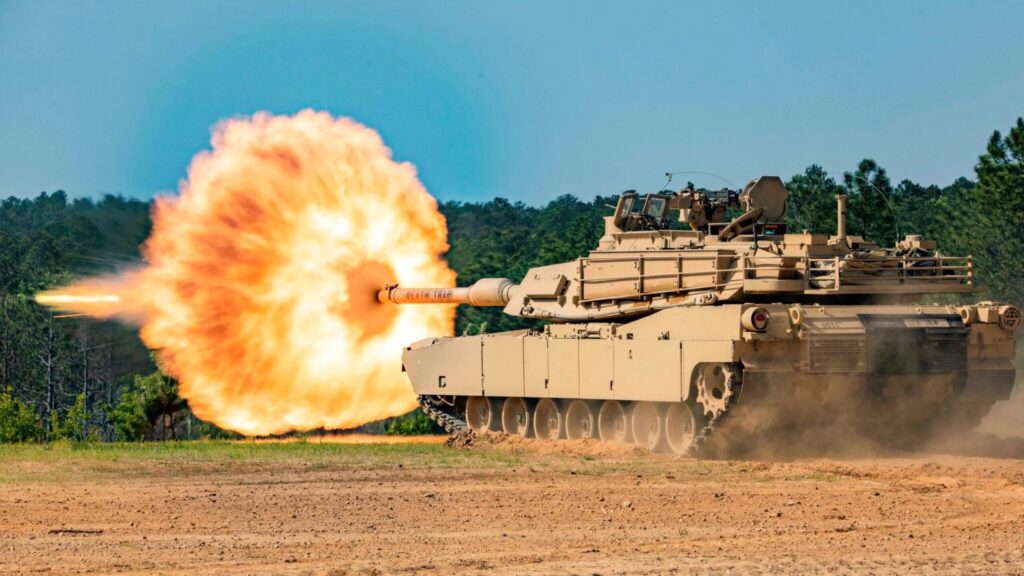
Combat History and Global Use
The Abrams first proved itself in the 1991 Gulf War, where its armor and firepower dominated Iraqi armored forces.
It later saw extensive use during the Iraq War and in Afghanistan, demonstrating adaptability in both conventional and asymmetric operations, and in the ongoing Ukraine‑Russia war, where US‑supplied M1A1 Abrams tanks were deployed to support mechanized offensives and provide heavy fire support against Russian units.
Today, it remains in service with the US Army and Marine Corps and has been exported to allied nations such as Taiwan, Poland, Kuwait, Australia, and Saudi Arabia, each of which has adapted the basic design to fit local needs.
Future Outlook
Rather than being retired, the Abrams platform is being modernized and upgraded to remain relevant in 21st‑century combat.
Future efforts focus on improved digital connectivity, advanced protection (including active protection systems), and addressing logistical strain through next‑generation propulsion concepts.