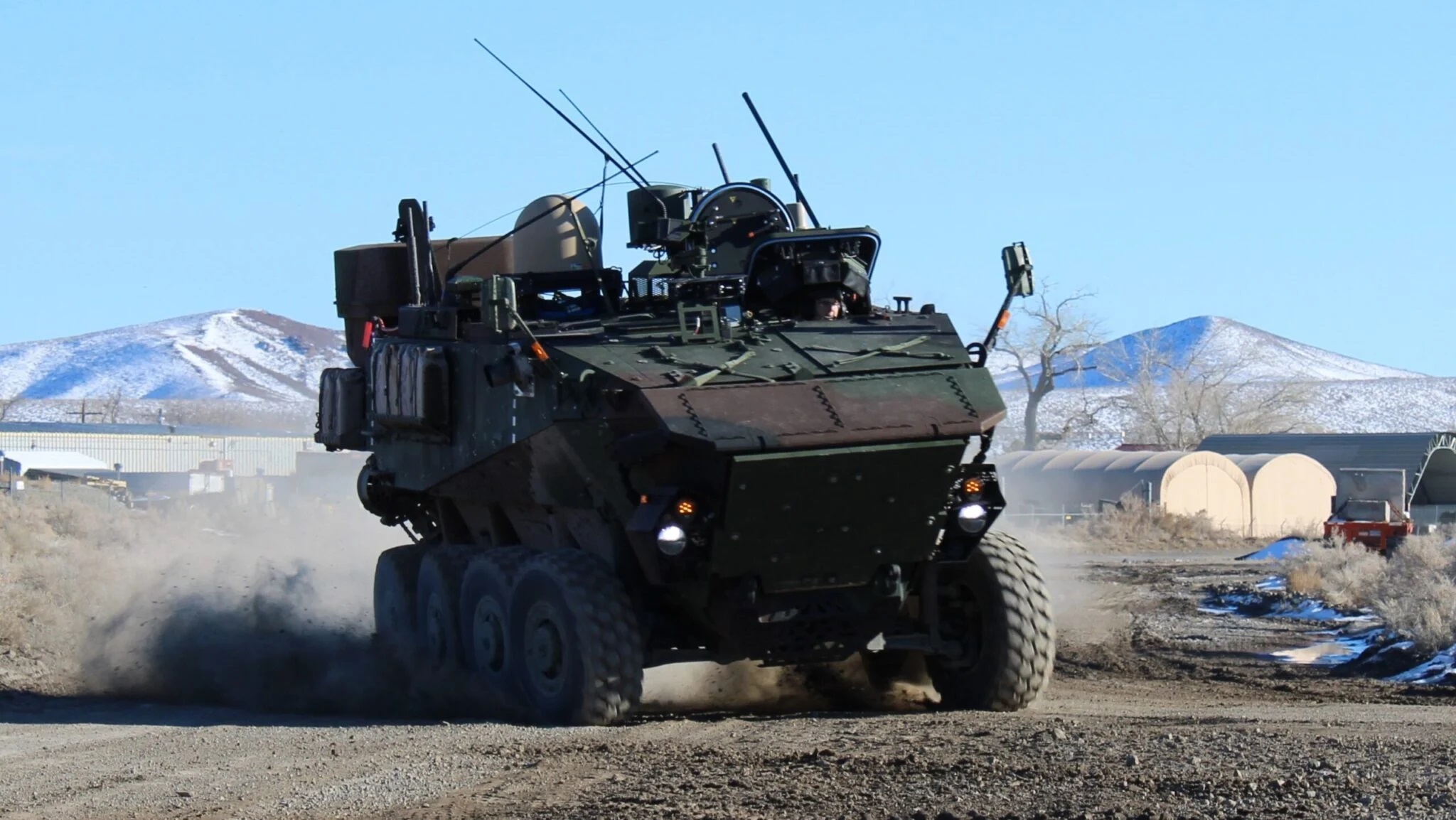
The US Marine Corps has awarded General Dynamics Land Systems (GDLS) a $450-million contract for the pre-production development phase of the Advanced Reconnaissance Vehicle (ARV) program.
The phase will validate the vehicle’s final design and produce multiple prototypes representing a subset of the planned ARV family, followed by US government testing and evaluation.
The contract covers the command, control, communications, and computers/unmanned aerial system variant (ARV-C4UAS), the 30mm autocannon variant (ARV-30), and the logistics variant (ARV-LOG).
“Our ARV prototype has been thoroughly tested throughout the previous phases, and we are confident in its ability to meet and exceed the requirements of the Marine Corps,” Vice President and General Manager of US Operations at General Dynamics Land Systems, Keith Barclay, said.
“We are proud to continue working side-by-side with the Marines through this next phase to ultimately deliver a transformational capability.”
Advanced Reconnaissance Vehicle
The ARV program, with GDLS and Textron as primary competitors, aims to replace the aging Light Armored Vehicle introduced in 1983 with a family of vehicles optimized for mobile reconnaissance.
The platform combines sensors, communications, and weapon systems to counter threats traditionally handled by heavier armored platforms.
Smaller and lighter than the Amphibious Combat Vehicle-30, the ARV supports rapid deployment and stealthier operations across diverse terrain.
The ARV-30 will provide greater firepower than the current Light Armored Vehicle 25mm variant, while the ARV-C4UAS will operate as a battlefield “quarterback” through integrated intelligence, surveillance, and reconnaissance systems.
Deliveries are expected in fiscal year 2028, followed by a production decision in fiscal year 2031.
“In the future fight, the Marine Air-Ground Task Force must out-cycle the fight for information to shape the battlespace and deliver precision fires,” Program Manager for Light Armored Vehicles Col. Chris Stephenson said.
“This highly contested environment is drastically more complex, and mobile reconnaissance battalions must have a purpose-built capability such as the ARV that can sense, communicate, and fight by incorporating manned and unmanned systems and sustaining effective sensor webs tied to kill chains.”