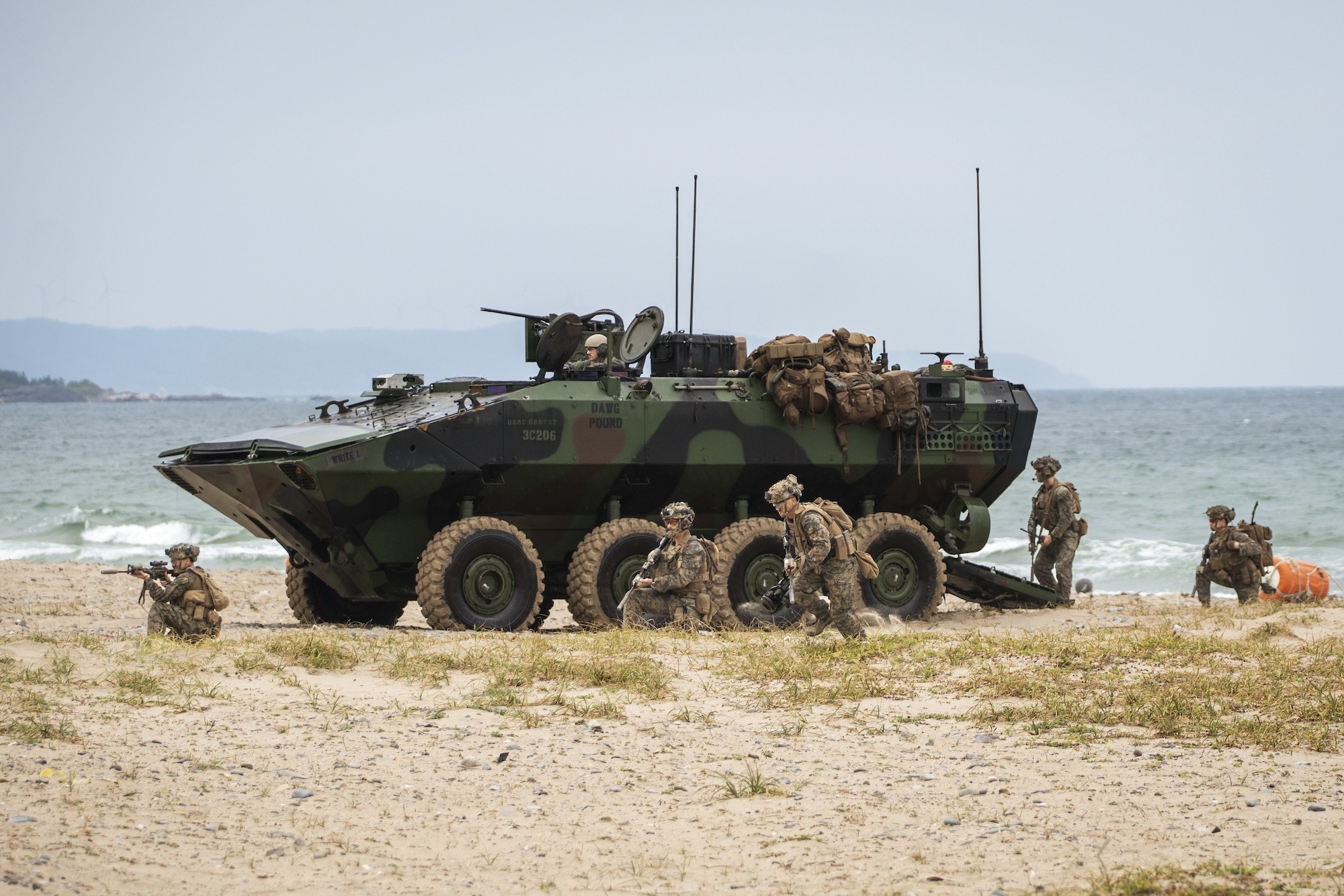
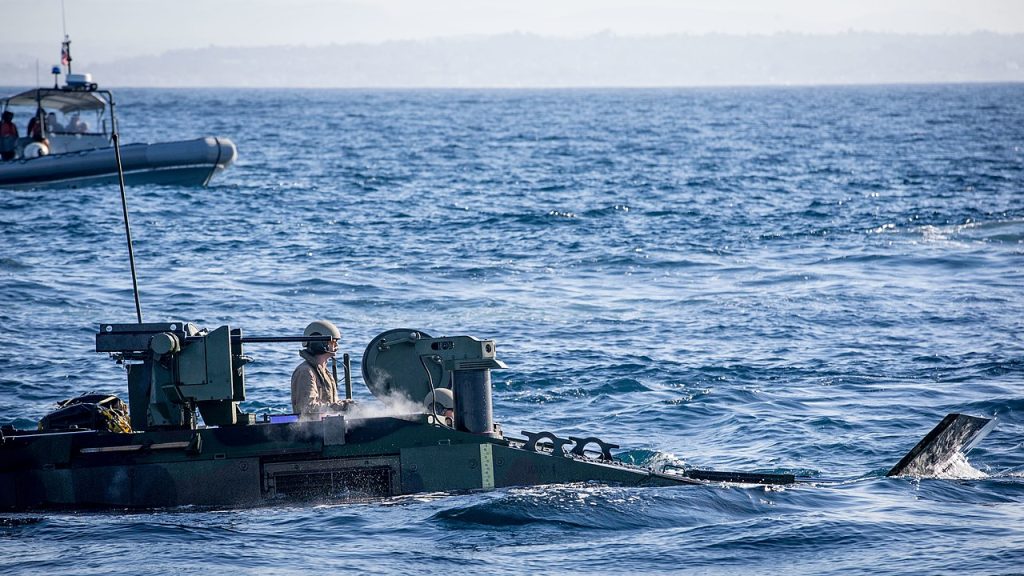
Imagine an armored machine gliding off a ship’s ramp, seawater sluicing from its wheels as it transitions effortlessly onto land, carrying a squad of Marines into the heart of a contested beachhead.
The Amphibious Combat Vehicle (ACV) is a modern eight‑wheeled amphibious assault platform designed to redefine how infantry forces project power from ship to shore and into inland operations.
Explore this guide to get answers on what makes the ACV tick, where it’s deployed, and where it’s headed next.
Defining the Amphibious Combat Vehicle
At its core, the ACV is a next‑generation, eight‑wheeled armored platform developed primarily for the US Marine Corps to fulfill ship‑to‑shore and shore‑to‑shore assault and tactical mobility missions.
It’s designed to transport infantry, provide supporting fires, and operate in challenging littoral environments much more robustly than its predecessor, the Assault Amphibious Vehicle (AAV).
The ACV’s combination of waterborne and land mobility, survivability features, and modular design makes it a flexible centerpiece of modern amphibious doctrine — able to move from naval vessels to complex inland terrain while protecting its occupants en route.
Origins and Inspiration
A New Wave of Amphibious Warfare
The Marine Corps recognized that its legacy amphibious fleet — particularly AAVs — needed modernization to meet evolving threats in littoral zones, contested beaches, and expeditionary battlegrounds.
The need for greater protection, mobility, and adaptability drove the development of a new design that could withstand modern battlefield threats, carry modern gear, and provide more robust tactical support.
In 2018, BAE Systems won the contract to produce ACVs, beginning a new era of amphibious vehicles that combine advanced armor, water‑jet propulsion, and modular systems suited for a range of mission sets.
Originally intended to replace more than 1,000 AAVs, the procurement goal was later revised to roughly 632 vehicles, reflecting evolving force design priorities and naval expeditionary strategies.
Making the Waves: How the ACV Works
Hybrid Mobility
One of the ACV’s defining features is its dual‑domain mobility.
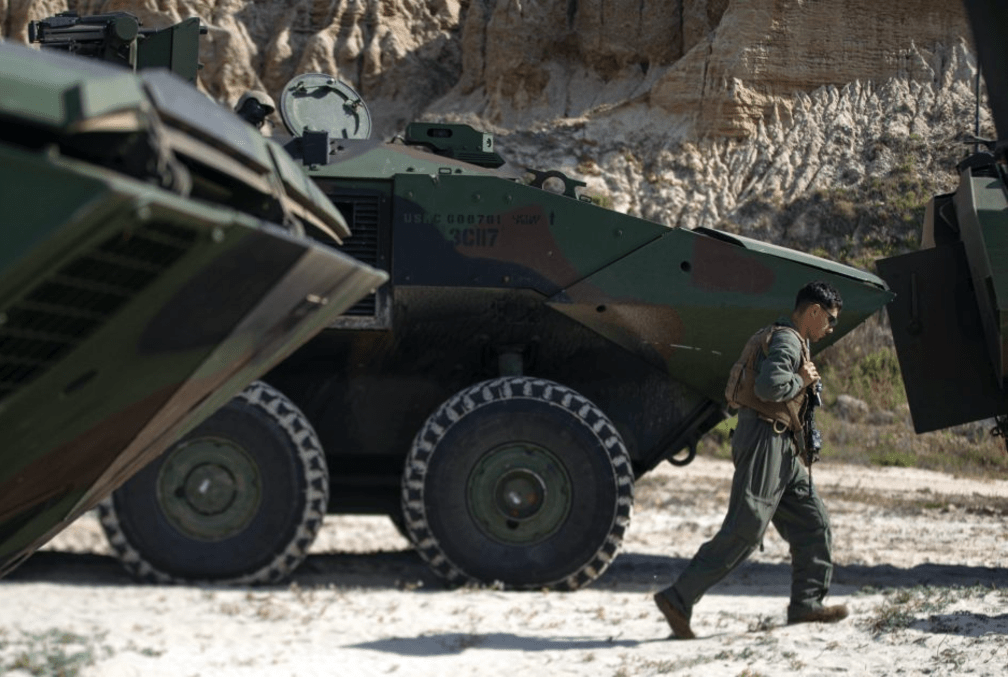
On land, its robust diesel engine and wheeled 8×8 configuration enable speeds exceeding 100 kilometers (62 miles) per hour on roads and long ranges exceeding 520 kilometers (323 miles), giving infantry units rapid maneuver capability once ashore.
At sea, dual water‑jet propulsion delivers amphibious capability, allowing the vehicle to travel up to roughly 12 nautical miles (14 miles/22 kilometers) from ships and navigate surf zones with greater agility than preceding models.
These capabilities make the ACV a true ship‑to‑shore connector, not just a landing craft surrogate — able to operate in open water and then transition swiftly into land operations.
Protection and Firepower
Survivability is built into the ACV’s chassis. Its blast‑deflecting V‑shaped hull, modular armor, spike‑resistant seats, and nuclear, biological, and chemical protection systems shield occupants against mines, improvised explosive devices, small arms fire, and fragmentation threats.
Armament varies by variant: base personnel carriers typically mount a remote weapon station equipped with heavy machine guns or grenade launchers, while specific models, such as the ACV‑30, feature a 30 mm cannon for enhanced fire support against light armor and fortified positions.
Tailoring the ACV for the Mission
The ACV program includes several purpose‑built variants tailored to specific operational roles:
- ACV‑P (personnel carrier): The baseline troop transport and amphibious assault vehicle.
- ACV‑C (command and control): Mobile battlefield command platform with advanced communications and networking systems.
- ACV‑R (recovery): Designed for battlefield recovery and repair support.
- ACV‑30: Equipped with a stabilized 30 mm cannon for direct fire support.
These variants expand the ACV family’s utility from troop transport to battlefield coordination, vehicle support, and integrated firepower.
Global Operations and Integration
After initial deliveries in 2020 to 2021, the ACV entered operational integration with Marine units, replacing AAVs and expanding amphibious training and missions.
The vehicle has participated in exercises in the Indo‑Pacific region, including Japan and the Philippines, demonstrating its open‑water maneuvering and joint-operation capabilities in contested littoral environments.
These deployments demonstrate the ACV’s adaptability across conditions, from surf zones to inland terrain, confirming its role as a chief connector in expeditionary attacks and joint force maneuvers.
Staying Ahead of Tomorrow’s Battlespace
The ACV program continues to grow, both in numbers and capabilities.
Planned enhancements include increased amphibious performance (such as longer range or higher water speeds) and, optionally, manned or unmanned systems to further expand combat and support capabilities.
Networked battlefield integration, active protection systems, electronic warfare modules, and modular payloads are all possible future pathways, ensuring the ACV remains a flexible pillar of modern amphibious doctrine.