For generations, the tools of the infantry soldier have remained largely unchanged: rifles and machine guns firing familiar cartridges carried across battlefields from Vietnam to Afghanistan.
But modern threats are pushing those weapons to their limits.
Enter the Next Generation Squad Weapon (NGSW) program, the US Army’s ambitious effort to redefine squad-level firepower with new rifles, machine guns, and ammunition built for the challenges of modern combat.
Let’s break down what NGSW is, how it works, where the program is headed, and why it could reshape the future of infantry warfare.
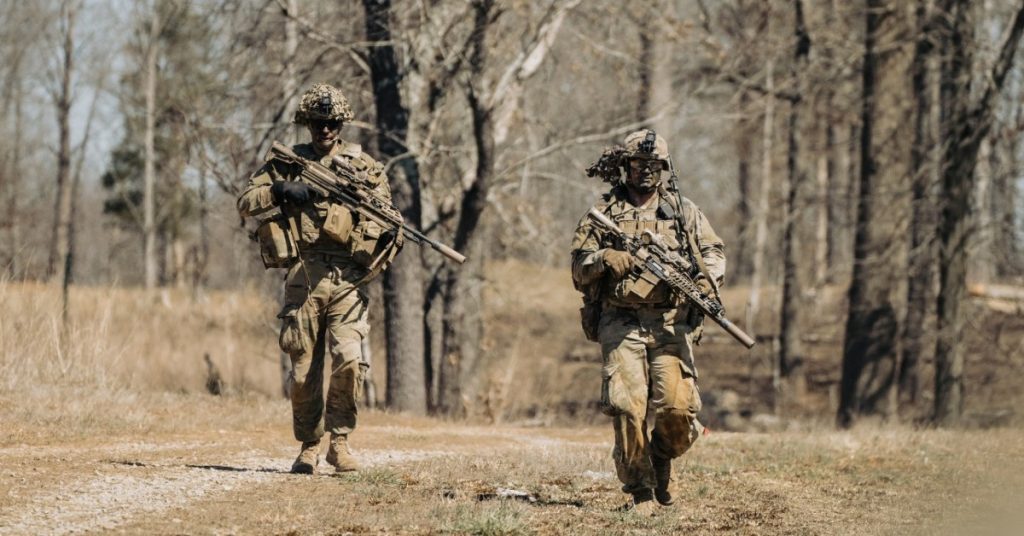
What Is the Next Generation Squad Weapon?
The Next Generation Squad Weapon is a US Army initiative to replace long‑serving infantry small arms, notably the M4/M4A1 carbine and M249 Squad Automatic Weapon, with a family of weapons firing a new 6.8mm cartridge paired with advanced fire‑control systems.
By combining modular rifles, automatic rifles, smart optics, and advanced ammunition, the NGSW creates a fully integrated squad-level system with increased lethality and improved target acquisition, ensuring each soldier can respond quickly across short- and long-range engagements.
How NGSW Came to Be
The NGSW program kicked off in 2017, driven by the US Army’s need to outmatch modern threats with improved range, punch, and battlefield effectiveness, including adversaries wearing advanced body armor.
After years of rigorous testing and soldier feedback, the service in 2022 awarded the production contract to SIG Sauer and Olin Winchester for the core weapons and ammunition, and to Vortex Optics for the fire control components.
Fielding of the new weapons and optics began in 2023 to 2024, marking a major step forward for squad-level firepower.
The development process was extensive, with over 27 months of prototyping and evaluation, hundreds of soldiers providing hands-on feedback, and tens of thousands of rounds fired to fine-tune both performance and usability in real-world conditions.
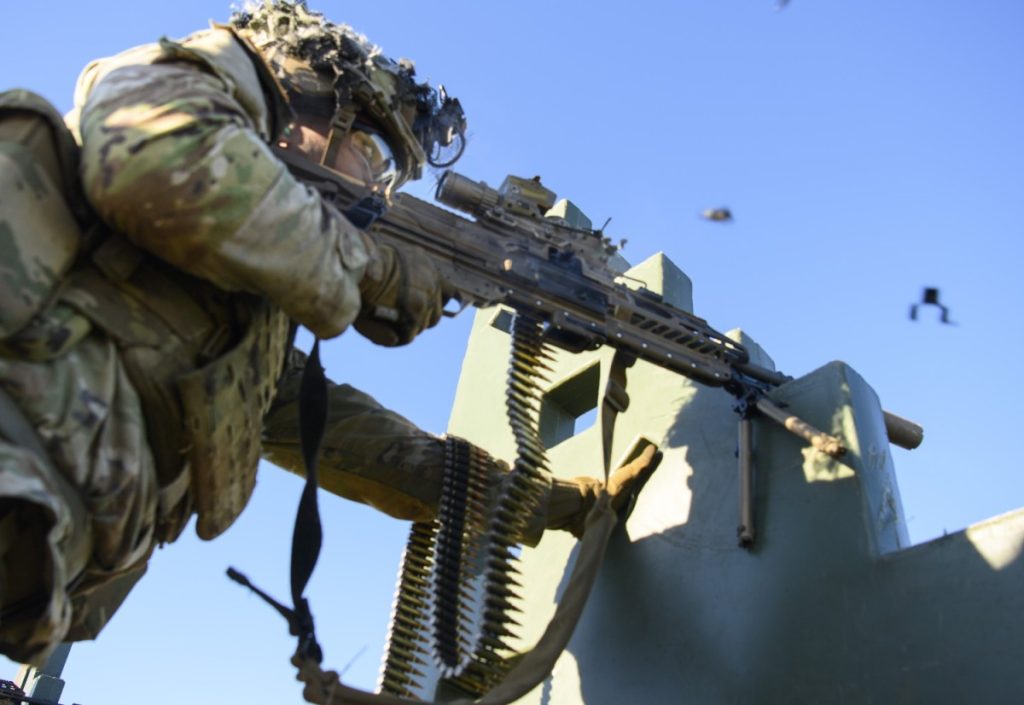
The Two Pillars of the NGSW
The program centers on two primary platforms designed to replace legacy small arms at the squad level: a standard infantry rifle and a light machine gun-style automatic weapon.
While both weapons share design philosophies, such as ambidextrous controls, suppressor compatibility, and modern modular interfaces, each is optimized for a different role within the infantry squad.
NGSW Rifle
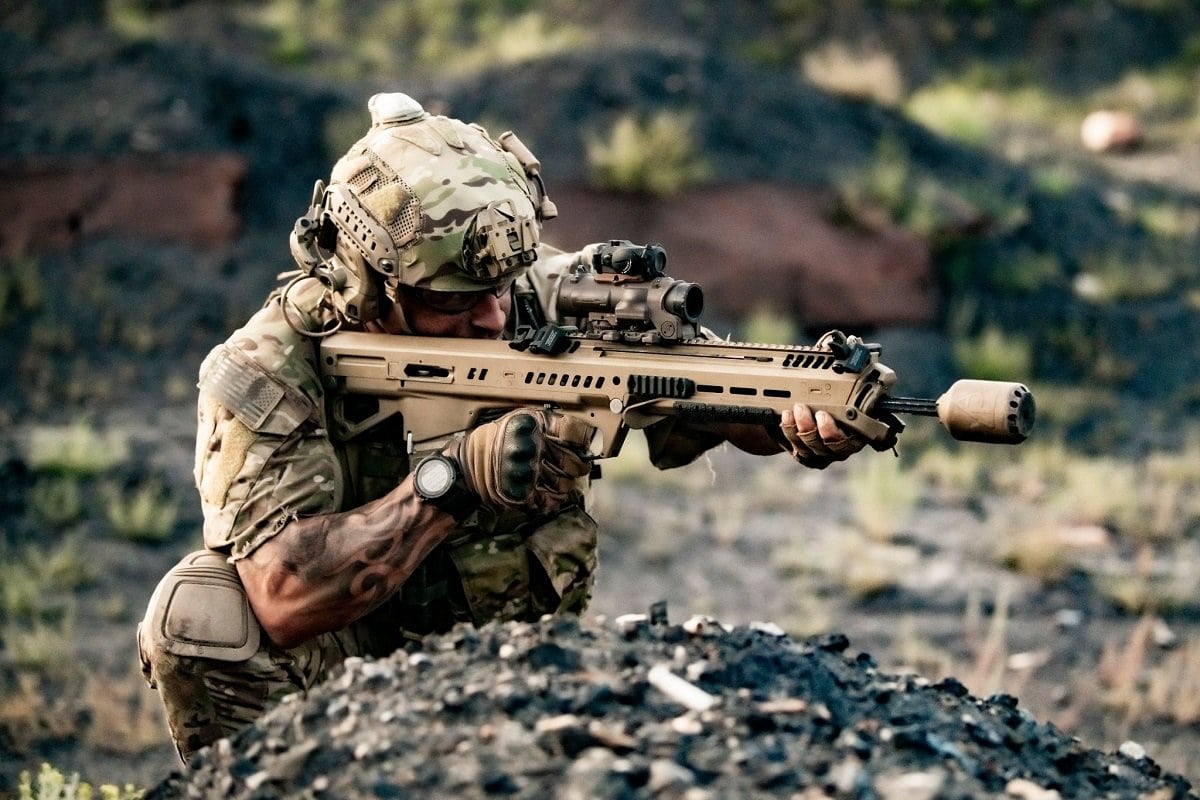
The NGSW Rifle serves as the squad’s primary individual weapon, intended to replace the long‑serving M4/M4A1 carbine.
Built as a modular, piston‑driven, select‑fire rifle, it fires the new 6.8mm ammunition designed to improve performance against modern threats.
Ergonomically, the rifle closely mirrors the familiar layout of the M4 platform while introducing improvements that enhance handling and adaptability.
Fully ambidextrous controls, a non‑reciprocating side charging handle, and a collapsible or side‑folding stock help accommodate different shooting positions and user preferences.
The rifle is also designed to operate with a suppressor as part of the standard configuration, reducing sound, visible flash, and gas blowback while improving the shooter’s situational awareness.
NGSW Automatic Rifle
The NGSW Automatic Rifle fills the squad automatic weapon role, replacing the M249 light machine gun in many frontline units.
Designed to deliver sustained suppressive fire, it uses a belt‑fed system that allows soldiers to engage targets continuously during firefights.
The weapon emphasizes reduced weight and improved controllability despite its machine gun role, incorporating a recoil mitigation system to make sustained fire more manageable for the operator.
The automatic rifle is also meant to operate with a quick‑detach suppressor optimized for the weapon.
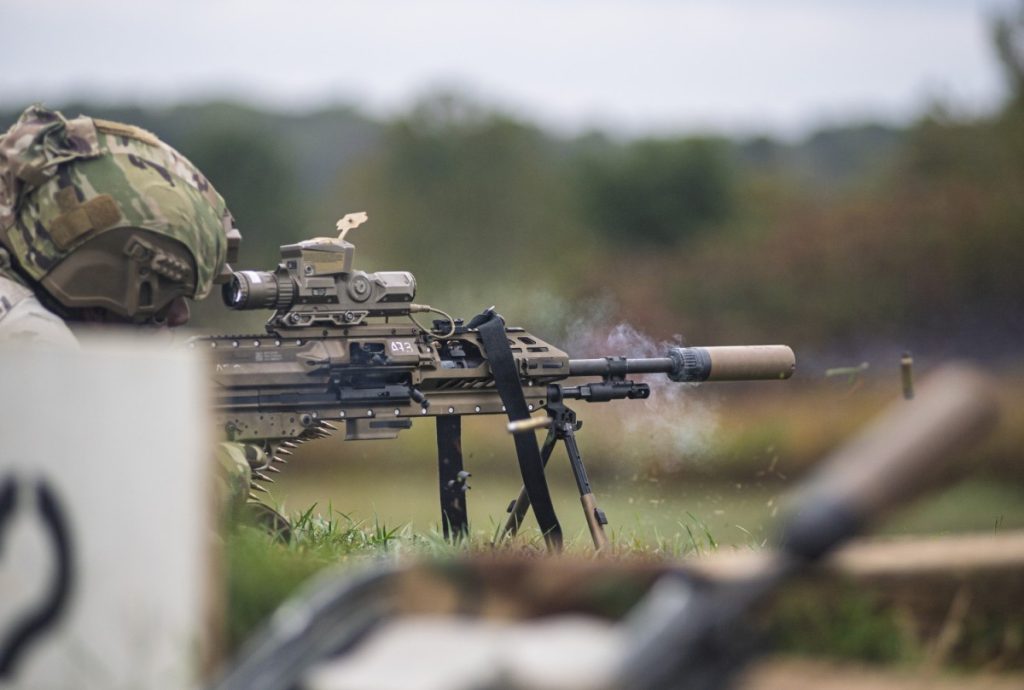
How NGSW Works
The NGSW achieves its effectiveness through the ease with which its core components can be coordinated. Its 6.8mm cartridge delivers powerful range, accuracy, and penetration than legacy rounds.
The XM157 fire control system provides real-time aiming correction via a ballistic solver and a laser rangefinder integrated into the sight.
Combined with modular ergonomics, the rifle and automatic rifle offer flexible, intuitive handling for modern infantry squads.
While the NGSW offers significant improvements, it comes with some trade-offs. The increased performance of its weapons and 6.8mm ammunition adds weight and logistical demands, affecting soldier load and supply chains.
Fielding the system across the army will take time, creating a period of mixed inventories and partial adoption.
Additionally, the advanced optics and fire control systems require extra training and maintenance, which could strain unit resources without sufficient support.
Global Use and Adoption
Currently, NGSW is primarily a US Army program with fielding focused on infantry and other close‑combat units.
Early deliveries have taken place at installations such as Fort Campbell, where soldiers received XM7 rifles and XM250 automatic rifles, marking the start of broader deployment across the force.
However, certain challenges arise, including the US Marines’ refusal to adopt the NGSW in favor of its current arms.
Future Outlook
The NGSW program continues to evolve with ongoing upgrades based on soldier feedback, including improved suppressors, enhanced ergonomics, and potential carbine variants to better balance weight and performance.
The intent is to procure hundreds of thousands of weapons and optics over the next decade as the US Army builds a more lethal and adaptable close combat force.