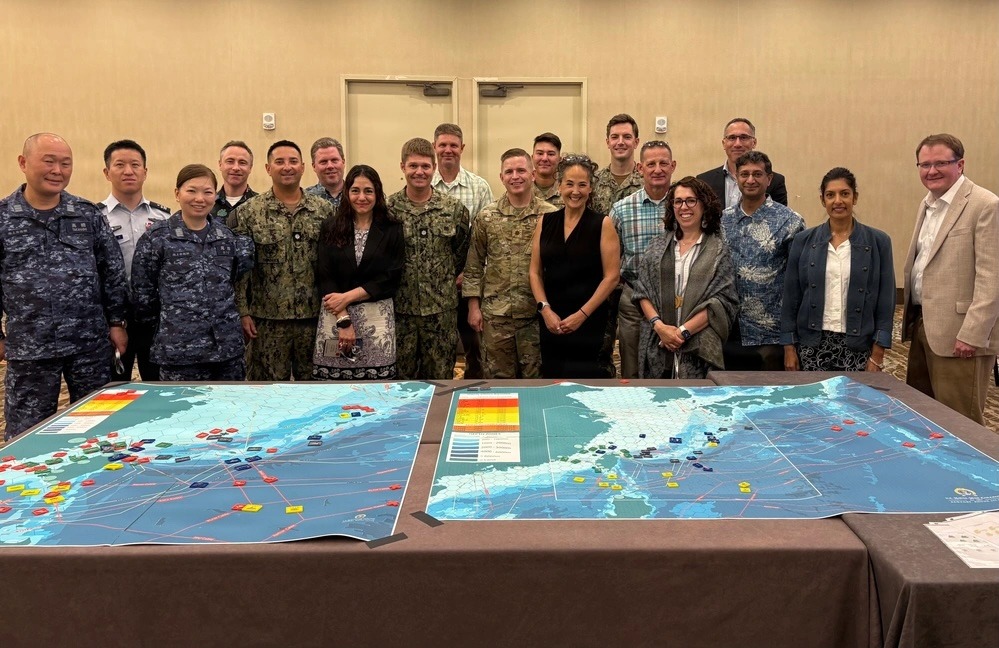
The US Naval War College (NWC) has brought together American, Australian, and Japanese military and scientific experts to simulate how to protect undersea communications lines that are vital to Indo‑Pacific security.
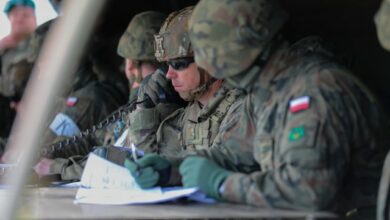
Held during the 2026 Pacific Operational Science & Technology Conference in Honolulu, the wargame engaged around 20 participants from the US military, Australia’s science and technology community, and the Japan Self‑Defense Forces.
Organizers from the NWC’s Cyber & Innovation Policy Institute said the unclassified exercise tested coordinated regional responses to potential sabotage of international undersea communications infrastructure, a growing concern for defense planners who see these networks as critical to both civilian and military systems.
“These findings reinforce the broader themes of our ongoing research efforts: the need for multinational cooperation, improved situational awareness, and realistic concepts for infrastructure defense during conflict,” Associate Professor Nina Kollars said.
A specific focus was on how allied cooperation could complicate adversary efforts to disrupt undersea cables and related infrastructure, which is an area that increasingly features in strategic defense thinking as regional tensions rise.
Researchers also used the event to highlight vulnerabilities and prompt further work on concepts such as “Data Center Warfare,” which considers the strategic risks facing physical and digital infrastructure that underpins modern defense operations.
US Indo‑Pacific Cooperation Efforts
US defense cooperation in the Indo‑Pacific has widened through formal agreements and expanded joint activities in recent years.
In July 2025, the US, Japan, and Australia signed their first trilateral naval logistics agreement to streamline interoperability and sustainment operations at sea, including equipment transfer and emergency support.
By August 2025, the US and the Philippines agreed to approve more than 500 joint military activities for 2026, ranging from large‑scale exercises to subject‑matter expert exchanges designed to enhance readiness and interaction between their militaries.
Regional defense cooperation is also taking shape through broader multilateral pacts. For example, in March 2026, Indonesia and Australia outlined plans to expand defense collaboration with Japan and Papua New Guinea, including intelligence sharing and joint training initiatives.