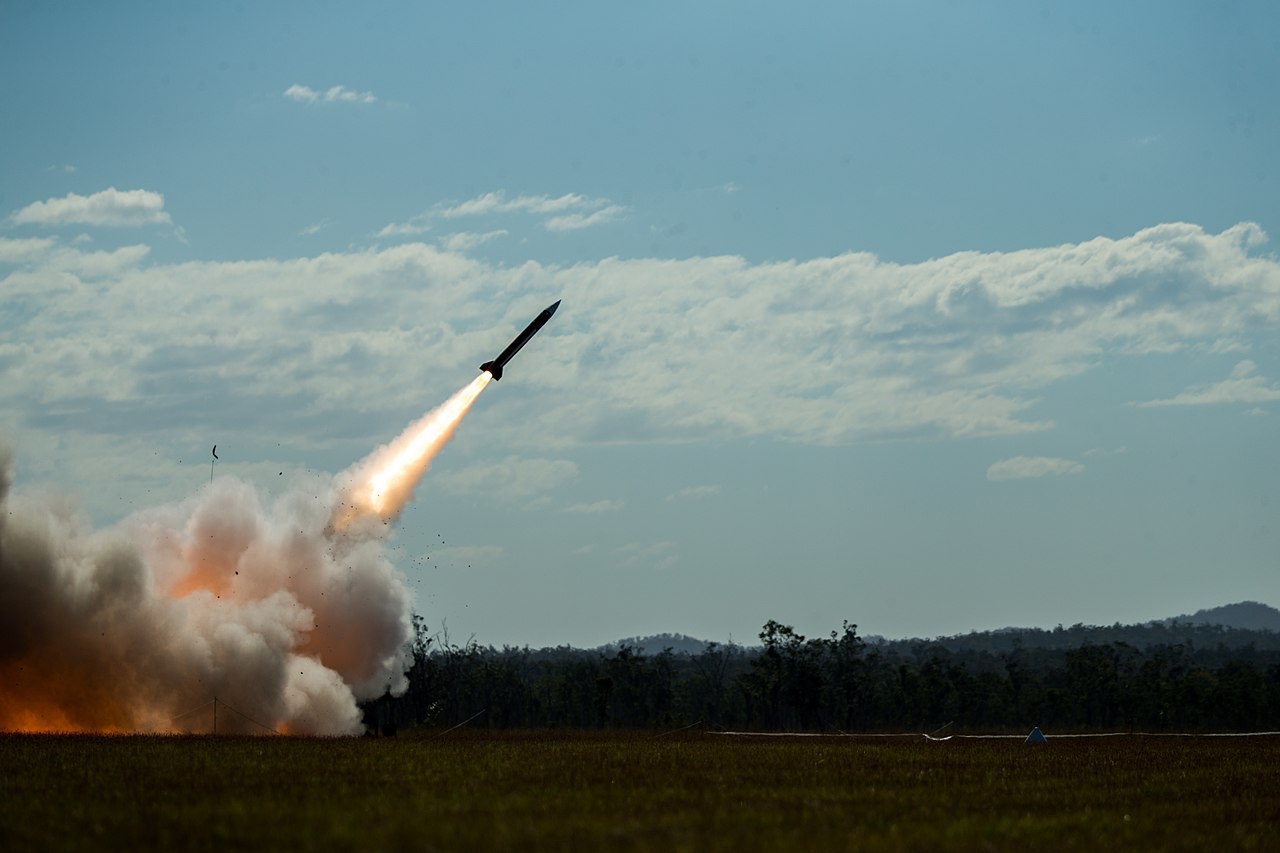
Air and missile threats rarely come with warning. Within minutes, a ballistic or cruise missile can endanger cities, bases, and critical infrastructure.
To meet that danger, the MIM-104 Patriot was built — an air and missile defense system that has evolved steadily since the Cold War. Through decades of upgrades and global deployments, it has become a cornerstone of modern air defense.
Dive into this guide to discover how the Patriot works, how it evolved, and why it still matters today.
What Is the MIM-104 Patriot?
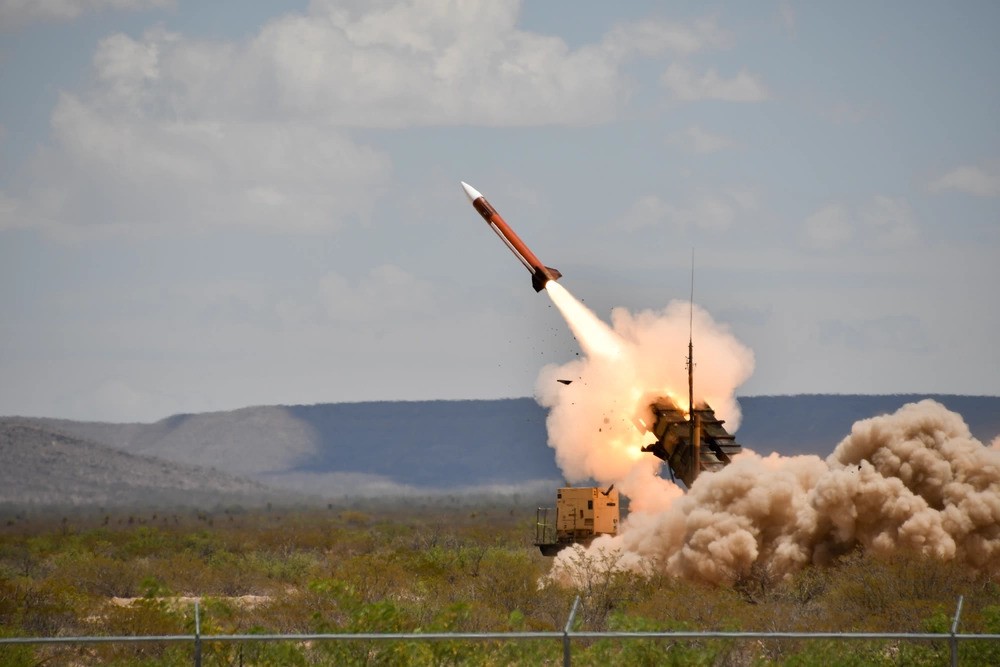
The MIM‑104 Patriot is a long-range, all-altitude, all-weather surface-to-air missile system designed to intercept and destroy a variety of aerial threats.
These include:
- Tactical ballistic missiles
- Cruise missiles
- Advanced aircraft
- Unmanned aerial systems (UAS)
The system is developed and produced by Raytheon, with major components such as interceptor missiles produced in partnership with Lockheed Martin.
Patriot batteries combine radar, command systems, launchers, and interceptor missiles to form a layered defense capable of protecting large areas from aerial attack.
How Patriot Came to Be
Patriot’s origins date back to the 1960s, when the US Army sought a modern replacement for older air defense systems.
The system entered service in the early 1980s as an anti-aircraft missile system designed to defend against enemy aircraft. However, its mission evolved rapidly during the Gulf War, when Patriot was used to intercept Iraqi Scud ballistic missiles.
Following that conflict, the Patriot underwent major upgrades to improve its ability to counter ballistic missiles and other advanced threats.
Today, it serves as one of the most important integrated air and missile defense systems used by the United States and its allies.
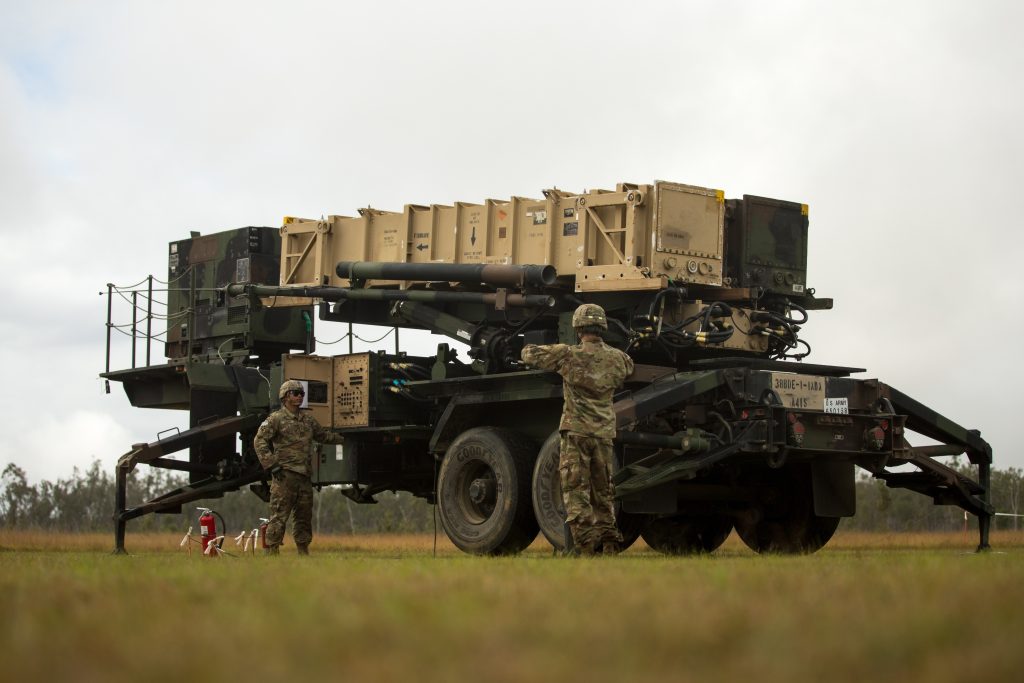
Configurations of the System
Over the decades, Patriot has evolved through multiple major configurations, enabling the system to adapt and remain effective against increasingly sophisticated aerial threats:
PAC-1
Introduced in the early 1980s, it focused primarily on improving engagement performance against enemy aircraft, enhancing radar tracking, fire control, and missile guidance.
The PAC-1 laid the foundation for future enhancements and integration of more advanced interceptors.
PAC-2
Significant improvements to both interceptor missiles and radar systems to counter not only aircraft but also tactical ballistic missiles are introduced.
Larger warheads and improved proximity detonation capabilities, as well as upgraded radar resolution and processing, are now featured.
PAC-3
A major redesign introducing a hit-to-kill interceptor designed specifically to destroy ballistic missiles through direct impact.
How Patriot Works
The MIM-104 Patriot system begins with its phased-array radar, which continuously scans the surrounding airspace for potential threats.
When an aircraft, missile, or drone enters the radar’s range, the system tracks it in real time, letting operators quickly assess threats to bases, assets, or protected areas.
Once a threat is identified, the command center analyzes the data and coordinates available launchers, assigning interceptors and synchronizing multiple units to ensure optimal coverage and engagement.
Using continuous radar guidance, Patriot missiles intercept threats mid-flight, neutralizing aircraft, cruise missiles, and ballistic missiles with either hit-to-kill impact or proximity warheads.
Through this combination of radar detection, command and control, and guided interception, the Patriot system maintains a layered defense capability that protects personnel, infrastructure, and critical areas from a wide spectrum of aerial threats.
Strengths of the MIM-104 Patriot
- Proven missile defense: Patriot has been tested and used in multiple conflicts, making it one of the most combat-experienced air defense systems in service.
- Layered defense capability: The system can defend against a variety of threats, from aircraft to ballistic missiles.
- Network integration: Patriot can operate within larger integrated air defense networks, sharing data with other sensors and interceptors.
- Real-time situational awareness: Continuous radar updates provide operators and commanders with an accurate air picture, enabling faster decision-making and coordinated responses.
Limitations of the MIM-104 Patriot
- Coverage direction: Earlier Patriot radars focused mainly forward, meaning threats from other directions required careful positioning of the system.
- Limited radar horizon: While the phased-array radar is advanced, it is line-of-sight limited, meaning low-flying cruise missiles or terrain-masked targets can evade detection until relatively close.
- Saturation vulnerability: Patriot batteries can struggle if multiple threats arrive simultaneously, especially if more targets than available interceptors or radar tracking slots are presented.
- Mobility constraints: The system is large and heavy, making rapid redeployment difficult in fast-moving operations compared to lighter air defense systems.
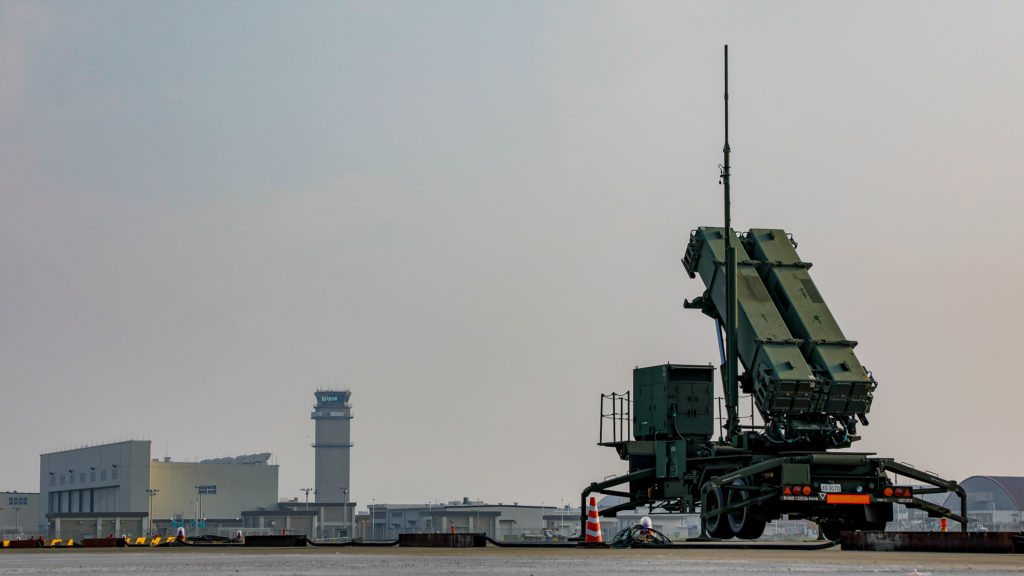
Global Deployment and Use
Patriot has become one of the most widely exported air defense systems in the world. Countries operating the system include:
- Germany
- Japan
- Poland
- Turkey
- Ukraine
- Denmark
- United Arab Emirates
The MIM-104 Patriot has been deployed in several major operations and defense initiatives, intercepting missiles, strengthening allied air defenses, and supporting multinational security programs.
- 2003 Iraq War: US forces deployed Patriot systems in Kuwait, where PAC-3 and guidance-enhanced missiles intercepted several hostile surface-to-surface missiles.
- Saudi Arabia Deployment (2019): The US Department of Defense sent two Patriot missile batteries and a THAAD system to Saudi Arabia following a drone attack on Saudi Aramco oil facilities, reinforcing regional air defense.
- Ukraine: Patriot has been used mainly as a strategic air and missile defense shield, protecting major cities, especially Kyiv, and intercepting some of Russia’s most advanced missiles, including hypersonic weapons.
Beyond operational use, procurement efforts highlight how nations are scaling and sustaining these capabilities for future threats.
- European Sky Shield Initiative (2024): NATO awarded a $5.6-billion contract to COMLOG (a Raytheon–MBDA joint venture) to supply GEM-T missiles, one of the Patriot interceptor variants.
- Germany Patriot Expansion (2024): Germany expanded its Patriot missile inventory and air defense network as part of broader European air and missile defense efforts.
Future Outlook
Although Patriot has been in service for decades, it continues to evolve.
Key modernization efforts include:
- Integration with the Lower Tier Air and Missile Defense Sensor (LTAMDS)
- Upgraded PAC-3 MSE interceptors
- Expanded integration with integrated air and missile defense networks
These improvements aim to ensure the system remains effective against emerging threats such as advanced cruise missiles and maneuverable ballistic missiles.