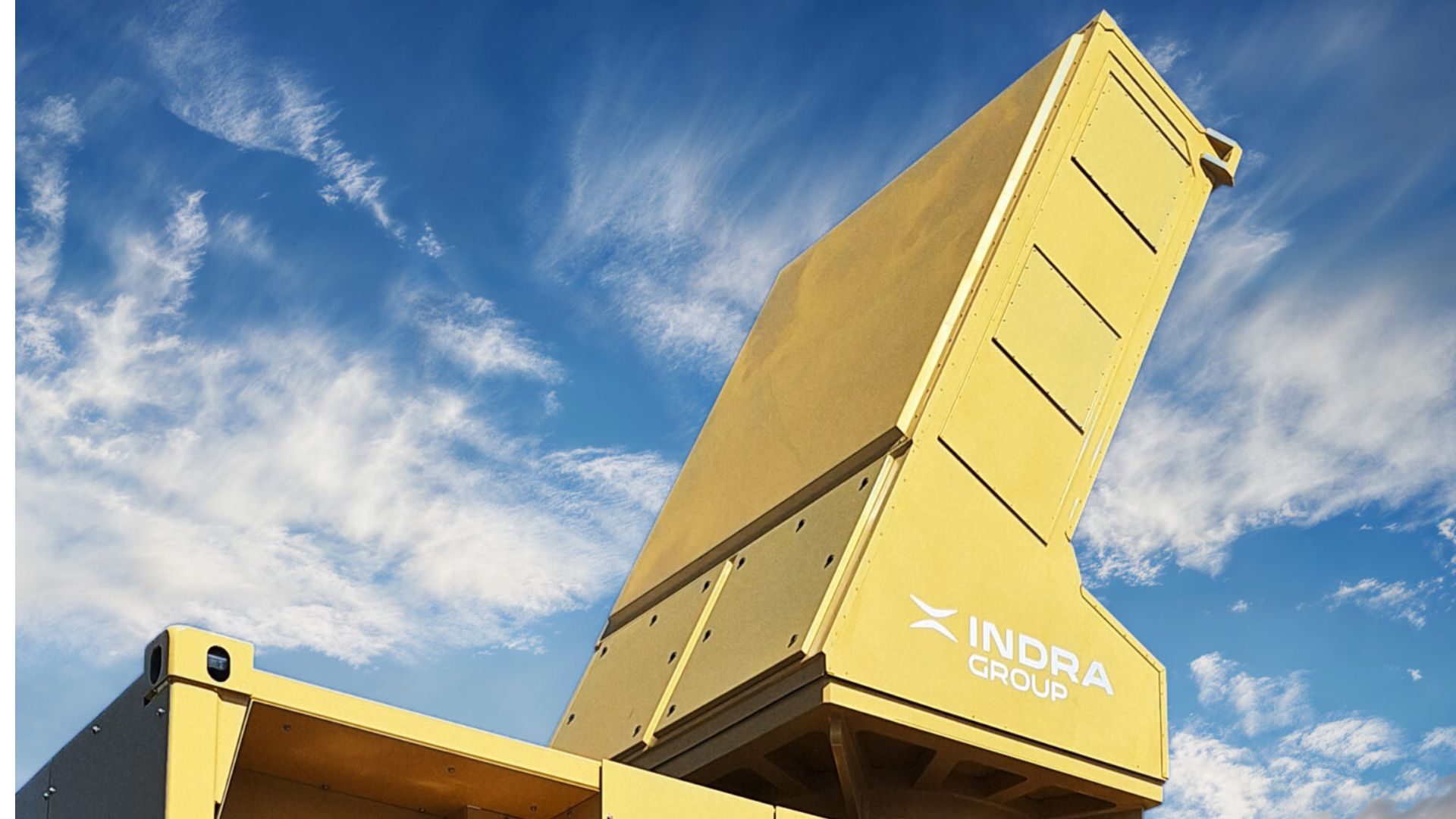
Spanish defense technology firm Indra Sistemas has formed a consortium to deliver a next-generation active electronically scanned array (AESA)-based counter-battery radar system for the Spanish Army.
The company secured a 30-million-euro ($35 million) contract in December to develop the radar, with completion scheduled for November 2028.
Spain-based companies GMV and Nord Motorreductores, along with small- and medium-sized enterprises including Niasa, Teyde 2010, and AC Precisión, are participating in the Radar for Locating the Origin of Indirect Fire project.
The system will replace the Spanish Army’s AN/TPQ-36 Firefinder weapon-locating radar, which entered service in 1989. It will be designed, developed, and manufactured entirely in Spain, with more than 80 percent of the work carried out by Spanish firms.
“The objective is to strengthen the defense industrial base and incorporate into these programs any company with technological capabilities that may be of interest, regardless of its previous experience in the defense sector,” Director of Indra’s Land Systems business unit, Miguel Rodríguez Mora, stated.
“The aim is to reduce excessive dependence on third countries and gain technological sovereignty over the systems developed.”
National Project
Indra will coordinate the project, with work distributed across Spain.
Engineering and systems integration will be carried out in Madrid, while development of advanced sensors and technologies based on Gallium Nitride will take place in Vigo.
In Córdoba, the program will support the creation of a radar-focused industrial hub in collaboration with the local university. Mechanical and electromechanical subassemblies will be produced in the Basque Country, Aragón, and Catalonia.
The project will generate high-quality employment across engineering, advanced electronics, software, precision manufacturing, and systems integration.
AESA Radar
The radar will leverage Gallium Nitride semiconductor technology and software‑defined radio communications to deliver greater range and precision in detecting indirect fire, along with strong resistance to electronic interference and flexible digital reconfiguration for different missions.
Gallium Nitride is a key enabling technology for modern AESA radars, as it can operate at far higher power densities than older semiconductor materials such as Gallium Arsenide. This capability significantly improves radar power output, efficiency, detection range, and overall system reliability.
The war in Ukraine has underscored the importance of early detection and counter-fire capabilities. This radar goes further by enabling highly automated operation, reducing personnel workload, and fully integrating with command-and-control networks.
Beyond counter-fire roles, it can also support ground surveillance, forward operating base protection, and coastal monitoring, providing the armed forces with a versatile capability across a wide range of missions.