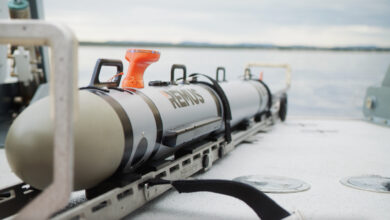
Europe is advancing an underwater drone swarm project consisting of a fleet of networked autonomous platforms designed to carry out a range of future naval missions.
Now in its fourth year, the Swarm of Biomimetic Underwater Vehicles (SABUVIS) project — managed by the European Defence Agency (EDA) — signals a potential shift in how navies approach surveillance, mine countermeasures, seabed warfare, and operations in contested maritime environments.
By operating as a coordinated swarm rather than as standalone units, the system is intended to deliver greater speed, cost efficiency, and resilience.
Swarms of lower-cost autonomous vehicles can distribute risk, complicate adversary targeting, and sustain mission effectiveness even when individual platforms are lost.
The project brings together four participating member states, with Poland serving as the lead nation alongside Germany, Portugal, and Slovenia.
Building on the first phase, SABUVIS II addressed key challenges inherent to underwater autonomy, including the loss of satellite-based tracking below the surface, constrained communications bandwidth, high latency, and the unpredictability of the operating environment.
SABUVIS II Takeaways
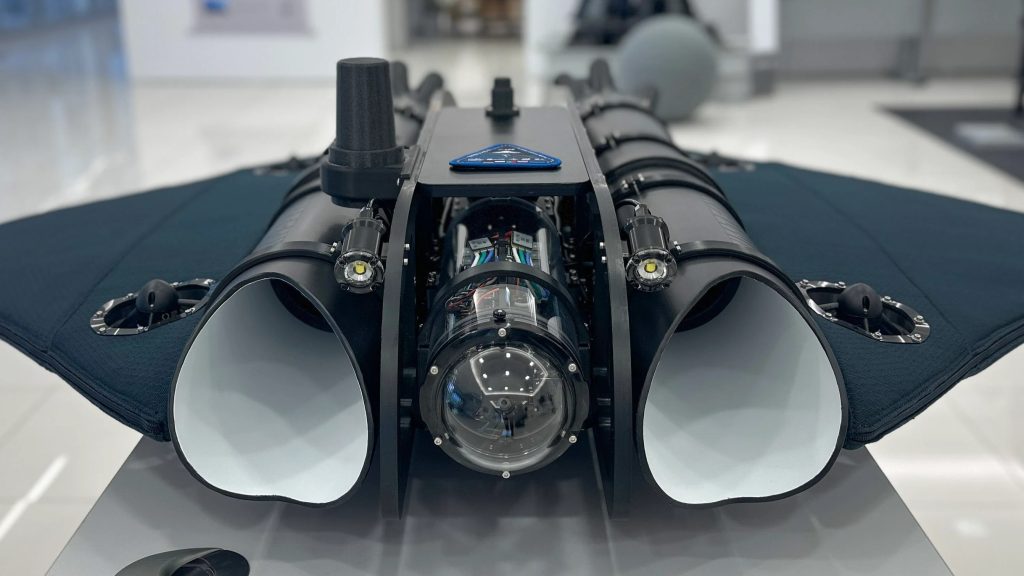
SABUVIS II developed and assessed three complementary concepts: scalable, lower-cost autonomous underwater vehicle swarms, biomimetic vehicles optimized for maneuverability in shallow or cluttered littoral waters, and mixed swarms integrating underwater vehicles with autonomous surface platforms.
The project builds on earlier work, including the EDA’s SALSA (Smart Adaptive Long- and Short-range Acoustic network) initiative, which developed adaptive underwater acoustic networking technologies to support connectivity and data exchange among multiple autonomous platforms.
“SABUVIS II demonstrated that mission execution does not need to depend on a single platform,” the EDA stated.
“Heterogeneous systems can be aligned through common standards and interfaces. Beyond hardware and algorithms, the project established advanced simulation and testing environments where swarm behaviours could be evaluated and optimised as well as validated before deployment.”
Field Trials
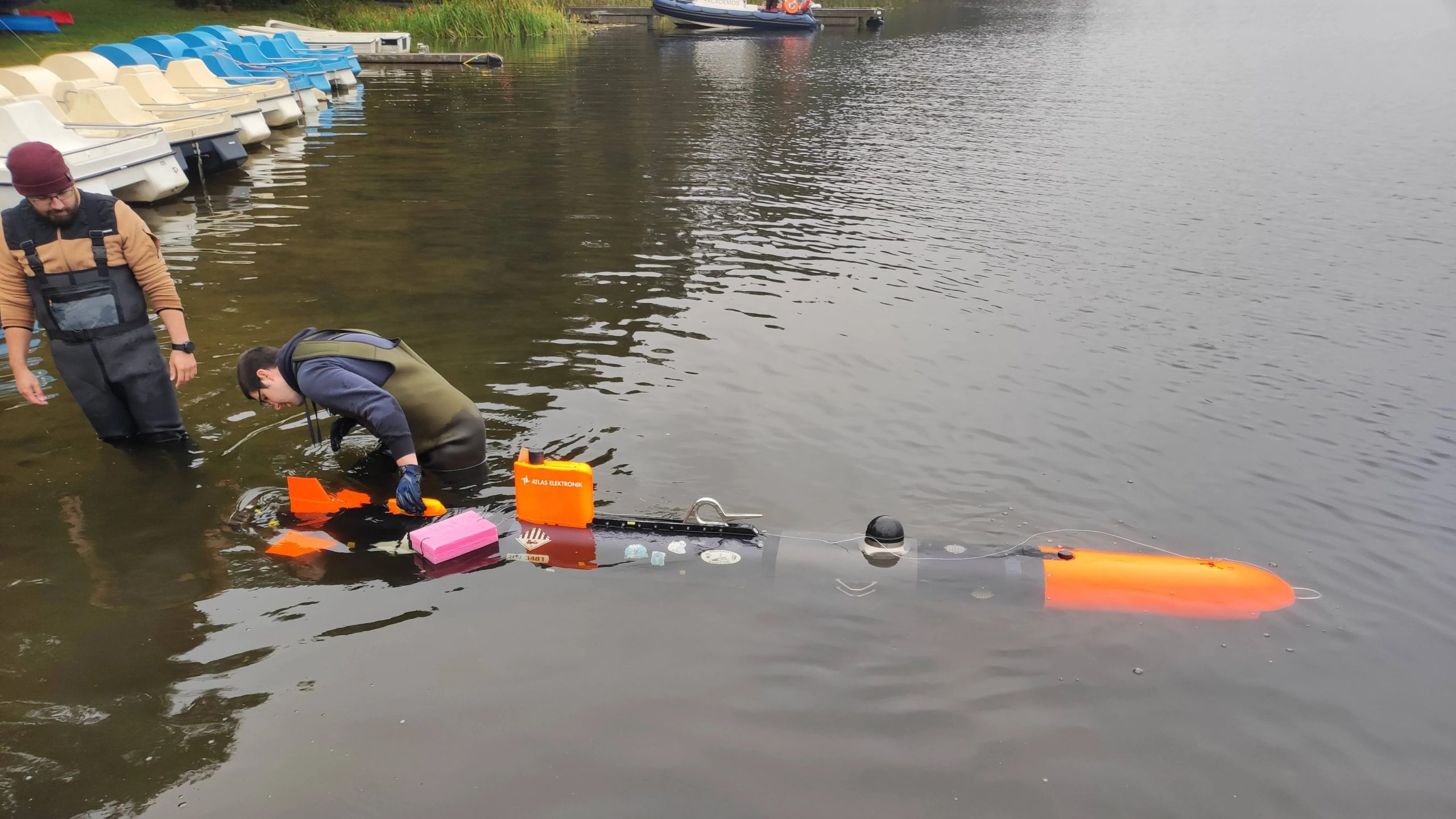
The second phase culminated in early February with a series of field demonstrations conducted in Poland, Germany, and Portugal during REPMUS 2025.
During the trials, mixed swarms of underwater drones were tested in realistic operational conditions, demonstrating coordinated swarm movement, reliable data exchange, formation control, and adaptive mission execution.
The demonstrations also advanced the integration of disparate systems through command-and-control architectures, ensuring interoperability among autonomous vehicles from different countries and manufacturers.