Why a Strike on Iran Won’t Stay Limited
Washington may aim for a quick hit, but in Tehran, the exit has all but disappeared.

In Washington, a “limited strike” on Iran can sound tidy: hit, pause, exit. In Tehran, “limited” can sound like a trap: absorb the first blow, then face the second with fewer options left to answer it.
A limited exchange works only if both sides believe there is a ceiling. That belief is fading.
It has worked before. In January 2020, after President Donald Trump ordered the strike that killed Qassem Soleimani, Iran fired missiles at Ain al-Asad in Iraq; no Americans were killed.
Last June, after US strikes on Iranian nuclear facilities, Tehran retaliated by striking Al Udeid in Qatar, and the exchange ended without reported American fatalities.
Each time, escalation stayed inside a corridor both capitals could live with: punishment, then an exit — without turning the clash into a fight to the finish.
The Ceiling That Made ‘Limited’ Work
That corridor was never about missile ranges or interceptor math. It was political. Washington kept its objectives bounded, and Tehran kept retaliation below the threshold that would force a US president to widen the war.
“Limited” held because the stakes were capped — and because both sides believed there was still an exit after the first exchange.
The ceiling did the real work. It defined what the war was not: not a bid to end the other side, not a contest over regime survival.
Once that understanding exists, a strike can be sharp and still stay contained, because both sides can stop without looking like they blinked.
Why the Ceiling Is Cracking
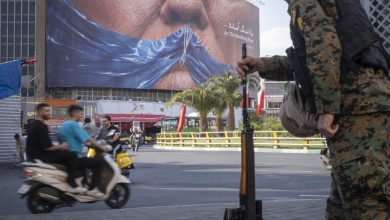
Start with Iran’s internal pressure. The unrest began in late December, after the rial’s slide and a cost-of-living squeeze pushed economic anger into the streets.
Trump warned Tehran against shooting demonstrators. The protests spread anyway, and within days the confrontation left thousands dead, and tens of thousands detained — numbers that changed every calculation.
Trump did not treat that unrest as background noise. He urged Iranians to “take over your institutions” and wrote that “help is on the way.”
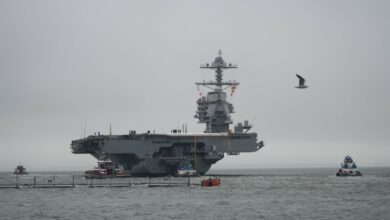
Then the message turned into posture: he talked up an American “armada” as the USS Abraham Lincoln carrier strike group surged into the region.
What began as a protest-triggered buildup kept widening, with more aircraft, reinforced air defenses, and now a second carrier ordered toward the theater.
That is the bind. After promises like that, inaction can read as bluff. But a small strike that draws a costly reply can be worse than doing nothing, because it produces the one outcome no White House can manage away: American casualties and pressure to escalate.
For Trump, who sells foreign policy as clean wins and fast endings, a televised setback is not a detail. It breaks the story.
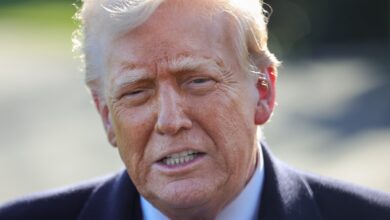
This is where political language starts mattering as much as hardware. Trump has said that a change of power in Iran “would be the best thing that could happen.” Political transformation is not a negotiable “file” like enrichment levels or inspection access; it is an end-state.
Even if Tehran treats the remark as rhetoric, it cannot ignore what the rhetoric implies: the ceiling can be lifted.
This is not an argument for or against regime change. It is a description of what that phrase does to incentives: it makes restraint feel risky, and it tells Tehran that waiting may only leave it weaker.
When the Exit Disappears
That ceiling shapes Iran’s rational play. Tehran cannot win a conventional fight with the United States. But it can impose costs Washington is built to avoid: casualties at regional bases, disruption at sea, and shocks that pull partners into the open.
Under an existential frame — when leaders believe they are fighting for survival — the incentive is to use what remains early, before launchers, radars, and command links are degraded.
Iranian officials have long framed their leverage in geographic terms: “It would not be possible to attack American soil, but we will target their bases in the region.”
A limited exchange works only when both sides believe that leverage will be used in a way that still permits an exit.
Once either side doubts the exit exists, both start planning for the maximum, and the US posture starts to look less like one-night punishment and more like a denial campaign meant to blunt retaliation over days and weeks.
Israel tightens the seam. Benjamin Netanyahu’s consultations in Washington sit between coercion and campaign.
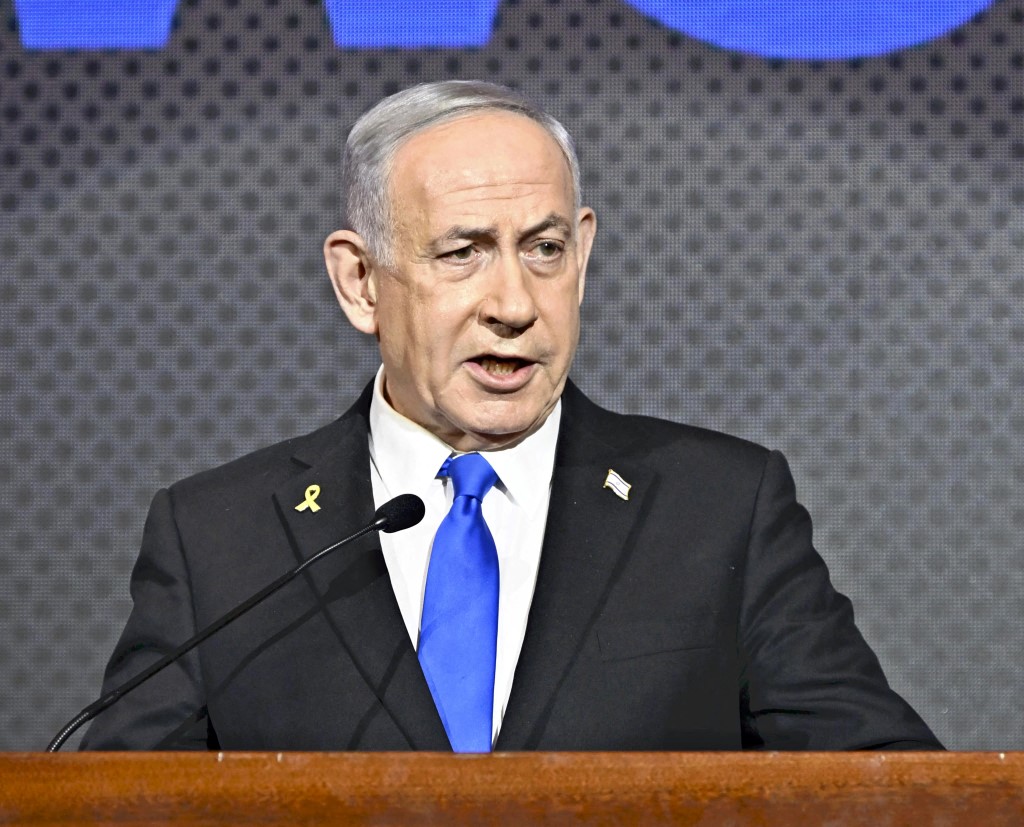
Acting together now, while US defenses are positioned to absorb a first wave, can look safer than acting alone later. But coordination can also compress timelines and widen target sets, making de-escalation harder to steer.
Meanwhile, diplomacy runs on a different logic. Talks in Geneva still orbit the nuclear file because it offers something both sides know how to negotiate: limits, verification, and relief.
Washington is pressing for a broader agenda; Tehran insists the bargain must stay nuclear and that “zero enrichment” is a non-starter. These are hard gaps, but they are still gaps arms control is designed to narrow.
The trouble is that bargaining assumes any settlement is meant to hold long enough to matter.
If Tehran believes talks are cover for positioning — or that the partner across the table is being treated as temporary — cooperation starts to look like vulnerability, and restraint gets harder to sustain.
And if Washington signals that only decisive outcomes count, it raises the bar for what “limited” can mean in practice.
That is the asymmetry pushing both sides toward the maximum.
Trump’s logic is credibility: force must be overwhelming enough that Iran cannot answer in a way that humiliates him in public. Iran’s logic, once it believes the ceiling is gone, is survival: a government under pressure has less reason to keep retaliation symbolic if symbolism only invites the next strike.
When both sides start needing decisiveness — not a symbolic exchange — the corridor that bounded escalation stops functioning.
“Limited” becomes a wager that neither side can keep making.
Crises like this narrow into two lanes: capitulation or escalation. That is why the next strike on Iran, if it comes, is unlikely to stay limited.

Mojtaba Touiserkani is an independent researcher and international relations scholar (Ph.D., University of Tehran).
The views and opinions expressed here are those of the author and do not necessarily reflect the editorial position of The Defense Post.
The Defense Post aims to publish a wide range of high-quality opinion and analysis from a diverse array of people – do you want to send us yours? Click here to submit an op-ed.