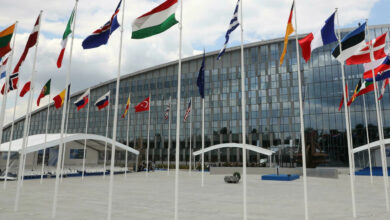
Rīga Stradiņš University (RSU) has been designated a NATO DIANA test center, becoming Latvia’s first such facility based outside a military installation.
DIANA — short for Defence Innovation Accelerator for the North Atlantic — is NATO’s platform for accelerating dual-use technologies through cooperation between civilian industry and the defense sector.
With the designation, RSU is joining more than 200 test centers across the alliance and will provide startups and defense-focused developers access to its laboratories, simulation facilities, and research expertise.
The university has previously worked with the defense sector on initiatives ranging from military medical training to civil–military research programs.
RSU Facilities
Engagement with companies will be managed through the RSU Innovation Centre, which will serve as the primary coordination hub.
Much of the testing activity is expected to take place at the university’s Medical Education Technology Centre — considered one of Northern Europe’s most advanced simulation facilities — where clinical and tactical scenarios replicate military medicine, trauma response, and NATO-standard civil–military operations.
Meanwhile, the RSU 3D Laboratory will focus on rapidly deployable medical technologies, including custom prosthetics, orthotic support, and field-ready anatomical models.
Beyond medical solutions, the university’s infrastructure supports research into human performance, rehabilitation, biomonitoring, environmental factors, and digital tools that evaluate psychological resilience and cognitive function.
In parallel, RSU’s social sciences faculty will contribute research and analyses on disinformation, cognitive influence, and information manipulation, areas increasingly tied to hybrid warfare and societal resilience.
“Security and defence are no longer exclusively military issues — they are closely linked to health, human performance in extreme conditions, technological solutions, and the public’s ability to recognise false information,” noted RSU Rector Aigars Pētersons.