Heavy artillery long relied on brute force, constrained by slow logistics and exposed firing positions. The answer was not simply to add more armor, but to focus on speed, automation, and flexibility.
That logic led to the CAESAR self-propelled howitzer, designed to fire, relocate, and survive in an era where seconds matter.
Today, it stands as one of the most combat-proven examples of how mobility has reshaped modern artillery.
This guide outlines what CAESAR is, how it came to be, how it works, where it has been used globally, and what its future holds on tomorrow’s battlefields.
What the CAESAR Self-Propelled Howitzer Is
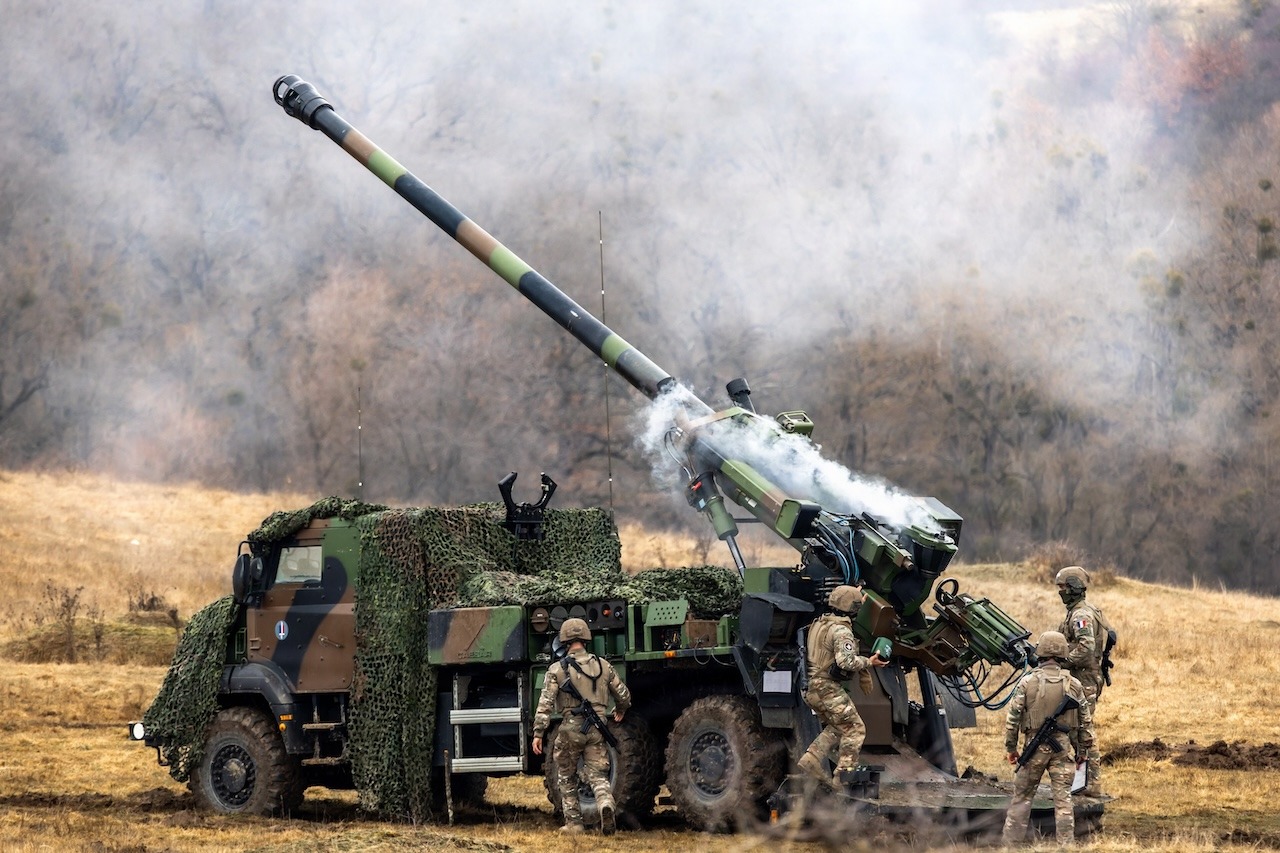
CAESAR — short for Camion Équipé d’un Système d’Artillerie — is a 155mm 52-caliber wheeled self-propelled howitzer developed to deliver long-range, high-precision firepower with exceptional strategic and tactical mobility.
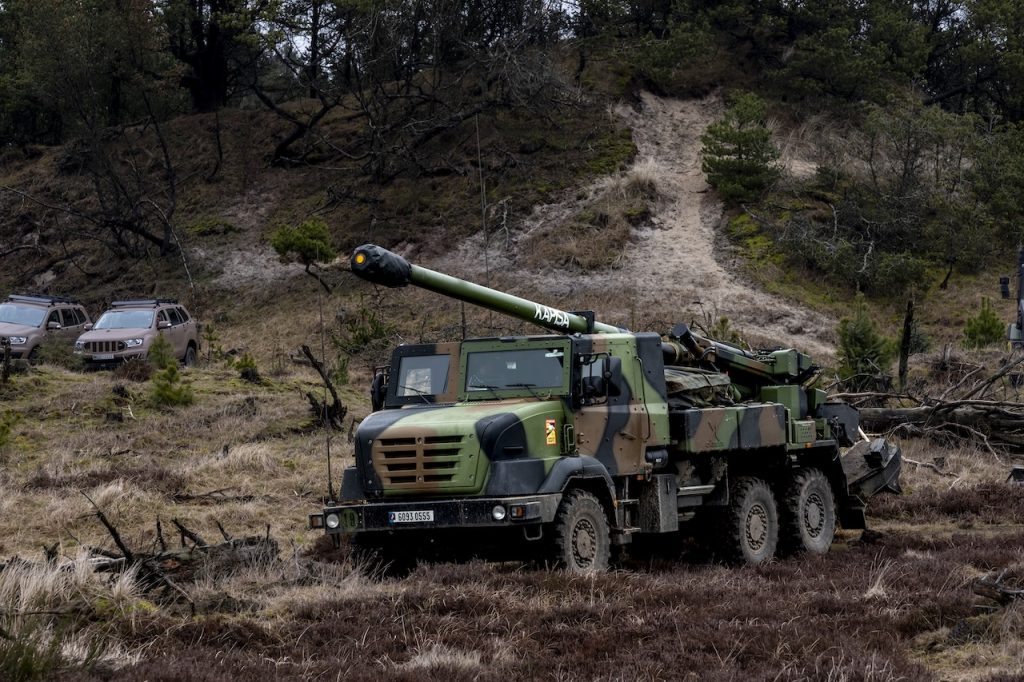
Mounted on a truck chassis rather than a tracked vehicle, the CAESAR combines the reach of modern NATO artillery with rapid deployability and lower sustainment demands.
The system is designed to provide shoot-and-scoot artillery fire, enabling crews to fire multiple rounds and reposition quickly before enemy counter-fire can respond.
How CAESAR Came to Be
A Shift in Artillery Thinking
During the 1990s, France identified a gap between towed artillery and tracked self-propelled guns, which offered protection but were expensive and logistically burdensome.
The solution was a high-mobility, truck-mounted artillery system that could deploy quickly by road, rail, or air while retaining full-caliber firepower.
Development and Industry
CAESAR was developed by GIAT Industries, now known as KNDS France, and entered French Army service in the mid-2000s.
From the outset, exportability and NATO compatibility were central design goals, shaping everything from ammunition standards to digital fire control integration.
CAESAR’s Key Capabilities
At the heart of CAESAR is a 155mm L/52 cannon, capable of firing standard NATO ammunition, including extended-range and precision-guided projectiles.
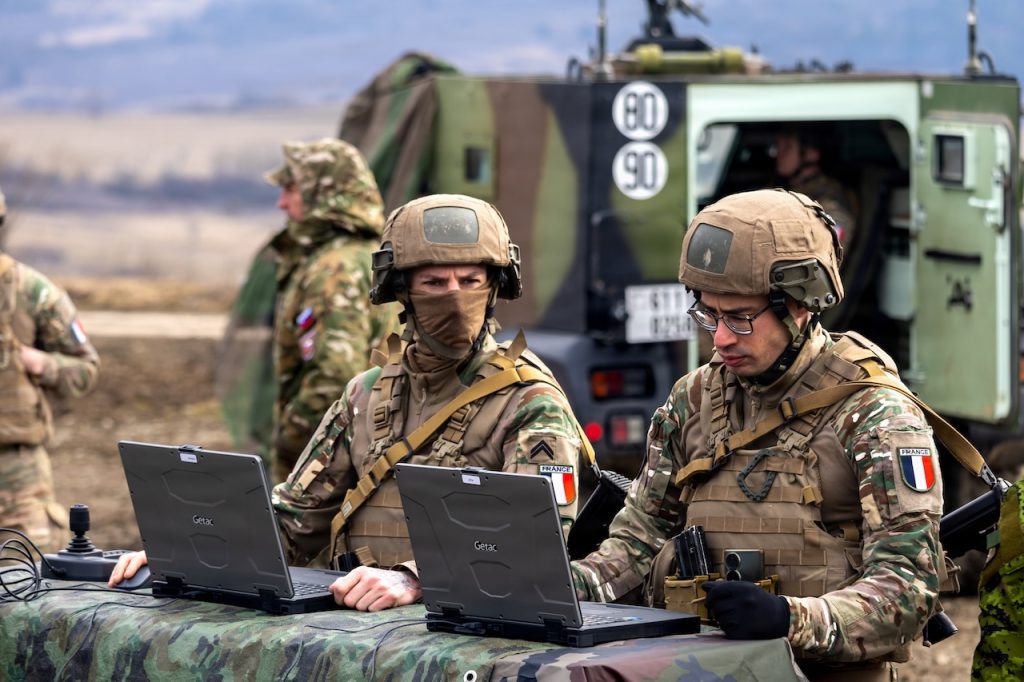
An onboard digital fire control system allows rapid target acquisition, automated gun laying, and quick execution of fire missions.
CAESAR can deliver accurate fire at ranges exceeding 40 kilometers (25 miles), depending on ammunition type.
Mobility and Deployment
Mounted on a 6×6 or 8×8 wheeled truck chassis, CAESAR excels in strategic mobility. It can self-deploy over long distances by road, be transported by aircraft, and rapidly enter firing positions without extensive preparation.
Hydraulic stabilizers are deployed in seconds, enabling fast transitions from movement to firing.
Strengths
- Exceptional shoot-and-scoot capability, reducing vulnerability to counter-battery fire
- High mobility compared to tracked artillery, with lower fuel and maintenance demands
- NATO interoperability, using standard 155mm ammunition
- Combat-proven precision, including compatibility with guided munitions
- Smaller crew requirements due to automation
Limitations
- Limited armor protection, relying on mobility rather than survivability
- Crew exposure during firing, compared to fully enclosed tracked systems
- Less effective in extremely rough terrain than tracked howitzers
- Ammunition resupply dependency, as onboard storage is limited
Where and How CAESAR Has Been Used
CAESAR has been adopted by a growing list of operators, including France, Estonia, Denmark, Croatia, Lithuania, Colombia, and Ukraine. Its global appeal lies in its balance of firepower, cost efficiency, and deployability.
In operational use, CAESAR has demonstrated effectiveness in expeditionary operations, counter-insurgency environments, and high-intensity conventional warfare.
Its performance in Ukraine has highlighted the importance of mobility and rapid displacement under modern counter-battery threats, reinforcing the relevance of wheeled artillery systems in peer-level conflicts.
However, recent production challenges have led to repeated delivery failures, and the Czech Republic has threatened to halt payments if KNDS continues to miss procurement deadlines.
Future Outlook
KNDS France continues to evolve CAESAR with improved crew protection, enhanced automation, and integration with modern battlefield networks.
Newer variants feature improved cabs, faster deployment cycles, and better digital connectivity with drones, radars, and joint fire systems.
As artillery remains a dominant force in land warfare, systems like CAESAR are increasingly favored for their speed, mobility-based survivability, and cost-effectiveness.
Rather than replacing tracked howitzers, CAESAR complements them, offering commanders a fast, flexible artillery option suited to both expeditionary operations and large-scale conflict.