USMC Picks GA-ASI YFQ-42A as Surrogate Testbed for ‘Loyal Wingman’ Effort

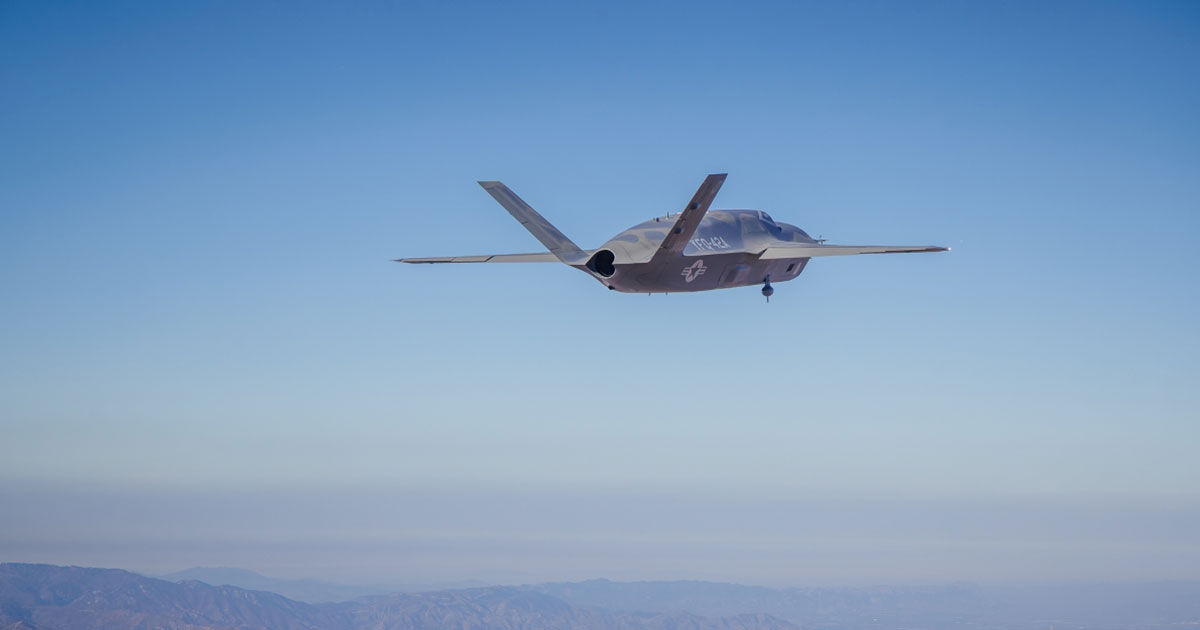
The US Marine Corps (USMC) has selected General Atomics Aeronautical Systems, Inc. (GA-ASI) to provide its YFQ-42A drone as a surrogate testbed for evaluation under the service’s “loyal wingman” program.
Under the agreement, the YFQ-42A will serve as a test platform that will be integrated with a USMC mission kit, described by GA-ASI as “a cost-effective, sensor-rich, software-defined suite capable of delivering kinetic and non-kinetic effects.”
The drone will be assessed within the Marine Air-Ground Task Force, with a focus on rapidly developing autonomy for the mission kit and supporting future Marine Air-Ground Task Force Uncrewed Expeditionary Tactical Aircraft evaluations.
This effort falls under the Collaborative Combat Aircraft (CCA) program, which is exploring how uncrewed aircraft with autonomous mission systems can support Marine Air-Ground Task Force operations in expeditionary environments.
“Our FQ-42, combined with our proven autonomy architecture and integration expertise, positions us to rapidly deliver an affordable CCA solution that enhances the Marine Air-Ground Task Force’s operational effectiveness in contested environments,” said Mike Atwood, VP of Advanced Programs for GA-ASI.
Loyal Wingman
The Pentagon began formally moving toward loyal wingman or uncrewed aircraft that can operate alongside piloted fighters in 2024, when the US Air Force chose GA-ASI’s YFQ-42A and Anduril’s YFQ-44A as prototypes, aiming towards operational acquisition and production of its CCA platforms.
Meanwhile, the USMC officially launched its CCA initiative in early 2026, tapping Northrop Grumman and Kratos to develop a system based on the XQ-58 Valkyrie airframe and choosing GA-ASI’s YFQ-42A as a surrogate platform to test the service’s autonomy capabilities.
YFQ-42A
Designed as a modular drone that performs reconnaissance and strike missions, the YFQ-42A is estimated to have a range exceeding 700 nautical miles (806 miles/1,296 kilometers), though speed and other performance details remain classified.
It completed its first flight in August 2025, validating its autonomous flight and operational readiness, as well as a “genus/species” concept enabling a common core aircraft design that can be rapidly adapted for different missions.