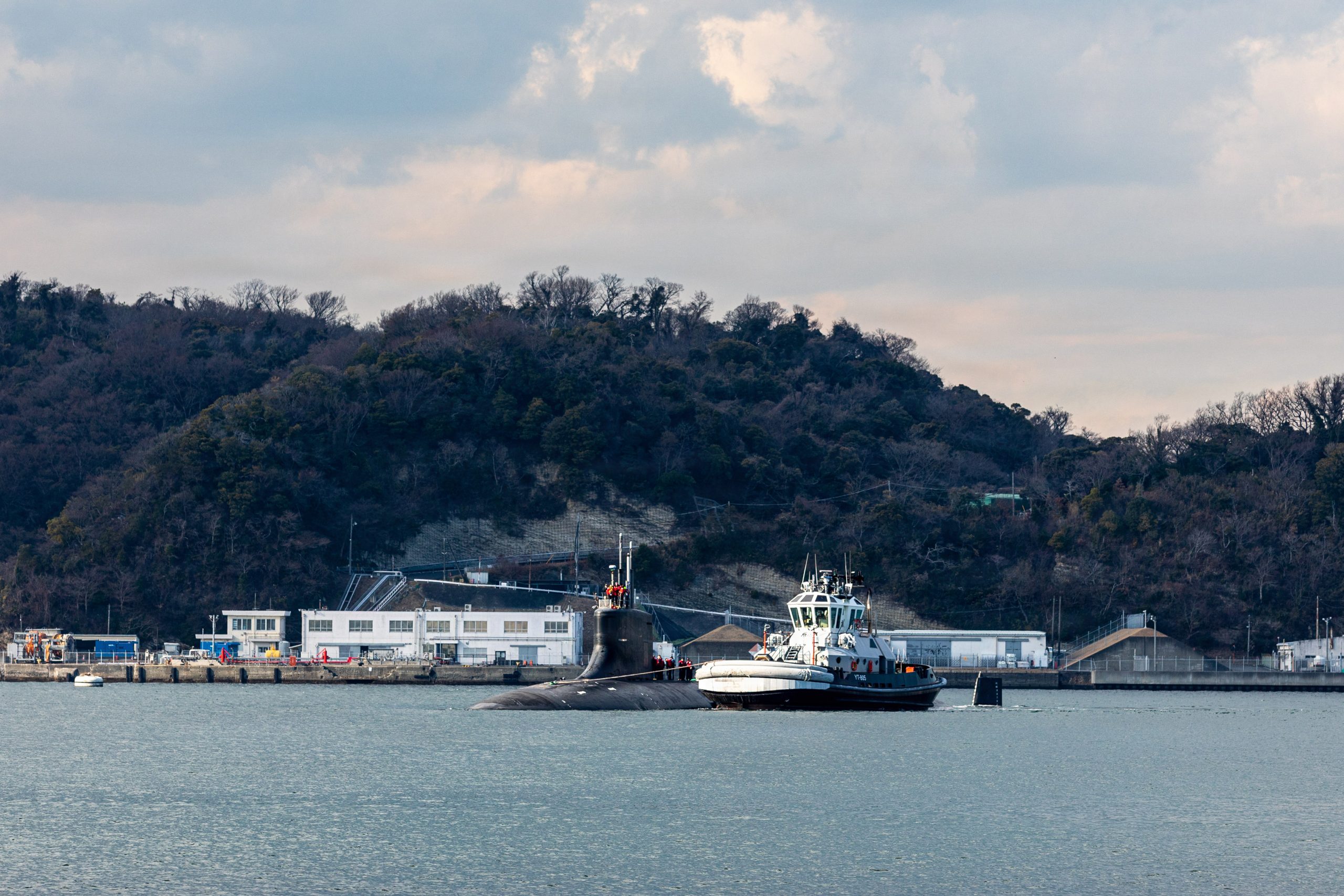
Invisible, silent, and persistent, the Virginia-class submarine delivers unmatched undersea reach and power.
Designed after the Cold War but built for today’s great-power competition, it combines stealth, intelligence gathering, long-range strike, and special operations support in a single, adaptable platform.
As older Los Angeles-class submarines retire, the Virginia class has become the backbone of the US Navy’s undersea force.
Explore the guide to learn how it works and the impact it has had globally.
An Insider Look at the Virginia-Class Submarine
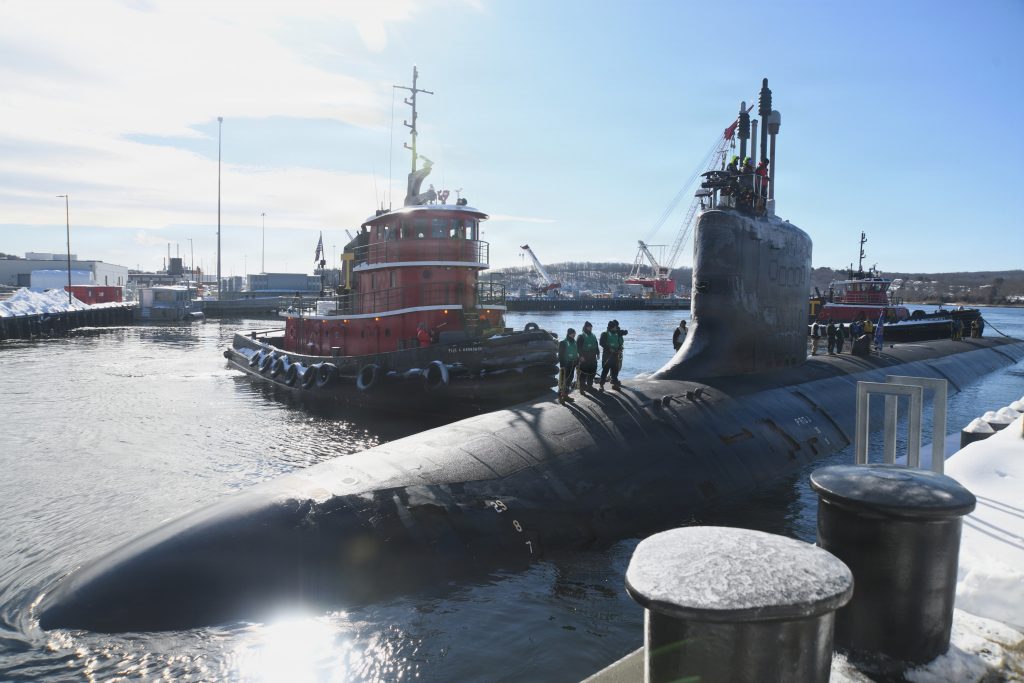
The Virginia-class submarine is a nuclear-powered fast-attack submarine developed for the US Navy to perform multi-mission operations in both deep-ocean and littoral environments.
The program emerged in the 1990s as a cost-conscious successor to the Seawolf class, which proved exceptionally capable but too expensive to build in large numbers.
Built by General Dynamics Electric Boat and Huntington Ingalls Industries, it features a stealth-optimized hull design, advanced sonar and sensor suites, and modular payload capabilities including torpedo tubes, vertical launch Tomahawk missiles, and the Virginia Payload Module.
Construction is shared between the two shipyards, with each submarine assembled from modular sections.
This approach has reduced build times and costs over successive production “Blocks,” while allowing new technologies to be incorporated as they mature.
There are 53 active nuclear-powered attack submarines (SSNs) in the US, and 22 of them are commissioned Virginia-class submarines. The navy has procured 40 Virginia-class attack submarines through financial year 2024, while there are plans to add two to three boats per year through the 2040s.
While near-term goals often cite a fleet of 48 Virginia-class submarines, US Navy leaders have long argued that demand is higher.
| Category: | Details: |
| Developer | General Dynamics Electric Boat and Huntington Ingalls Industries – Newport News Shipbuilding |
| Propulsion | One nuclear reactor; one shaft |
| Length | 377 feet (114.9 meters) |
| Beam | 33 feet (11 meters) |
| Displacement | Approx. 7,800 tons submerged |
| Speed | 25+ knots (28/46 kilometers per hour) |
| Crew | 132 (15 officers, 117 enlisted) |
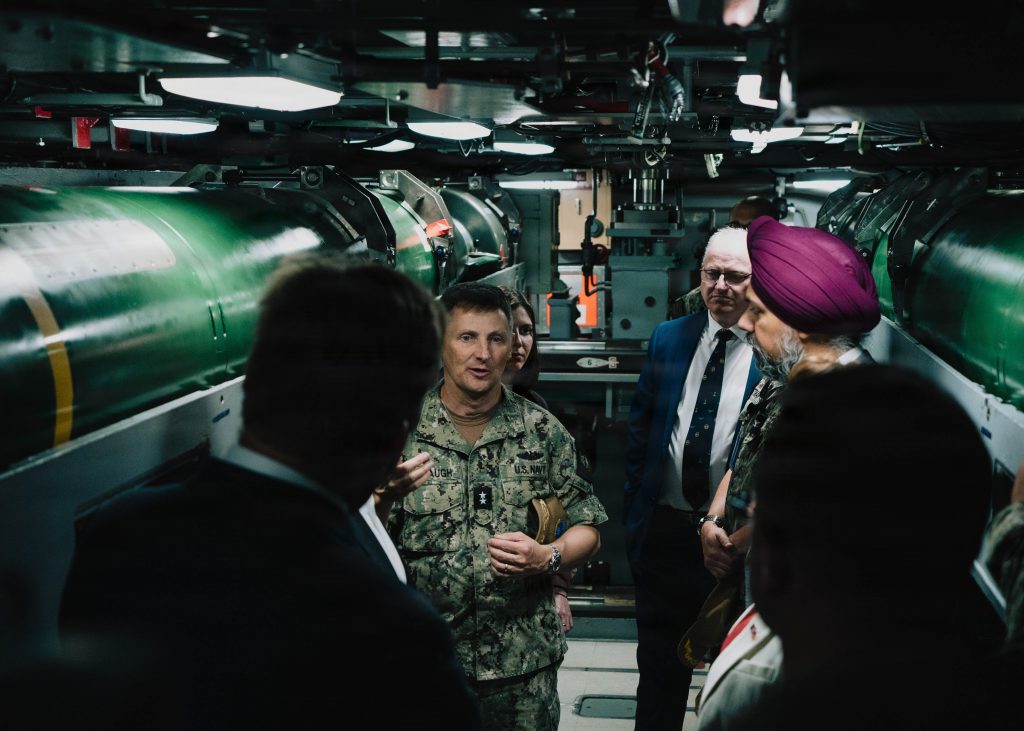
| Armament | Tomahawk missiles, MK 48 torpedoes, four torpedo tubes (on all SSNs); VLS on SSN 774 through 783; 2 large diameter payload tubes for SSN 784; Virginia Payload Module with four additional large diameter payload tubes for Virginia-class Block V |
Stealth, Sensors, and Survivability
Stealth is a defining characteristic of the submarine. Advanced acoustic quieting measures, including a pump-jet propulsor on later boats, significantly reduce radiated noise. This quietness allows it to operate closer to adversary coastlines and within heavily monitored waters.
Sensor capability is equally critical. The class features a sophisticated sonar suite anchored by a large bow-mounted array and enhanced by flank arrays and towed sensors.
Later variants replace traditional periscopes with photonic masts, which use high-resolution cameras and sensors instead of optical tubes.
This allows operators to remain deeper while observing the surface, improving survivability and situational awareness.
Weapons and Mission Flexibility
The Virginia class is designed as a true multi-mission platform. It can conduct anti-submarine and anti-surface warfare, land attack, intelligence, surveillance, and reconnaissance (ISR), and special operations support.
Early boats are armed with Tomahawk missiles launched from vertical launch tubes and heavyweight Mk 48 torpedoes fired from torpedo tubes.
Beginning with later production blocks, the class incorporates the Virginia Payload Module that dramatically increases missile capacity and enables the submarine to carry future weapons, unmanned systems, or specialized payloads.
The submarine also supports special operations forces, with lockout chambers and the ability to deploy divers or unmanned underwater vehicles, reinforcing its role in covert and intelligence-driven missions.
Key Limitations
Despite its advanced design, the Virginia class is not without limitations. While quieter than most adversaries, the submarine still operates in an environment where anti-submarine sensors, unmanned systems, and undersea surveillance networks are rapidly improving.
Additionally, payload capacity, especially on earlier blocks without the Virginia Payload Module, can limit strike volume compared to larger guided-missile submarines.
Ultimately, the Virginia class’ effectiveness depends not just on the platform itself, but on sustained investment in sensors, weapons, and undersea infrastructure.
Why It Matters
In an era where access to the maritime domain is increasingly contested, the Virginia-class submarine offers the US Navy a combination of stealth, adaptability, and persistence that few platforms can match.
More than just a hunter-killer submarine, it is a quiet enabler of joint and coalition operations — shaping events long before a conflict becomes visible on the surface.