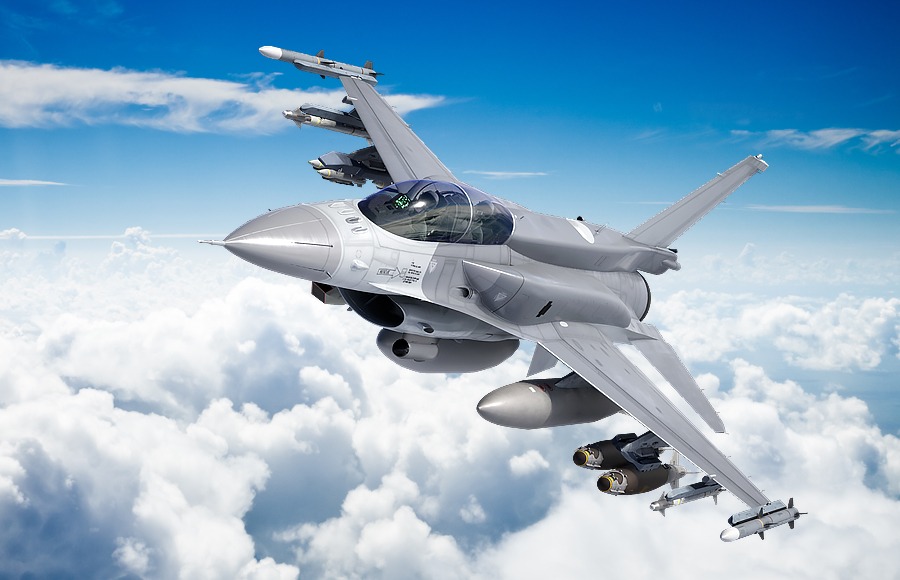
The US has awarded Lockheed Martin a $328.5-million foreign military sales (FMS) contract to provide Taiwan’s air force with advanced Legion‑ES IRST21 sensor systems.
Under the contract, Lockheed Martin will produce IRST21 Legion‑ES long‑wave infrared search‑and‑track systems designed to passively detect and track airborne targets at extended ranges.
These sensors, intended for integration with Taiwan’s F‑16 fighter fleet, do not emit radar signals, enhancing their survivability and helping alert pilots to threats earlier.
The deal marks the first time an international ally will receive the Legion‑ES configuration, further deepening defense cooperation between the United States and Taiwan.
Work under the contract will be conducted in Orlando, Florida, and is expected to run through mid‑2031, with more than $157 million in FMS funds already obligated at the time of award.
Lockheed’s IRST21 sensors build on a legacy of infrared search‑and‑track technology that has accumulated more than 300,000 flight hours, and is seen as a force multiplier for Taiwan’s aircraft under increasingly complex air defense and regional security conditions.
US’ Major Defense Sales to Taiwan
Since 2023, US FMS notifications to Taiwan have included a range of major capabilities aimed at enhancing the island’s deterrence and asymmetric defense posture.
In December 2025, the US notified Congress of an unprecedented $11.1-billion arms package comprising 82 HIMARS launchers and related equipment, 60 M109A7 self‑propelled howitzers, ALTIUS unmanned systems, Javelin and TOW missiles, and tactical mission network software and services.
A month prior, a separate FMS notification covered $330 million in non‑standard spare and repair parts for Taiwan’s F‑16, C‑130, and Indigenous Defense Fighter fleets.
Back in October 2024, the US agreed to sell three NASAMS air defense batteries with 123 AMRAAM‑ER missiles to Taiwan, expanding its medium‑range air defense capability with systems slated for delivery through late 2025.