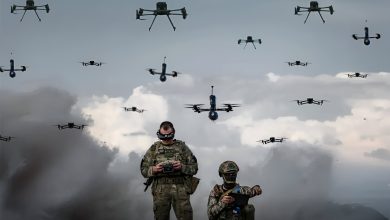
German defense firms HENSOLDT and TYTAN Technologies have signed an agreement to cooperate on counter-unmanned aerial systems (UAS) capabilities.
The cooperation involves integrating TYTAN’s interceptor drones with HENSOLDT’s sensor suite and its Elysion Mission Core command-and-control software.
The aim is to combine detection, classification, and interception capabilities into an operational system that can be deployed to protect both civilian and military infrastructure.
System integration and production are planned to take place in Bavaria, southeastern Germany.
Beyond counter-UAS interception, the partnership covers coordinated measures to protect critical infrastructure, including surveillance, threat assessment, and rapid response planning, conducted in cooperation with federal and state authorities.
The collaboration also extends to international projects, addressing NATO air defense requirements and supporting European initiatives related to operational support for Ukraine.
“The cooperation of HENSOLDT and TYTAN allows us to combine agility, innovative strength, system integration expertise and domain knowledge at the highest level,” stated Oliver Dörre, CEO of HENSOLDT.
“In this way, we are contributing to significantly and rapidly enhancing protection against the increasing threats posed by drones.”
The Systems
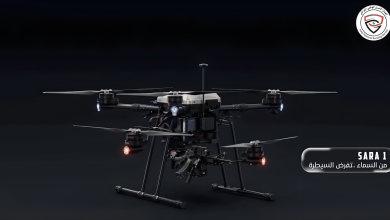
TYTAN’s interceptor drone is designed for rapid launch, taking off within seconds and flying toward the location of an incoming UAS.
Using computer vision for target acquisition and tracking, the platform closes the distance and engages the hostile drone in a direct kinetic collision.
The interceptor has a top speed of over 250 kilometers (155 miles) per hour, a range of more than 15 kilometers (9.3 miles), and a total weight of around 5 kilograms (11 pounds).
HENSOLDT’s Elysion Mission Core collects and fuses data from multiple sources, including radar, electro-optical and infrared cameras, radio-frequency sensors that detect drone communication signals, and acoustic devices that identify drone noise.
These inputs are used to detect, track, and prioritize drone threats.
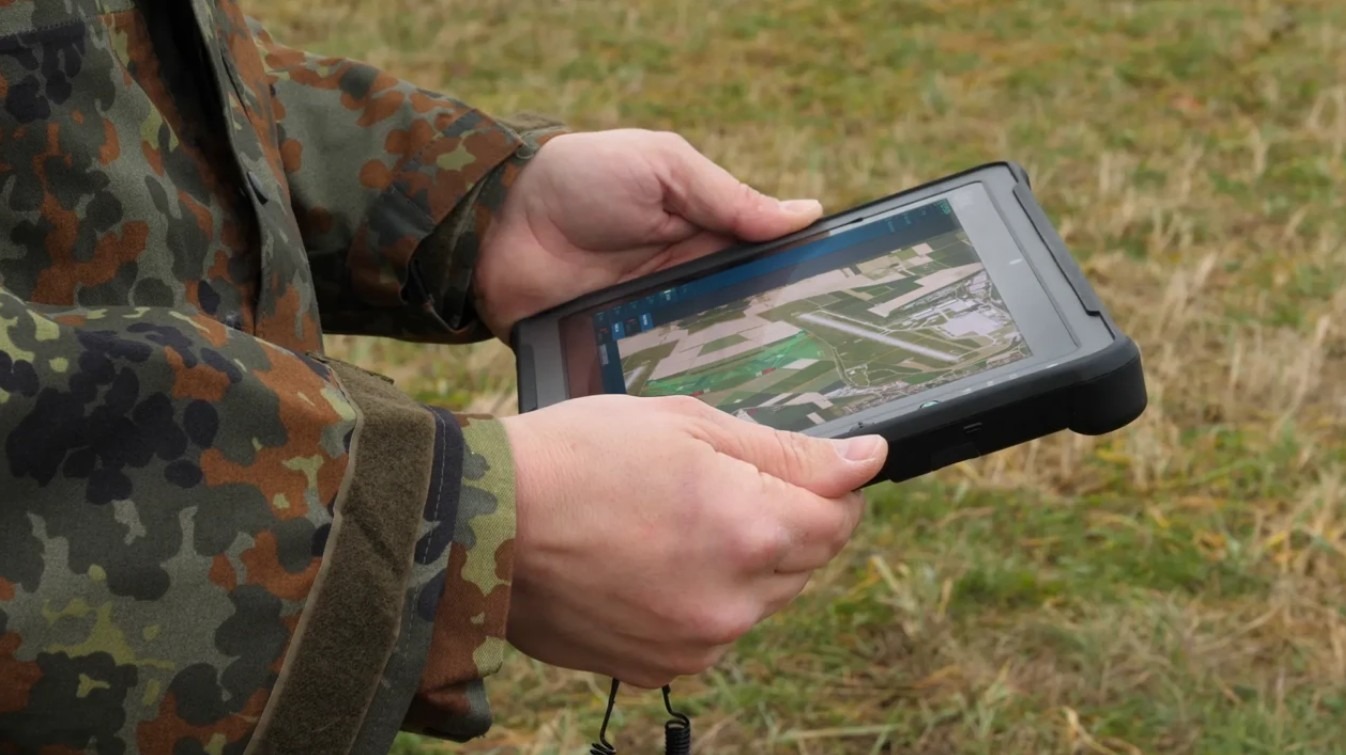
The software presents an integrated operational picture through a map-based interface, showing detections, connected assets, and protected zones in real-time.
Operators can control sensors and countermeasures from a single workstation or tablet, while automated tools help assess threats and recommend responses.