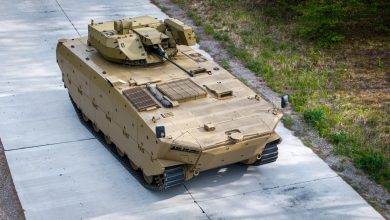
Defense contractor V2X Inc. has partnered with RENK segment Horstman Group to deliver modern suspension solutions for the US Marine Corps’ Amphibious Combat Vehicle (ACV) program.
The project will see Horstman provide its proprietary Hydrostrut hydro-pneumatic suspension technology, according to Defence Industry Europe.
Hydrostrut combines high-pressure nitrogen gas and an integral oil damper in a single package for more vehicle space and optimized drive.
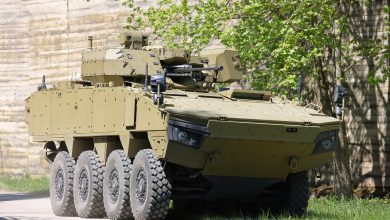
It is designed for outfitting with 4×4, 6×6, and 8×8 tracked and wheeled platforms.
The teaming comes after the military’s evaluation of Horstman’s technology and within 15 months of shipping the initial tranche for the ACV fleet, scheduled to continue through December 2026.
Deliveries of the latest Hydrostrut order will begin by the end of the year.
“From start to finish, the identification-to-fielding timeframe demonstrated the effective working relationship the [Program Management Office] has with private industry,” said Chris Melkonian, program manager of advanced amphibious assault at US Marine Corps.
“The Hydrostrut suspension will help to bolster availability of parts necessary to maintaining this amphibious capability for the [US Marine Corps].”
The ACV Program
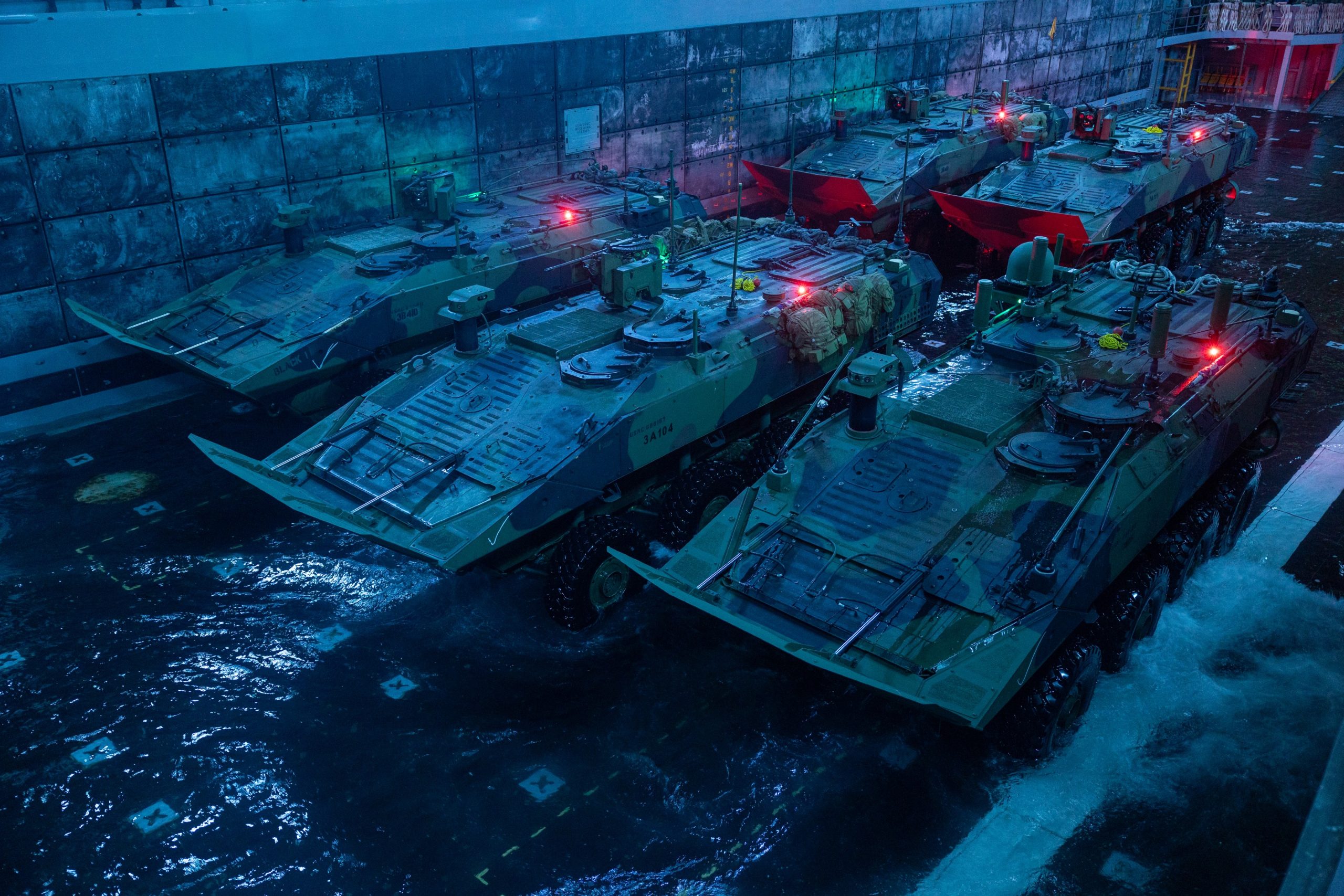
The ACV is part of an ongoing initiative to replace the US Marine Corps’ 1970s-era Assault Amphibious Vehicles tasked with transporting the landing force and associated equipment during ship-to-shore operations.
Since its introduction in 2018, the ACV platform has been developed into multiple iterations to expand into command and control, engineering, and attack functions.
A standard ACV chassis is armed with a remote weapon station, which can carry either a heavy machine gun or a grenade launcher.
It can accommodate up to 13 passengers, is operated by a crew of three, and has a payload capacity of over 3 tons.
It is equipped with a 700-horsepower Iveco Cursor 16 for a top speed of 65 miles (105 kilometers) per hour on paved roads and 7 miles (11 kilometers) per hour on water, and has a range of about 250 miles (402 kilometers).