The Rolling Airframe Missile (RAM) began as a joint US–German project in the late 1970s, born from a shared need: a lightweight, high-speed, close-in defense missile capable of stopping incoming anti-ship threats.
Purpose-built for rapid, autonomous response, the Rolling Airframe Missile was jointly developed by General Dynamics and Germany’s Diehl Defence to defeat incoming missiles and drones in the final seconds of an attack, with Raytheon later taking over production and guidance upgrades.
With continuous upgrades and expanding global adoption, the system has evolved into a cornerstone of layered maritime defense.
This guide breaks down how RAM works, why it’s so effective, and how its technology is shaping the future of ship self-protection.
RAM in Action: Function and Role
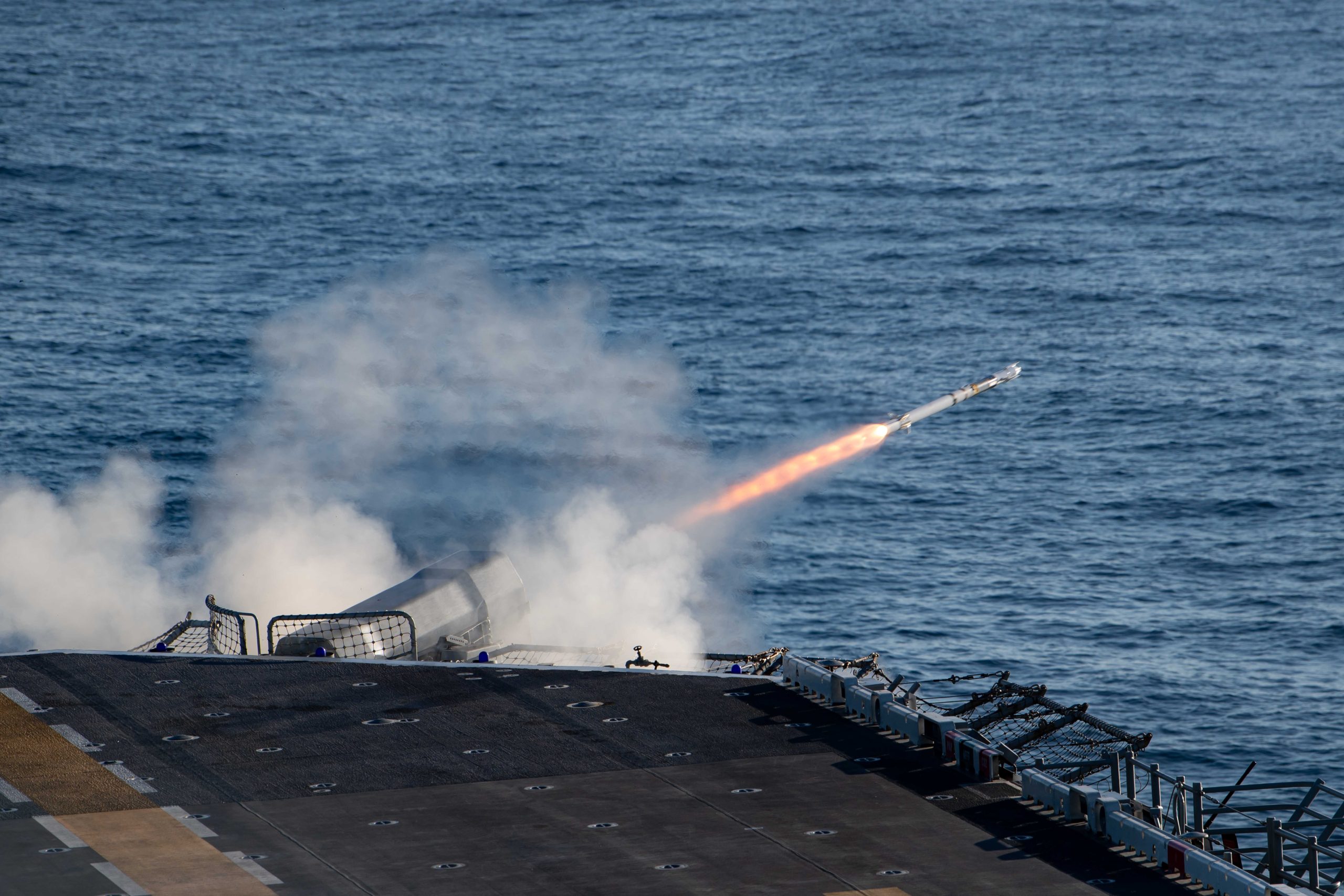
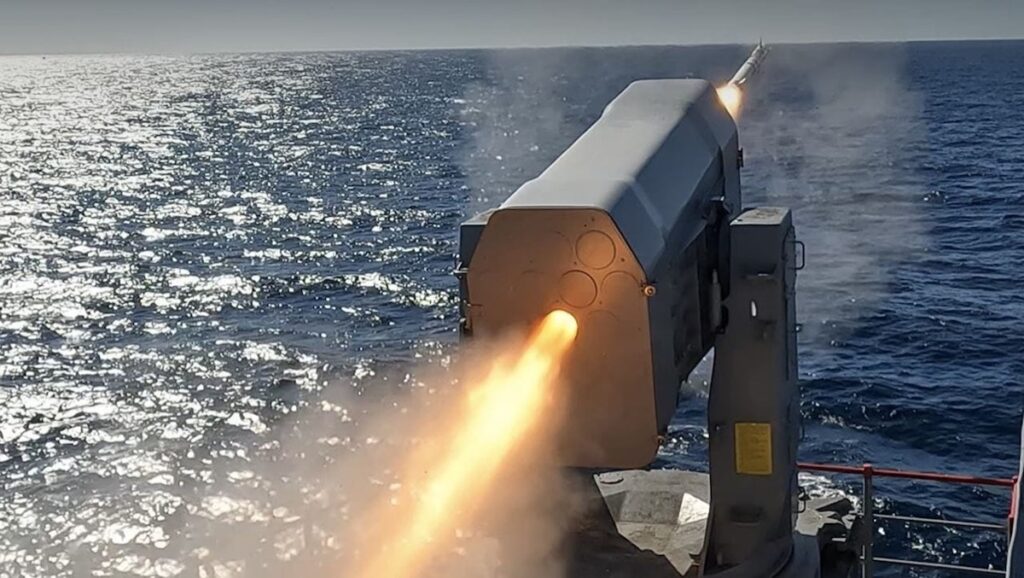
RAM is a point-defense, fire-and-forget surface-to-air missile designed primarily to counter anti-ship cruise missiles, aircraft, and asymmetric threats at close range.
It combines a rolling-body aerodynamic design for extreme agility with a dual-mode guidance system — initially passive radio-frequency (RF) homing and later integrated with infrared (IR) tracking — allowing fully autonomous “fire-and-forget” operation.
The missile’s small size and rapid response make it ideal for compact launcher installations on a wide range of naval platforms, forming a critical layer in modern, multi-tiered ship defenses.
Its key performance traits are:
- Dual‑mode passive seeker: It uses radio frequency for midcourse guidance, then switches to infrared in the terminal phase.
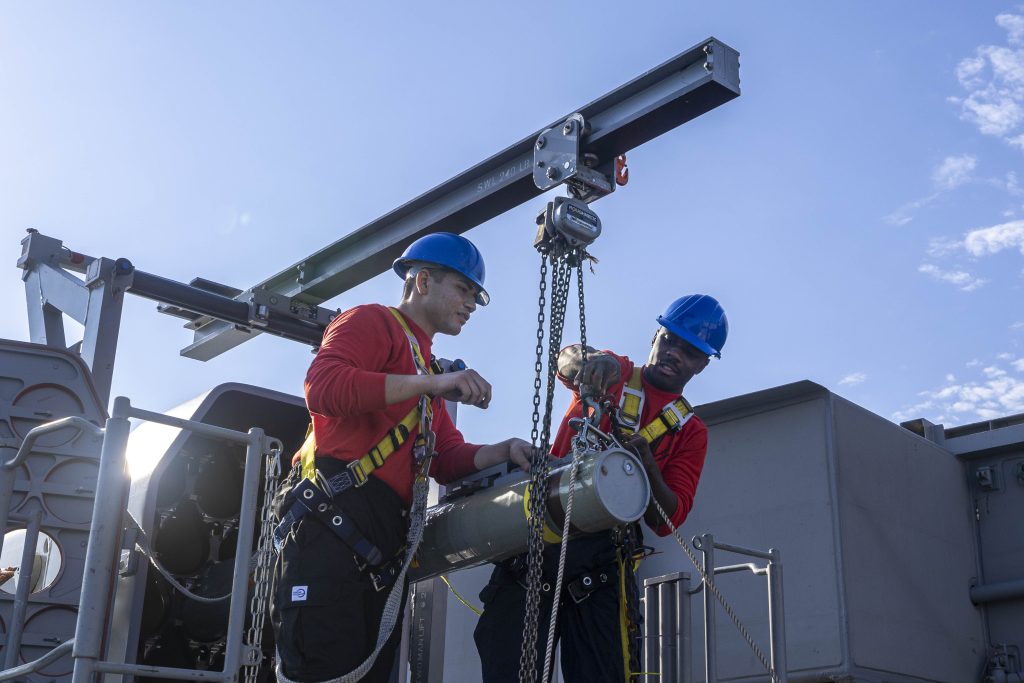
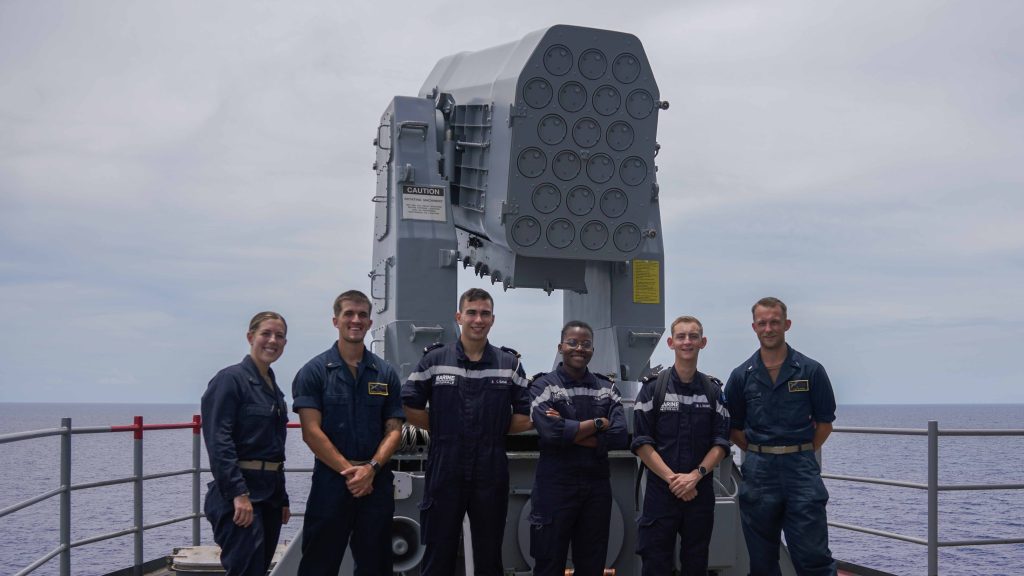
- Lightweight and responsive: RAM missiles are relatively small; the launcher is a 21-cell system that can fit on a variety of ships.
- Autonomous after launch: No need for shipboard illuminators — once launched, RAM guides itself to the target.
- High kill probability: According to test data, RAM has demonstrated very high “first-shot” effectiveness against sea-skimming and maneuvering threats.
Over the decades, RAM has evolved through multiple blocks and launcher configurations, each improving its guidance, lethality, and adaptability to modern naval threats.
Here’s a breakdown of the main variants and their enhancements:
| Variant | Purpose or Upgrade | Key Features |
| Block 0 (RIM‑116A) | Baseline, original operational version | RF midcourse + IR terminal guidance; uses control surfaces and a rolling airframe |
| Block 1 (RIM‑116B) | Improved seeker and counter-countermeasure capability | Adds “IR all‑the‑way” mode, enabling the missile to rely solely on IR if needed; better resistance to electronic countermeasures |
| Block 1A (Helicopters, Aircraft, and Surface or HAS mode) | Expanded target set | Software upgrade to engage HAS targets, not just missiles |
| Block 2 (RIM‑116C) | Enhanced performance versus modern, highly maneuvering threats | Features a more powerful motor, a four-canard control section (instead of two), and an evolved RF receiver to detect low-probability-of-intercept threats |
Evolving the Shield: Origins of RAM
The missile was developed in response to a specific and growing Cold War era problem: modern anti-ship missiles were getting faster, smarter, and harder for naval guns and older missile systems to stop.
Here’s what provoked its development:
- The rise of high-speed, sea-skimming anti-ship missiles in the 1970s (such as the Soviet Styx and later, more advanced models) made traditional naval guns and older point-defense systems increasingly ineffective.
- Navies needed a reaction-fast, close-in interceptor that could autonomously track and destroy incoming threats in the final seconds before impact — something guns often couldn’t guarantee.
- The US Navy and West Germany recognized that existing ship defenses were either too slow, too complex, or too limited in range, especially against maneuvering or supersonic threats.
- There was also a push for a system that required minimal operator input once launched — a truly fire-and-forget point-defense missile to reduce crew workload in high-pressure situations.
RAM on the Global Stage: Strategic Impact
RAM is not just a US system. It’s fielded by a number of navies around the world, underlining its strategic value:
- US Navy: Deployed on many ship classes, including amphibious assault ships, aircraft carriers, and littoral combat ships.
- Germany: A co‑developer and key user.
- Other navies: Countries such as Japan, South Korea, Greece, Turkey, Egypt, the UAE, and Mexico also operate RAM on various vessels.
Beyond the US fleet, RAM enhances the protection of key regional and expeditionary forces, strengthens multinational interoperability, and reinforces collective deterrence. Its widespread deployment demonstrates not only technical reliability but also strategic influence.
The RAM’s Future Trajectory
While RAM is already mature and widely deployed, its evolution continues: Block 2 represents a major leap in capability, keeping the system relevant against future high-speed, maneuvering sea-skimming threats.
Potential future evolutions might include:
- Further seeker improvements (better IR sensitivity, more resistance to countermeasures)
- Integration with newer Close‑In Weapon Systems or automated defense networks
- Adaptation to new threat profiles, including swarming missiles or unmanned aerial threats
The Rolling Airframe Missile stands out as a nimble, effective, and continuously modernized layer of shipboard self-defense.
Through co‑development and iterative upgrades, RAM has evolved from a “just-in-case” point-defense missile into a cornerstone of naval survivability.
Its blend of rolling flight, dual-mode guidance, and compact launcher design ensures it remains relevant — but it will need to keep innovating as anti-ship threats become faster, stealthier, and more complex.