The European Union has launched a call for proposals to study and design a stealth-enabled future multirole light aircraft capable of operating across diverse operational environments.
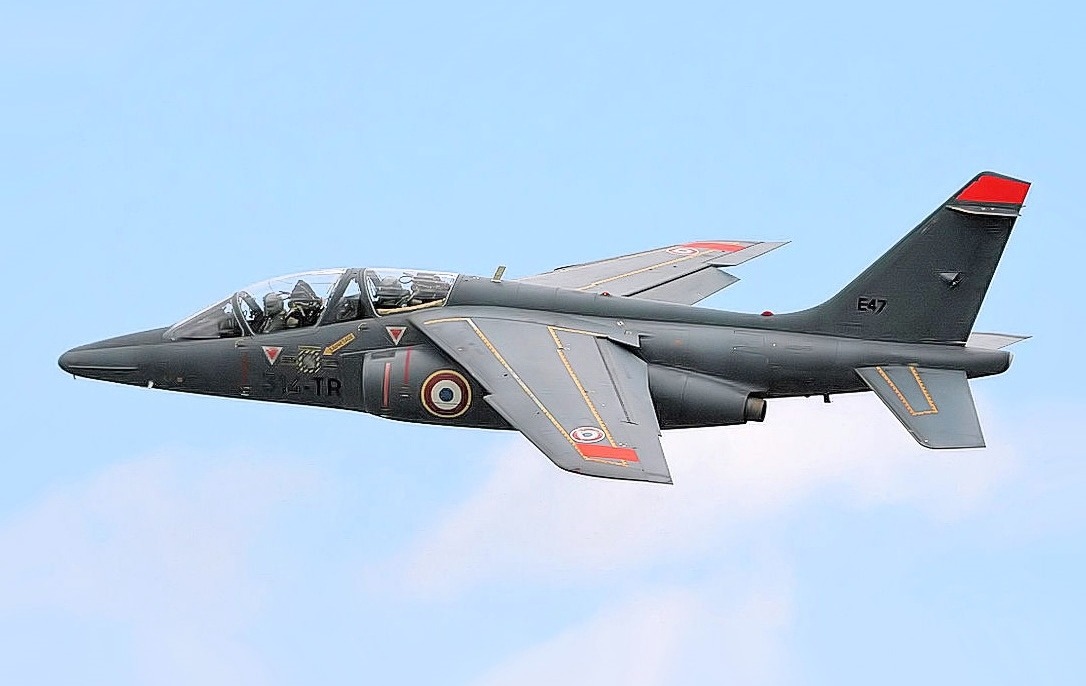
The 15-million-euro ($17.50-million) initiative aims to address a capability gap created by the aging fleet of European light multirole aircraft, many of which have been in service for 30 to 40 years, such as the Dassault Alpha Jet.
Light multirole or light attack aircraft offer a cost-effective alternative to jets for asymmetric warfare and are well suited for operations from austere locations with limited infrastructure.
Armed with precision-guided munitions, the future jet is expected to conduct air-to-ground missions including light attack, drone interception, close air support, as well as intelligence, surveillance, and reconnaissance.
“Beyond its core military role, the light multirole aircraft has to offer a platform that can be easily converted to meet civil security and EU internal needs, typically SAR (search and rescue), border surveillance and natural disaster relief missions,” a European Commission notice stated.
To Address Future Requirements
The study will assess light multirole aircraft replacement needs for the 2035-2040 timeframe and identify European development opportunities among European Defence Fund members and associated states.
For the first time, visibility reduction is being considered as a feature for a light aircraft, reflecting the growing sophistication of detection technologies.
According to the requirements, the aircraft is expected to incorporate radiation-absorbing paints and coatings to reduce its signature. However, the requirements do not specify airframe shaping or other design features typically associated with enhanced stealth performance.
The aircraft is also expected to incorporate measures to counter electronic interference, including protection against electromagnetic pulse effects, and to enable manned-unmanned teaming.
Expected Features
The turboprop-powered aircraft is expected to have a maximum takeoff weight of 7,500 kilograms (16,535 pounds) and short take-off and landing capabilities.
It should be capable of operating in harsh and performance-degrading environments, including sandy, dusty, saline, stormy, hot and humid, and extremely cold conditions, as well as high winds, heavy rainfall, and mountainous terrain.
The aircraft is expected to operate using both existing and advanced coastal and littoral communications networks, and be able to detect, localize, and engage targets in teamed or collaborative operations under human operator supervision.