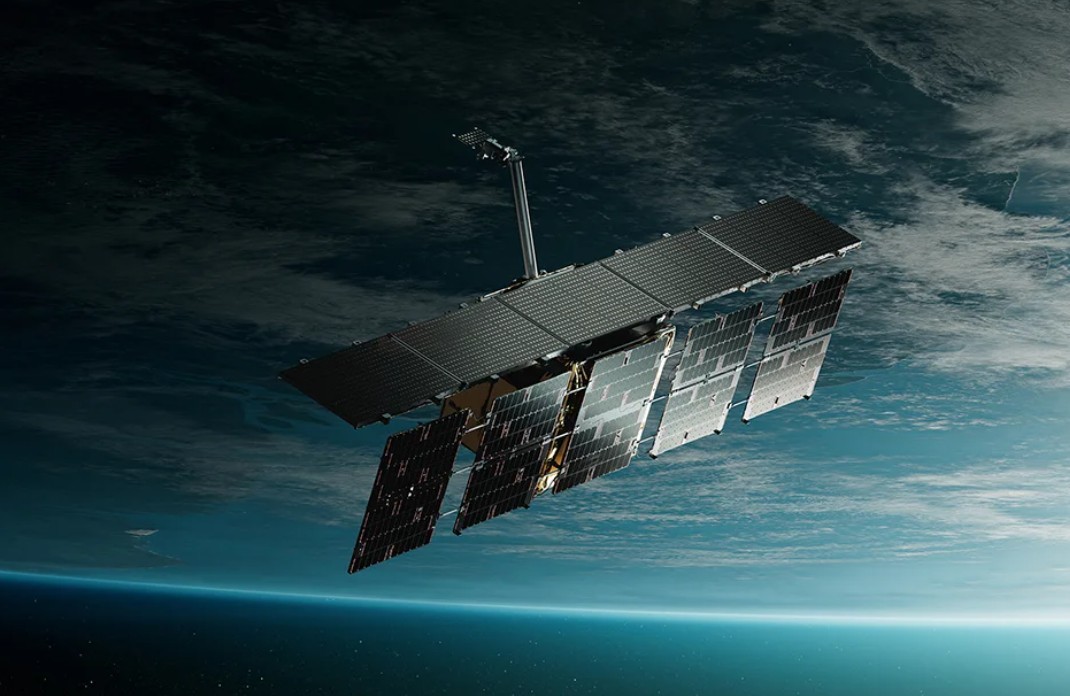
Rheinmetall and ICEYE have secured a German Armed Forces contract worth 1.7 billion euros ($1.9 billion) to provide space-based reconnaissance data through exclusive access to a synthetic aperture radar (SAR) satellite constellation.
The program is scheduled to run from late this year through 2030, with options for extension, and will be managed by the joint venture Rheinmetall ICEYE Space Solutions based in Neuss, Germany.
Under the agreement, the Federal Office of Bundeswehr Equipment, Information Technology and In-Service Support has tasked the joint venture with delivering a high daily volume of SAR imagery from a sovereign constellation owned and operated by Rheinmetall ICEYE Space Solutions.
Data will primarily support the protection of Germany’s Lithuania Brigade and contribute to NATO’s eastern flank security.
The contract also covers end-to-end services, including satellite operations, ground station management, and AI-assisted image analysis.
“By uniting rapid satellite production with advanced analytics, we are creating a new model for how nations secure strategic and tactical advantage from space,” stated Rafal Modrzewski, CEO and co-founder of ICEYE.
“We are driving a necessary evolution where single, vulnerable systems are replaced by resilient constellations that deliver timely, actionable insights directly to decision-makers when they’re needed most,” added Modrzewski.
SAR Satellites
Production of the first jointly operated SAR satellites is scheduled to begin late next year at the Neuss facility.
The program is designated the SAR Space System for Persistent Operational Tracking – Stage 1, with satellites operating in low Earth orbit at up to 600 kilometers (373 miles).
SAR technology uses radar rather than sunlight, enabling day-and-night, all-weather imaging through clouds, rain, and dust.
The system provides frequent revisit rates, detects subtle ground changes, and delivers imagery with a resolution as low as 16 centimeters (6.3 inches), supporting persistent monitoring of dynamic operational environments.