In the post-Cold War era, the demand to reduce collateral damage, cut sortie numbers, and stretch budgets drove engineers to design a simple add-on kit rather than an entirely new weapon.
The result: a guidance package small enough to bolt onto an existing bomb but sophisticated enough to steer that bomb onto a laser-illuminated aim point with surgical precision.
This short explainer walks you through the GBU-12’s origin, the hardware and guidance logic that make it work, and the strategic role it continues to play as forces modernize.
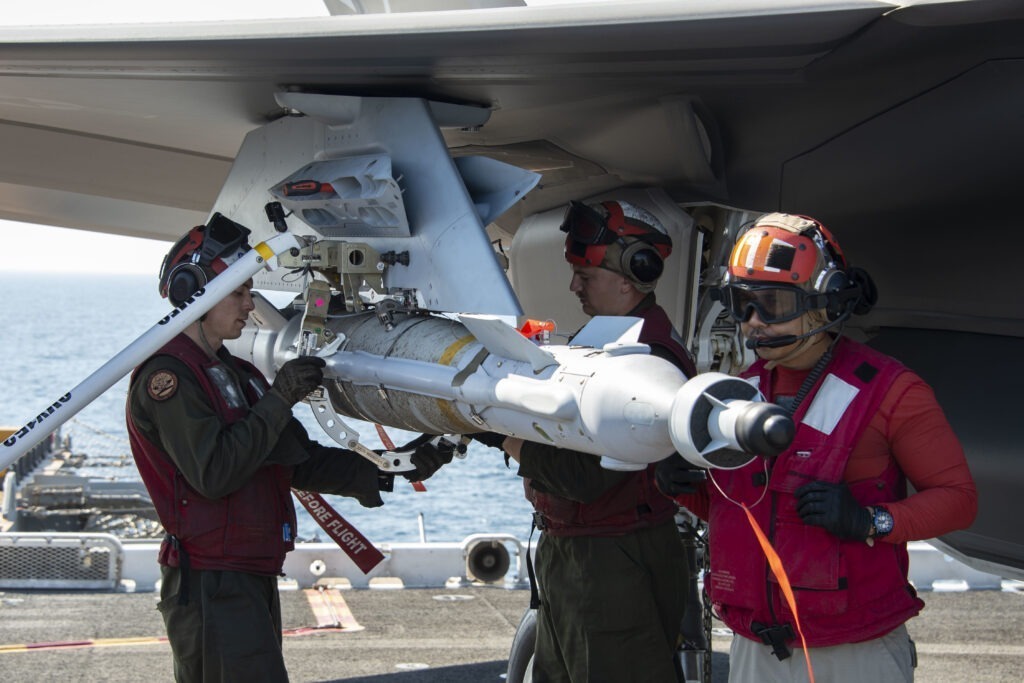
What Is GBU-12?
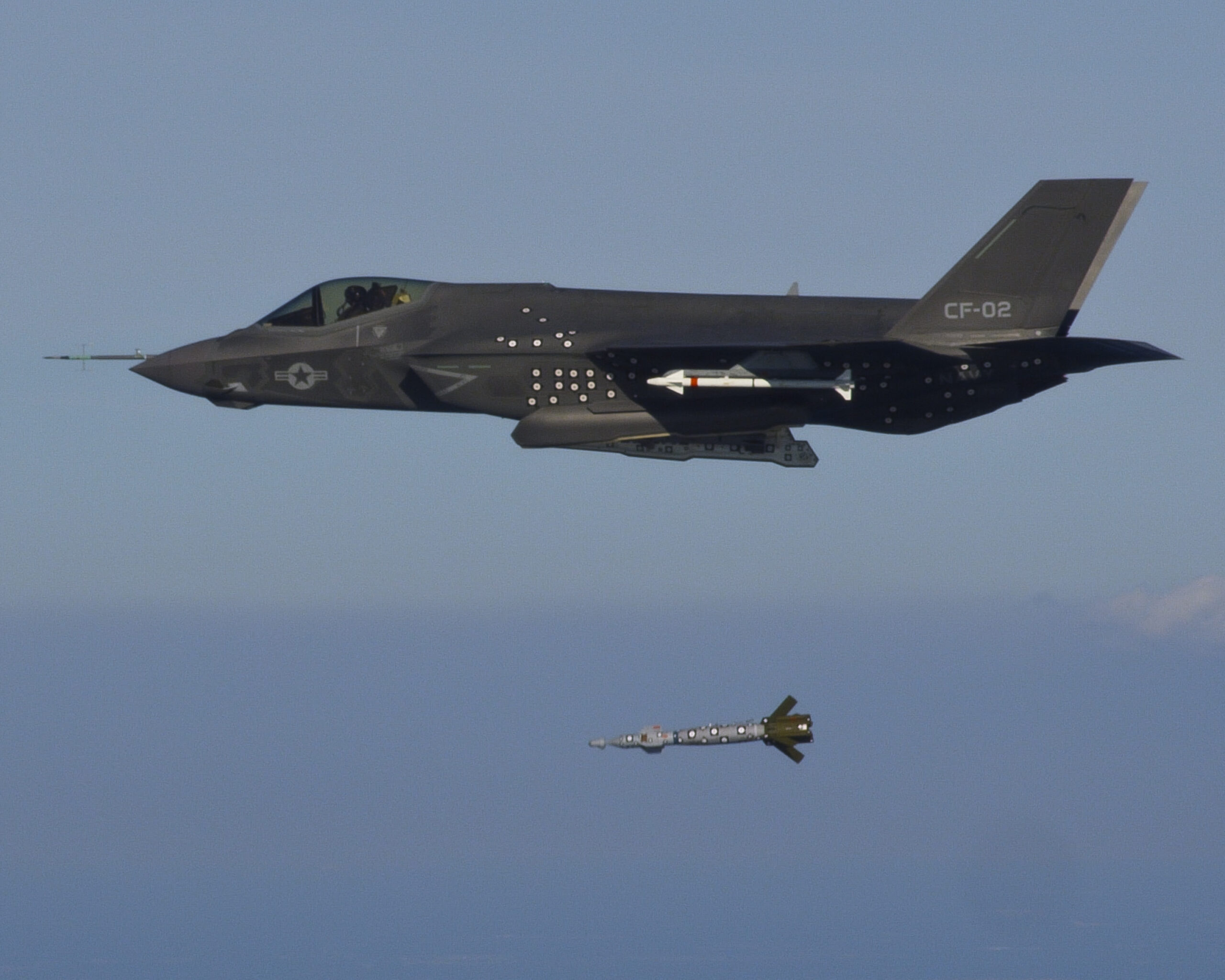
The GBU-12 Paveway II is part of Lockheed Martin’s Paveway series, wherein it attaches to Mk- and BLU-series warheads to convert them into laser-guided bombs.
The concept grew from demand for a low-cost way to improve accuracy without redesigning warheads or aircraft.
Instead of building an entirely new missile, engineers created a compact computer control group and air foil group that bolts onto existing gravity bombs, giving commanders a dramatic increase in first-shot effects.
Paveway II rose to prominence in the post-Cold War era when precision and reduced collateral damage became operational priorities; its ability to convert stockpiled Mk-series bombs into precision munitions made it valuable across many conflicts and coalition operations.
The Paveway II Plus iteration modernized that package with field-programmable electronics and robustness upgrades, keeping the kit relevant as aircraft and mission sets evolved.
| Category | Details |
| Type | Laser-guided bomb, part of the Paveway II family |
| Guidance | Semi-active laser homing; requires laser designation from aircraft, drone, or ground controller |
| Warhead | Mk-82 general-purpose bomb (500 pounds/227 kilograms) |
| Total Weight | Approximately 565 pounds (256 kilograms), depending on configuration |
| Length | Around 10 feet and 9 inches (3.3 meters) |
| Diameter | 10.75 inches (27.3 centimeters) |
| Range | Typically 5 to 7.5 miles (8 to 12 kilometers) when dropped from altitude; shorter from low-altitude releases |
| Accuracy | Circular Error Probable (CEP) is roughly 10 to 16 inches (25 to 42 centimeters) with proper designation |
| Platforms | Compatible with a wide range of aircraft: F-16, F/A-18, A-10, F-15, Mirage 2000, Rafale, Typhoon, and many drones |
| Introduced | Late 1970s; continuously upgraded |
| Manufacturer | Originally developed by Texas Instruments; later by Lockheed Martin and Raytheon |
| Key Features | Low cost, high reliability, modular design, compatibility with NATO aircraft, proven in combat across multiple conflicts |
| Operational Use | Widely used in Desert Storm, Afghanistan, Iraq, Libya, Syria, and various counter-terrorism operations |
| Notable Limitations | Weather/obscurants degrade laser designation; requires continuous laser spot tracking; susceptible to countermeasures that break line-of-sight |
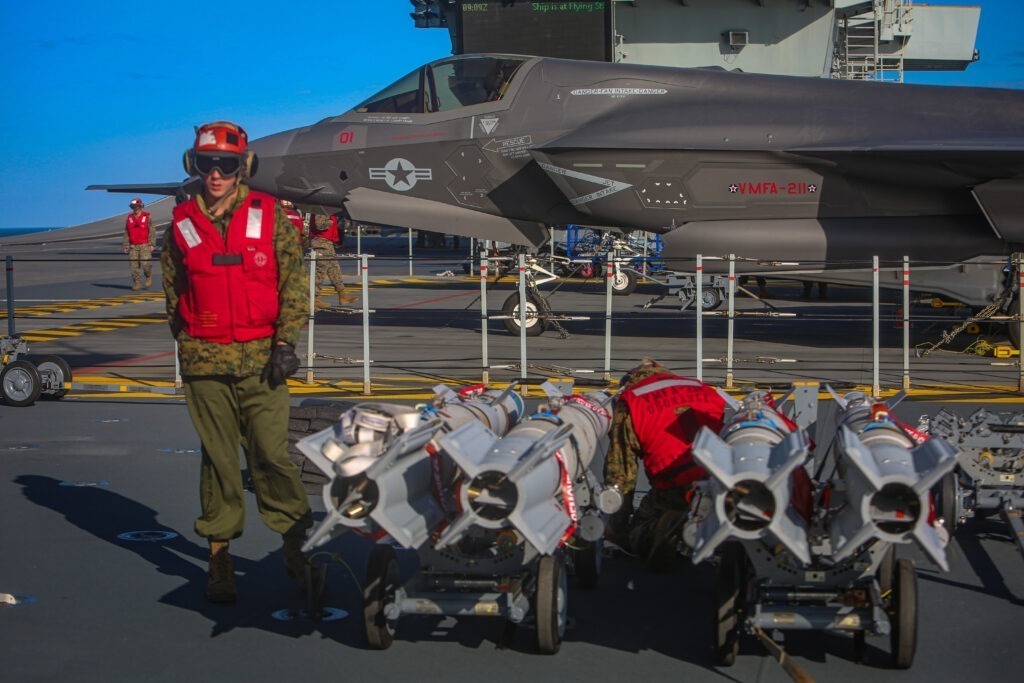
How GBU-12 Works
At its core, the GBU-12 is a simple idea executed with reliable mechanics and electronics. The warhead (such as an Mk-82 or BLU-109) provides the explosive effect while the Paveway II guidance kit supplies the brains and flight surfaces.
When a target is designated by a laser designator on the launching aircraft, a ground team, or another platform, the bomb’s semi-active laser seeker looks for laser energy reflected off the aim point.
The seeker converts the reflected pulse into guidance information for the computer control group (CCG), which, for Paveway II laser-guided bombs, is the MAU-209D/B.
The CCG then interprets the seeker input and commands the pneumatically controlled canards to steer the weapon toward the illuminated spot. An air foil group with extendable wings deploys after release to add lift and stability, giving the bomb greater range and a more forgiving glide path than simple tail-controlled designs.
Practical design choices improve reliability and maintenance: a glass detector lens resists pitting more than plastic, aluminum detector housing prevents moisture intrusion, and the field-programmable CCG allows easy software updates without a deep depot-level overhaul.
The result is a low-cost precision package that integrates with existing logistics, test sets, and aircrew tactics without requiring changes to aircraft software or ballistic tables.
| Weapon | Warhead Class | Total Weight | Typical Range | Accuracy | Best Use Case | Key Distinction |
| GBU-12 Paveway II | 500-pound (226.7 kilogram) Mk 82 | ~565 pounds (256 kilograms) | 5 to 7.5 miles (8 to 12 kilometers) | ~9.8 to 16.4 feet (3 to 5 meters) CEP | Precision strike on light/medium targets | Smallest, most adaptable bomb |
| GBU-10 Paveway II | 2,000-pound (907 kilogram) Mk 84 | ~2,103 pounds (954 kilograms) | 5 to 7.5 miles (8 to 12 kilometers) | ~9.8 to 16.4 feet (3 to 5 meters) CEP | Engage large, hardened, or deeply buried targets | Significantly heavier; delivers greater blast and penetration |
| GBU-16 Paveway II | 1,000-pound (453.5 kilogram) Mk 83 | ~1,120 pounds (508 kilograms) | 5 to 7.5 miles (8 to 12 kilometers) | ~9.8 to 16.4 feet (3 to 5 meters) CEP | Mid-tier targets where GBU-12 lacks punch and GBU-10 is excessive | Middle-weight option |
| GBU-49 Enhanced Paveway II | 500-pound (227 kilogram) dual-mode GBU-12 upgrade | ~570 pounds (259 kilograms) | ~15 to 20 kilometers (9.3 to 12.4 miles); GPS/INS allows a more flexible release | ~43 to 62 feet (13 to 18.8 meters) (GPS/INS) | Striking, moving, or obscured targets; all-weather use | Adds GPS/INS for target engagement |
Strategic Impact and Future Use
The Paveway II’s biggest strategic contribution is cost-effective precision.
By upgrading legacy bombs instead of procuring entirely new missiles, militaries can increase target effectiveness and reduce the sorties required to achieve the same effect, saving time and money, and reducing risk to noncombatants.
Interoperability is another advantage. Paveway II Plus works across US Air Force and Navy manned and unmanned platforms and with international aircraft certified to carry laser-guided bombs, keeping coalition logistics straightforward.
Looking forward, the field-programmable nature of the MAU-209D/B CCG and the kit’s compatibility with a wide range of warheads and aircraft mean the Paveway II family can absorb incremental capability improvements.
That makes it a pragmatic bridging technology while more expensive or specialized precision munitions are developed.
Its continued relevance will come from upgrades to seeker sensitivity, software improvements that refine target engagement modes, and expanded integration with unmanned platforms and networked targeting sources.
The GBU-12 Paveway II remains a workhorse: not the flashiest weapon system, but one that delivers precise effects affordably and reliably — and that, for many planners, is exactly the point.