L3Harris Technologies has signed a subcontract to deliver support services for the US Air Force’s Survivable Airborne Operations Center (SAOC) program.
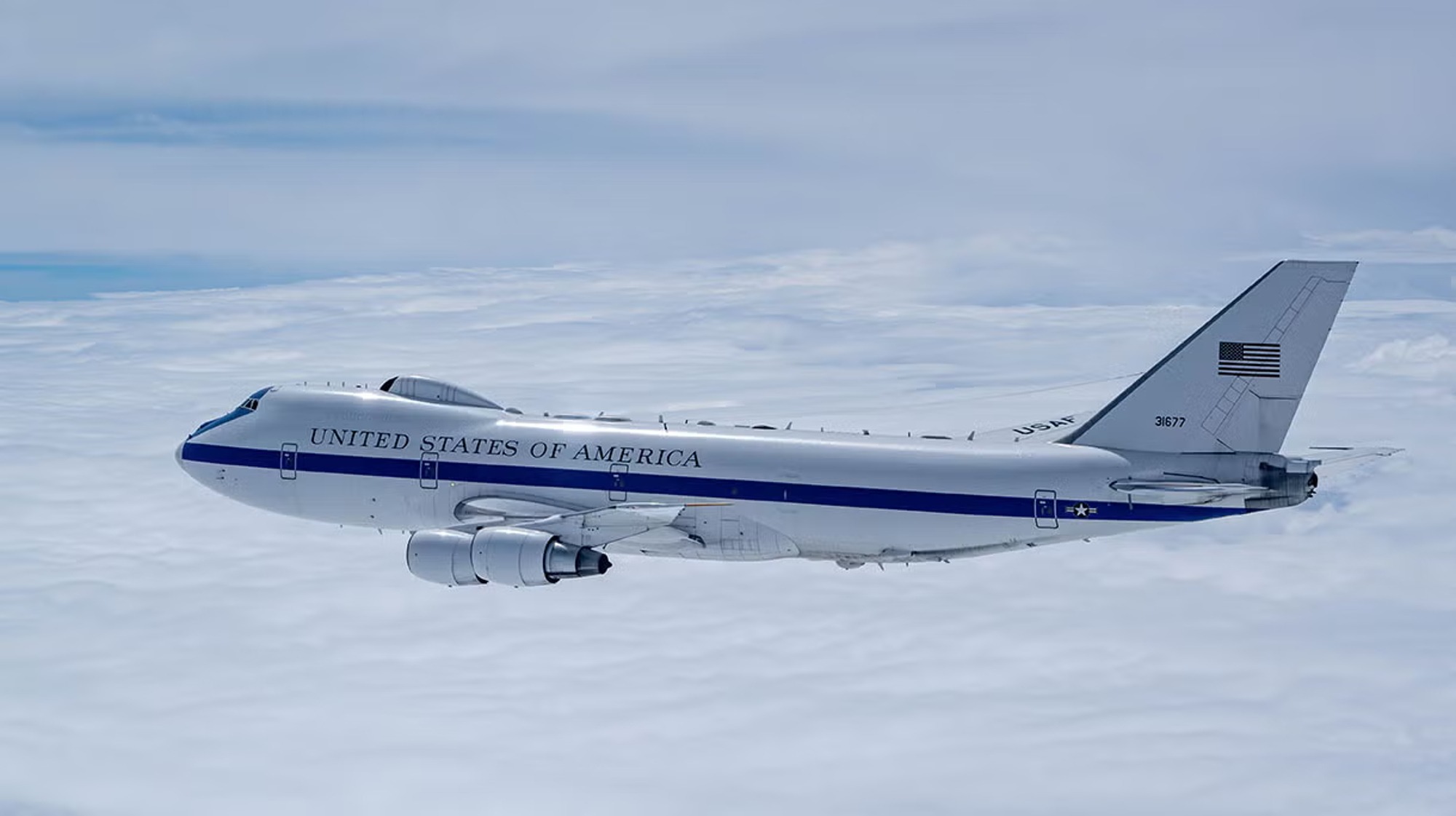
Led by Sierra Nevada Corporation (SNC), SAOC replaces the service’s 1980s-era E-4B Nightwatch planes, a militarized version of the Boeing 747-200, in their roles to maintain command, control, and communications between top US officials in the event of a national emergency or nuclear fallout.
Resulting systems from the $13-billion program will be designated as the E-4C “Doomsday” aircraft based on the Boeing 747-8i Intercontinental commercial airliners, slated for completion through 2036.
‘Seamless’ Integration
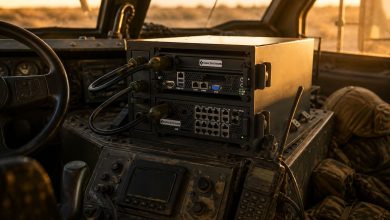
Under the agreement, L3Harris will aid SNC’s engineering and manufacturing partner Collins Aerospace in integrating communication solutions into the E-4C planes.
The selected suite will be in the latest “resilient” configuration to sustain and enhance the specialized fleet’s connectivity across air, ground, and space domains.
L3Harris will draw on more than 15 years of experience supporting the E-4B fleet, including work on wideband communications upgrades, to deliver new technologies for high-priority command-and-control missions.
The company’s performance will also build on its continuous airborne capability support for other US Department of Defense initiatives, including the Advanced Battle Management System and Next-Generation Jammer – Low Band programs.
It will also leverage experience in supplying modern electronic warfare kits for the F-16 Falcon, EA-37B Compass Call, and B-2 Spirit fleets.
“L3Harris will provide upgraded, state-of-the-art capabilities to ensure the E-4C fleet can successfully execute any mission,” L3Harris Broadband Communications Systems President Lauren Barnes said.
“Our open-system technology and vast portfolio of resilient waveforms will support seamless software upgrades and longevity for this vital program well into the future.”