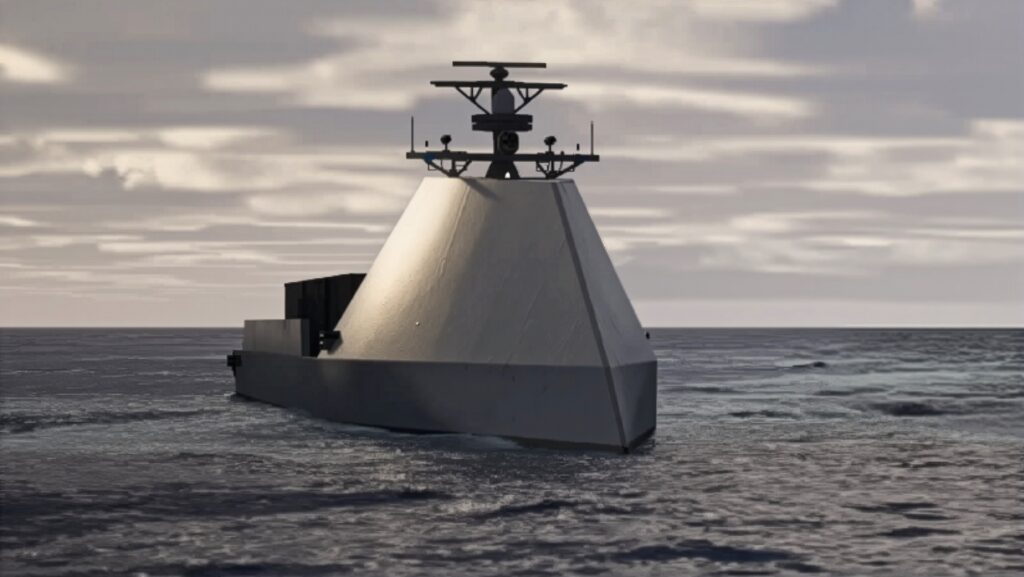
Huntington Ingalls Industries (HII) is advancing the development of a ROMULUS prototype, its new unmanned surface vessel (USV) family.
The vessel, currently around 30 percent complete, is scheduled for sea trials in late 2026.
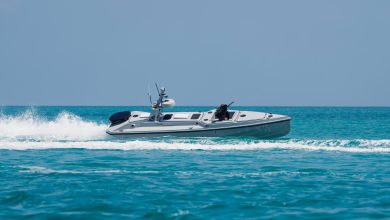
The ROMULUS USVs are designed for high-endurance, open-ocean operations to support the US Navy, Marine Corps, joint forces, and allied partners.
Capabilities include intelligence, surveillance, and reconnaissance, as well as counter-drone missions.
The vessels also support mine countermeasures, strike missions, and the launch and recovery of unmanned underwater and aerial vehicles.
“ROMULUS is progressing at a pace that reflects the urgency of the mission and the strength of our partnerships,” said Andy Green, president of HII’s Mission Technologies division.
Green described the system as “a platform that brings scale, autonomy, and real operational advantage.”
ROMULUS
The ROMULUS vessels can reach speeds of over 25 knots (46 kilometers/29 miles per hour) and have a range of up to 2,500 nautical miles (4,630 kilometers/2,880 miles).
Each vessel measures approximately 190 feet (58 meters) in length.
The systems are capable of manned and unmanned teaming for tasks such as refueling and resupply.
At the core of ROMULUS is Odyssey, HII’s AI-driven control suite, which can manage individual vessels or coordinated swarms.
Featuring an open architecture, ROMULUS can integrate new sensors, payloads, and autonomy technologies over time.
The vessels incorporate technologies from Shield AI, Applied Intuition, and C3 AI to enhance autonomous performance and sustainment.
In November, HII and Shield AI conducted a dual-autonomy integration test for the USV system, running Shield AI’s Hivemind mission autonomy software alongside HII’s Odyssey suite.