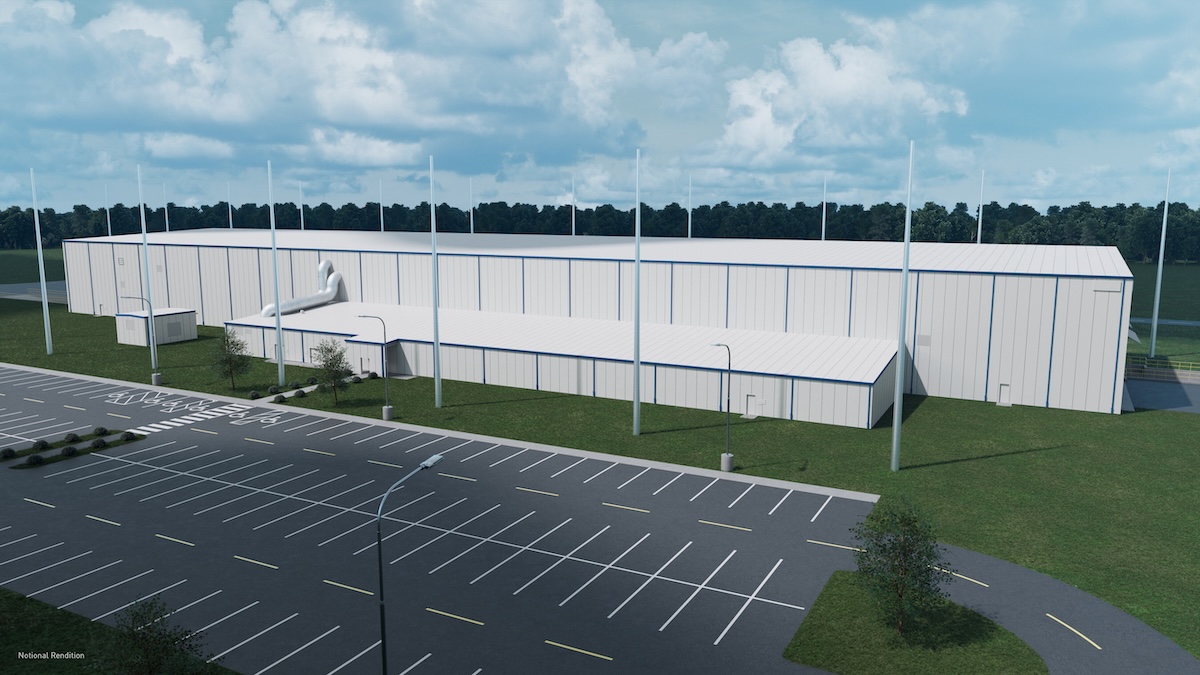
Lockheed Martin is approaching the completion of a facility dedicated to high-volume production of the US military’s Next Generation Interceptor (NGI).
The incoming Missile Assembly Building-5 (MAB-5) in Courtland, Alabama, spans 88,000 square feet (8,175 square meters) and is expected to be completed by early 2026.
MAB-5 will draw on lessons from previous high-reliability programs, such as the Terminal High Altitude Area Defense (THAAD) system, using advanced digital engineering tools, including digital twins, model-based systems engineering, and virtual testing and validation.
This approach helps minimize risk while accelerating delivery, as data-driven decision-making, as well as digital models and simulations, enable optimized performance and the early detection and mitigation of potential issues.
As the NGI forms the backbone of a multilayered integrated national defense system, the MAB-5 was designed for performance, manufacturability, reliability, and speed, according to Johnathon Caldwell, VP and general manager of Strategic and Missile Defense Systems at Lockheed Martin.
“The new Missile Assembly Building represents a major investment in our ability to produce the NGI at scale and meet the government’s need for rapid delivery,” he added.
It will work alongside Lockheed’s Troy, Alabama, facility, which will support the NGI’s hardware integration and large-scale manufacturing.
The NGI Program
The NGI is a US Missile Defense Agency program to replace current ground-based interceptors to defend against complex and long-range ballistic missile threats.
In April 2024, the agency selected Lockheed to develop the NGI under an approximately $17.7-billion contract, with initial operational capability expected by fiscal 2028.
Lockheed is working with several defense contractors on the program, including L3Harris segment Aerojet Rocketdyne for the NGI’s propulsion, Voyager Space for the advanced upper-stage solid-propulsion subsystem, and Northrop Grumman for the target vehicle.