Defense firm Elsight has been selected by the US Defense Innovation Unit (DIU) to enter Phase 3 of Project GI.
This development follows a successful Phase 2, in which its HALO multilink communication system demonstrated reliable performance for uncrewed systems in contested operational environments.
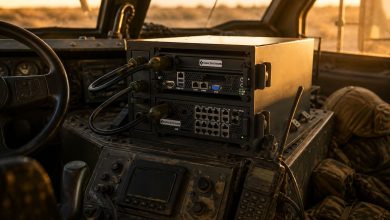
The HALO platform integrates cellular, satellite, and RF links into a single, secure communications tunnel, ensuring continuous command-and-control and real-time data transfer, even under electronic warfare conditions.
Its platform-agnostic design allows integration with a wide range of commercial and military drones, enabling operational flexibility without requiring hardware modifications.
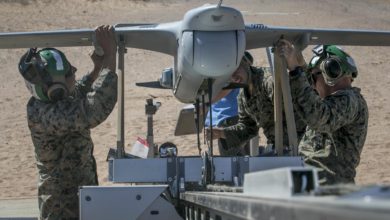
During Phase 2 evaluations, Elsight demonstrated HALO’s ability to maintain uninterrupted connectivity across multiple uncrewed aerial systems (UAS) simultaneously, a critical requirement for tactical operations involving the rapid deployment of swarms or distributed uncrewed assets.
With the Phase 3 selection, Elsight will receive additional funding to further demonstrate and validate HALO across real-world scenarios, including extended operations in denied or jammed communication environments.
The Relevance of Project GI
Project GI and its Design Reference Mission 2 (DRM2) Prize Challenge are part of the DIU’s push to rapidly deploy mature, mission-ready UAS technologies across military operations.
DRM2 specifically seeks connectivity, autonomy, and communications systems that can sustain uncrewed platforms in contested and denied environments, enabling persistent command, control, and data flow, even when standard links are jammed or degraded.
Beyond Project GI, the DIU runs several parallel efforts to innovate around uncrewed systems. One major program is the Blue UAS Refresh Challenge, which evaluates commercial UAS and components to validate for use by the Department of Defense.
In the counter‑drone space, the DIU has launched the C‑UAS Low‑Cost Sensing Challenge to find scalable, affordable systems for detecting and tracking hostile UAS, essential for homeland defense.
Additionally, the DIU’s Artemis program is testing single-use, long-range “one-way” drones with companies such as Dragoon and AeroVironment. These low-cost, expendable systems are being designed to operate even with limited communication bandwidth and under jamming, making them useful for mass deployment.