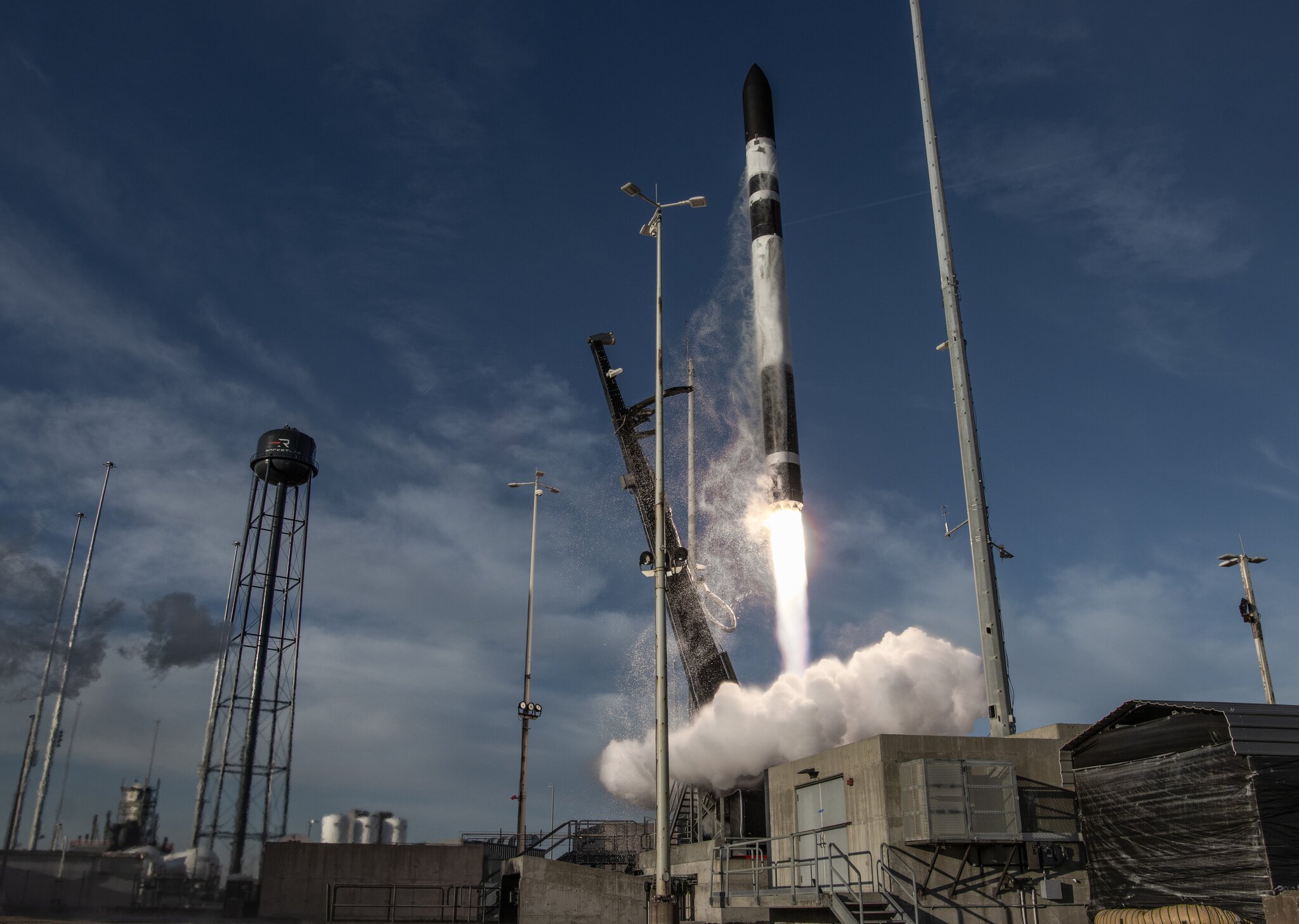
Rocket Lab Corporation has conducted a suborbital mission with its HASTE launch vehicle for the US Defense Innovation Unit (DIU) and the Missile Defense Agency.
According to the company, the mission supports national defense objectives by testing advanced missile defense technologies.
Taking place from Rocket Lab Launch Complex 2 on Wallops Island, Virginia, the launch was part of the DIU’s Hypersonic and High-Cadence Airborne Testing program supporting evaluation of hypersonic technologies.
The mission carried a primary payload developed by the Johns Hopkins University Applied Physics Laboratory and multiple secondary payloads from federal and industry partners.
It occurred within 14 months of contract signing, using a commercial liquid launch vehicle to carry out developmental and risk-reduction tests.
The operation was Rocket Lab’s sixth launch of its HASTE rocket since its debut in 2023.
HASTE System
HASTE is a suborbital, liquid-fueled launch vehicle with adjustable engine power, used for testing hypersonic technologies and conducting suborbital missions.
It supports repeated flights for evaluating new systems and payloads.
The rocket’s third stage, its final section, steers the vehicle and makes sure payloads are released at the correct altitude, speed, and flight path.
The vehicle is built with carbon fiber composite structures and uses Rutherford engines produced via 3D printing.
It can carry payloads of up to 700 kilograms (1,540 pounds) on customized trajectories, supporting air-breathing, glide, and ballistic tests, as well as technologies for re-entry from space.
HASTE can deploy payloads at speeds ranging from 3 kilometers (1.86 miles) per second to over 7.5 kilometers (4.66 miles) per second.
Payloads can be released at altitudes starting around 80 kilometers (approximately 50 miles) and higher.