GA-ASI Completes Third Round of Fatigue Testing on MQ-9B Airframe

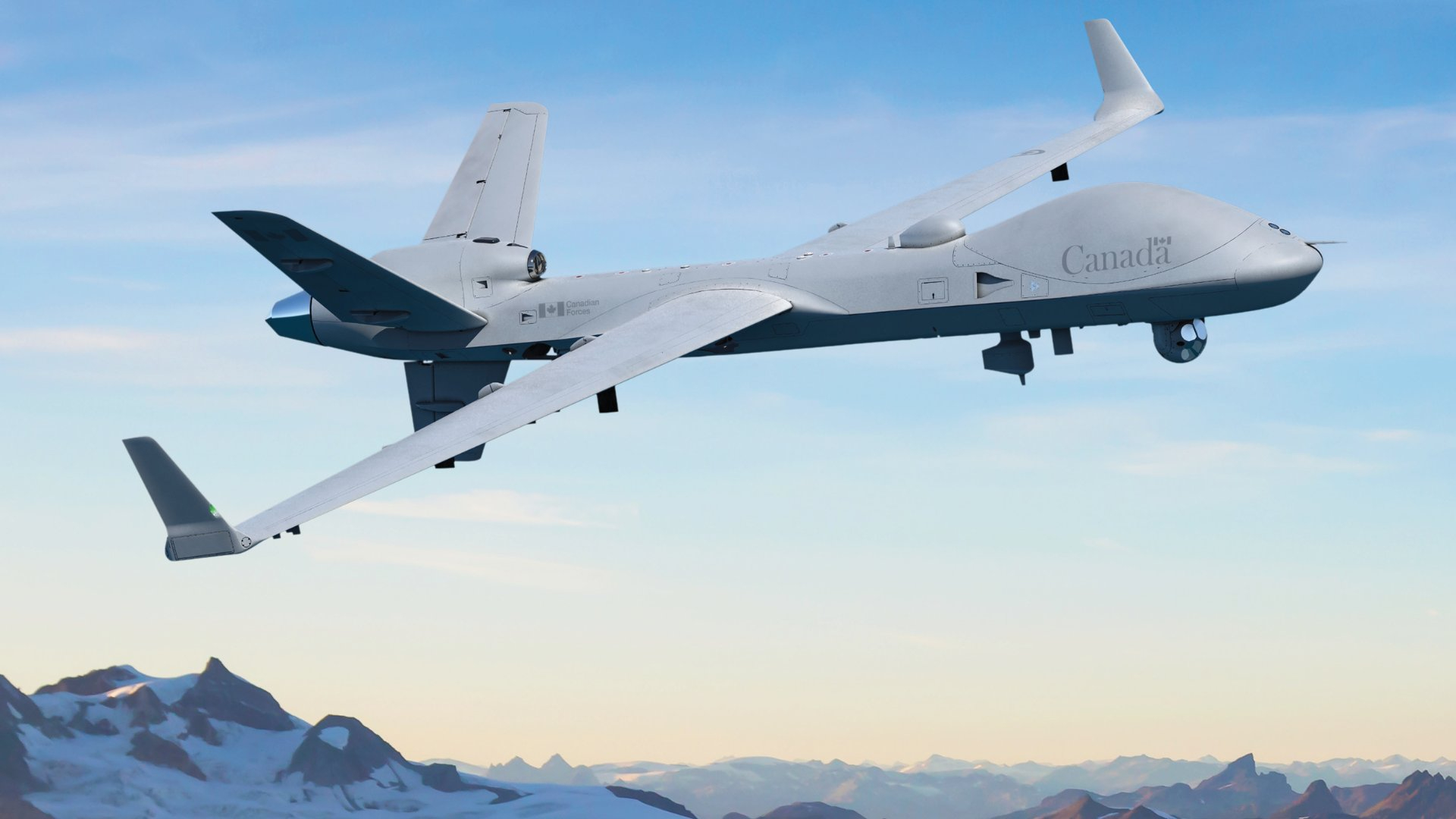
General Atomics Aeronautical Systems has completed the final phase of full-scale fatigue testing on its MQ-9B drone, marking a key step toward long-term airworthiness certification.
The latest test cycle — finished on October 31 and conducted at Wichita State University’s National Institute for Aviation Research — simulated a cumulative 120,000 operating hours.
That total represents three full service lives for the drone, with each life equating to more than 40,000 flight hours.
Full-scale fatigue testing is widely used across the aviation sector to identify potential structural weaknesses, refine maintenance schedules, and support certification work.
GA-ASI said the first two simulated lifetimes reflected normal operational use, while the third introduced deliberate structural damage to evaluate how the airframe performs under degraded conditions.
Data from the campaign will support NATO STANAG 4671 airworthiness certification and guide future in-service inspection requirements.
The airframe used for testing was a production model built specifically for the effort, which began in December 2022.
MQ-9B Drone
The MQ-9B is the latest evolution of GA-ASI’s long-endurance unmanned aircraft family, first fielded by the US Air Force in the mid-2000s.
The variant includes the SkyGuardian and SeaGuardian models, as well as the UK Royal Air Force’s Protector RG Mk1, now entering delivery.
Several international customers — including Belgium, Canada, Japan, Taiwan, Poland, India, Denmark, and US Special Operations Command — have also placed procurement orders.
MQ-9B aircraft have increasingly appeared in US Navy and joint exercises such as Northern Edge, RIMPAC, and Integrated Battle Problem, reflecting growing interest in long-range surveillance, maritime domain awareness, and multi-environment ISR capabilities across allied forces.