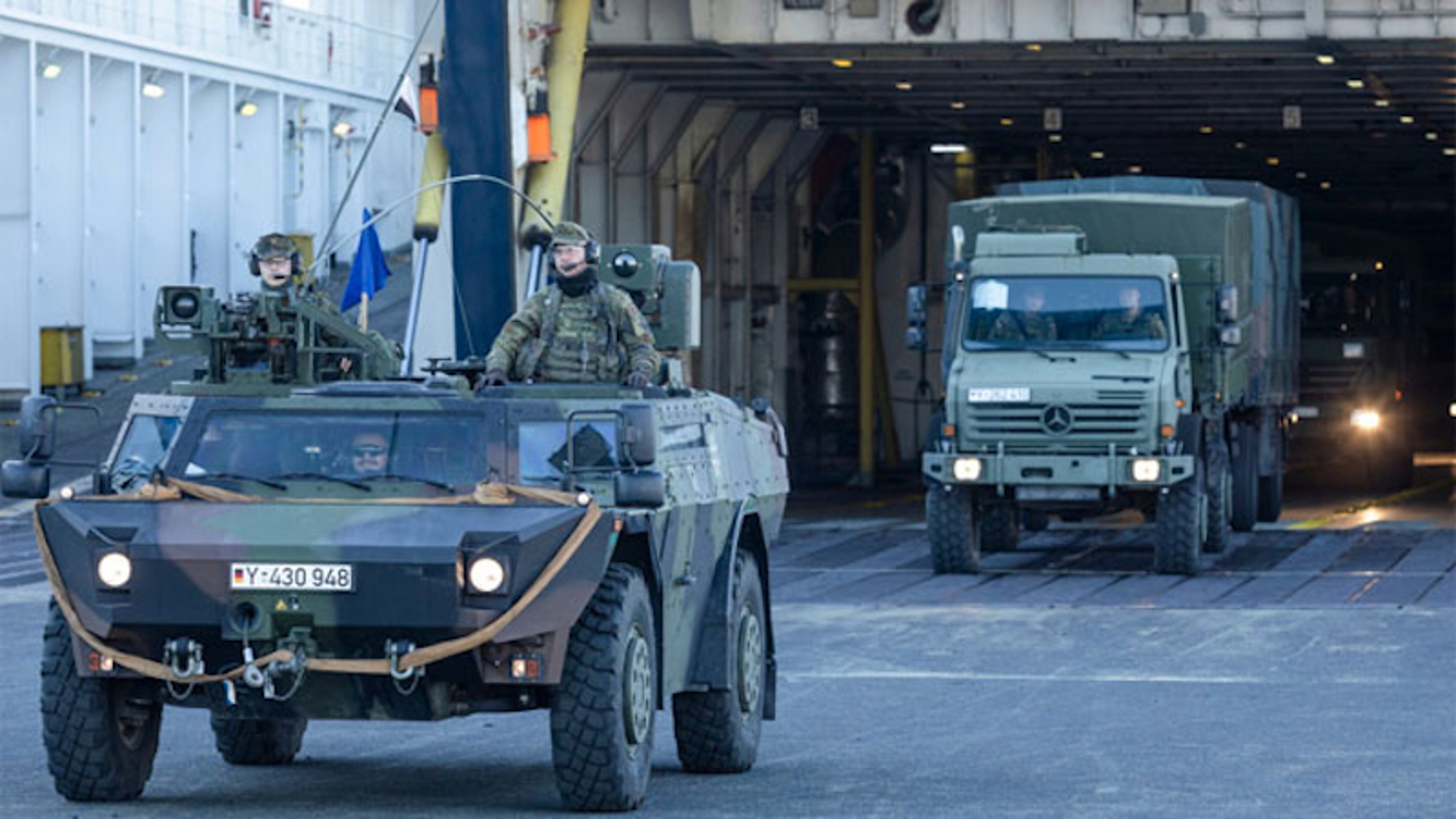
Eight European Union member states have signed a letter of intent aimed at streamlining military mobility across the continent.
Initiated in the context of the war in Ukraine, the project is designed to help European allies respond more swiftly to any potential military aggression from the east.
Under the agreement, Belgium, the Czech Republic, Germany, Luxembourg, the Netherlands, Poland, Slovakia, and Lithuania will align their efforts on infrastructure development and introduce joint monitoring, movement coordination, and enhanced information-sharing.
The initiative will build on the existing Netherlands-Germany-Poland model corridor by extending it to the west via Belgium and Luxembourg and to the east via Lithuania, the Czech Republic, and Slovakia.
“The creation of the Central North European Military Mobility Region aims to unify the rules for crossing state borders, ensure joint monitoring and coordination of means of movement, effective exchange of information, synchronization of infrastructure development, and interaction between countries,” a Lithuanian Ministry of National Defence press release stated.
Hurdles
A number of obstacles continue to impede the smooth movement of military platforms across European borders, ranging from regulatory and infrastructure constraints to capability shortfalls.
Regulatory barriers stem from differing national rules and administrative procedures, including permit requirements for military border crossings, limits on vehicle weight and dimensions, and varying customs processes.
Moreover, many European roads, bridges, railways, ports, and airports are not adequately designed to handle the transit of heavy military vehicles or large-scale convoys.
Lastly, the logistical resources of member states vary considerably, creating further challenges for coordinated military mobility.
“Military mobility is an essential part of modern defense,” the Lithuanian Ministry of National Defence press statement added.
“It refers to the ability to move troops, military equipment, weapons, ammunition, and other resources efficiently, quickly, and safely by land, rail, air, and sea.
This requires that infrastructure, vehicles, legal regulations, and logistics are coordinated and operate smoothly.”
Lithuania’s Role
With land borders adjoining Russian-aligned Belarus and the Russian exclave of Kaliningrad, Lithuania is already rolling out infrastructure projects to support the swift movement of military forces.
These measures include adapting the Via Baltica to meet military requirements and advancing the Lazdijai-Alytus-Vilnius road project to enhance the traffic capacity of the Suwałki Corridor.
Lithuania is also investing heavily in upgrades to its internal transport network, ensuring reliable links between permanent deployment sites and its main training grounds in Pabradė and Rūdninkai.
Vilnius also plans to establish a Tri-Baltic Military Mobility Zone, extending the Central Northern European Military Mobility Region toward the north and creating a continuous area that supports rapid military movement and strengthens regional deterrence.
“Smooth military mobility is a national priority for Lithuania. It is ensured by constantly developing infrastructure and coordinating movement, allowing allied forces to move quickly, safely and smoothly,” Lithuanian Minister of National Defence Robertas Kaunas explained.
“Lithuania’s main goal is to strengthen the infrastructure link of NATO’s eastern flank, especially in close cooperation with neighboring allies Poland and Latvia. Various funding sources, national and EU development funds are used to implement this strategic goal.”