
Engines of Strength: Why Congress Must Rebuild the Nation’s Propulsion Power
America’s long-held air superiority depends on its ability to design and build world-leading jet engines, but that advantage is eroding.

America’s dominance in the air has always been built, not given.
Generations of investment in people, technology, and industry placed the United States at the forefront of global aerospace.
At the heart of that advantage lies one critical capability: jet engine manufacturing.
For decades, US propulsion technology has powered everything from front-line fighters to long-range bombers, delivering the, range, reliability, and performance that define air superiority.
But that lead, earned over 70 years, is under pressure.
A Narrowing Gap
China’s fighter programs once relied on imported or reverse-engineered engines that lagged far behind in power and durability. That gap is closing fast.
China’s newer propulsion programs, including turbofan models used in stealth aircraft, are steadily improving in thrust and thermal management. Some reports even suggest experimentation with adaptive and AI-assisted propulsion.
Beijing still trails in durability and performance, but its ability to mass-produce “good enough” engines and iterate rapidly poses a long-term threat.
In a future conflict, quantity may challenge quality. If America allows its industrial base to stagnate, it risks losing the decisive advantage that has underwritten global stability since 1945.

The Case for Next-Generation Propulsion
The US military’s future depends on advancing its Next Generation Adaptive Propulsion (NGAP) initiative — the program designed to field engines that can shift between high-efficiency cruise and high-thrust combat modes for greater range, payload, and survivability.
Yet NGAP faces funding uncertainty just as geopolitical competition and technological momentum demand acceleration.
Congress must recognize that the propulsion race is not theoretical; it’s being fought now, in factories, labs, and classrooms. The winner will define air power for decades.
Rebuilding Capacity at Home
America’s jet engine manufacturing base remains a national treasure, but decades of consolidation and underinvestment have eroded capacity.
Specialized suppliers have vanished, tooling has been retired, and foreign dependencies have crept in.
Rebuilding requires a long-term industrial strategy. Congress should leverage every available tool — from Defense Production Act authorities to multi-year procurement commitments — to restore domestic production lines.
Manufacturing isn’t just about logistics. It’s about innovation. When design, testing, and production stay linked within US borders, progress accelerates and intellectual property remains secure.
Investing in People
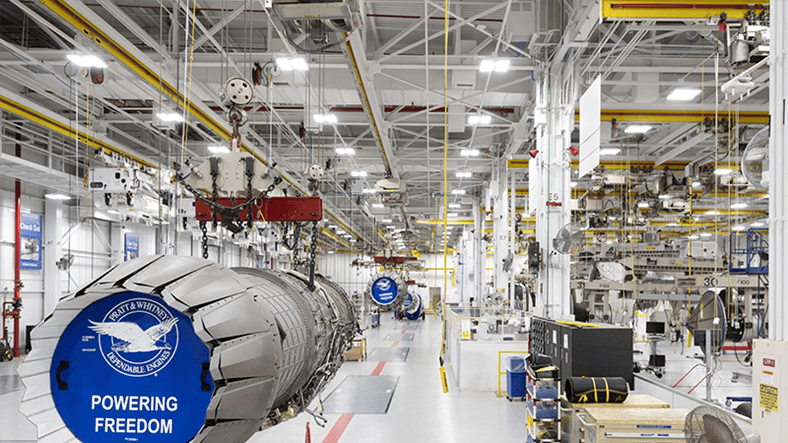
Engines aren’t built by machines alone. They’re built by highly skilled Americans — machinists who can hold tolerances to the thousandth of an inch, welders who master exotic alloys, and engineers who turn thousands of moving parts into one coherent system.
But this workforce is aging fast. The next generation of propulsion demands a new generation of skilled workers fluent in additive manufacturing, digital design, and model-based engineering.
Congress and the Department of Defense must prioritize technical apprenticeships, scholarships, and partnerships between defense firms, universities, and community colleges.
A strong propulsion workforce is a national asset, not a private one.
Securing the Supply Chain
Even the most advanced aircraft can be grounded by the absence of a single bolt or casting. Too many of these components still rely on vulnerable foreign suppliers.
The US must develop redundant domestic sources and build stockpiles of critical materials like titanium, nickel, and rare earths.
Equally important, America must invest in domestic refining and recycling to close the loop on material dependency.
A secure supply chain isn’t an afterthought — it’s the foundation of readiness.

Beyond Engines: Communities and Strength
Revitalizing the propulsion sector isn’t only about national defense; it’s about revitalizing American industry itself.
Expanding jet engine production means creating high-paying jobs, strengthening local economies, and reconnecting industrial communities to national security.
If we get it right here, propulsion can become the blueprint for rebuilding strength across the entire defense industrial base.
A Call to Congress
The United States has the knowledge, experience, and talent to lead the next century of aerospace — but only if its leaders act decisively.
Congress must:
- Fully fund the NGAP program and protect it from budget instability.
- Incentivize domestic manufacturing with multi-year procurement guarantees and targeted tax incentives.
- Invest in the workforce pipeline through national apprenticeships and technical training.
- Secure critical materials with stockpiles, domestic processing capacity, and transparent sourcing standards.
- Recognize propulsion as a strategic pillar of national security in the National Defense Authorization Act.
This is not just about technology — it’s about deterrence, jobs, and the credibility of American power.
Air superiority has long been our most decisive advantage. Losing it would ripple across every domain of defense. Protecting it requires leadership, investment, and the courage to act before crisis strikes.
The choice is clear: rebuild America’s engine base now, or risk ceding the skies tomorrow.

Lt Col (Ret.) Patrick McSpadden served 21 years in the US Air Force as an intelligence officer, with assignments supporting a wide range of aircraft and missions including the F-15, F-16, F-22, A-10, B-1, and Distributed Ground Station.
A graduate of the US Air Force Weapons School, he deployed in support of Operations Enduring Freedom, Odyssey Dawn, and Inherent Resolve.
He now writes on defense strategy, technology, and America’s industrial base.
The views expressed are those of the author and do not necessarily reflect the official policy or position of the Department of Defense or any agency of the US government.
The views and opinions expressed here are those of the author and do not necessarily reflect the editorial position of The Defense Post.
The Defense Post aims to publish a wide range of high-quality opinion and analysis from a diverse array of people – do you want to send us yours? Click here to submit an op-ed.