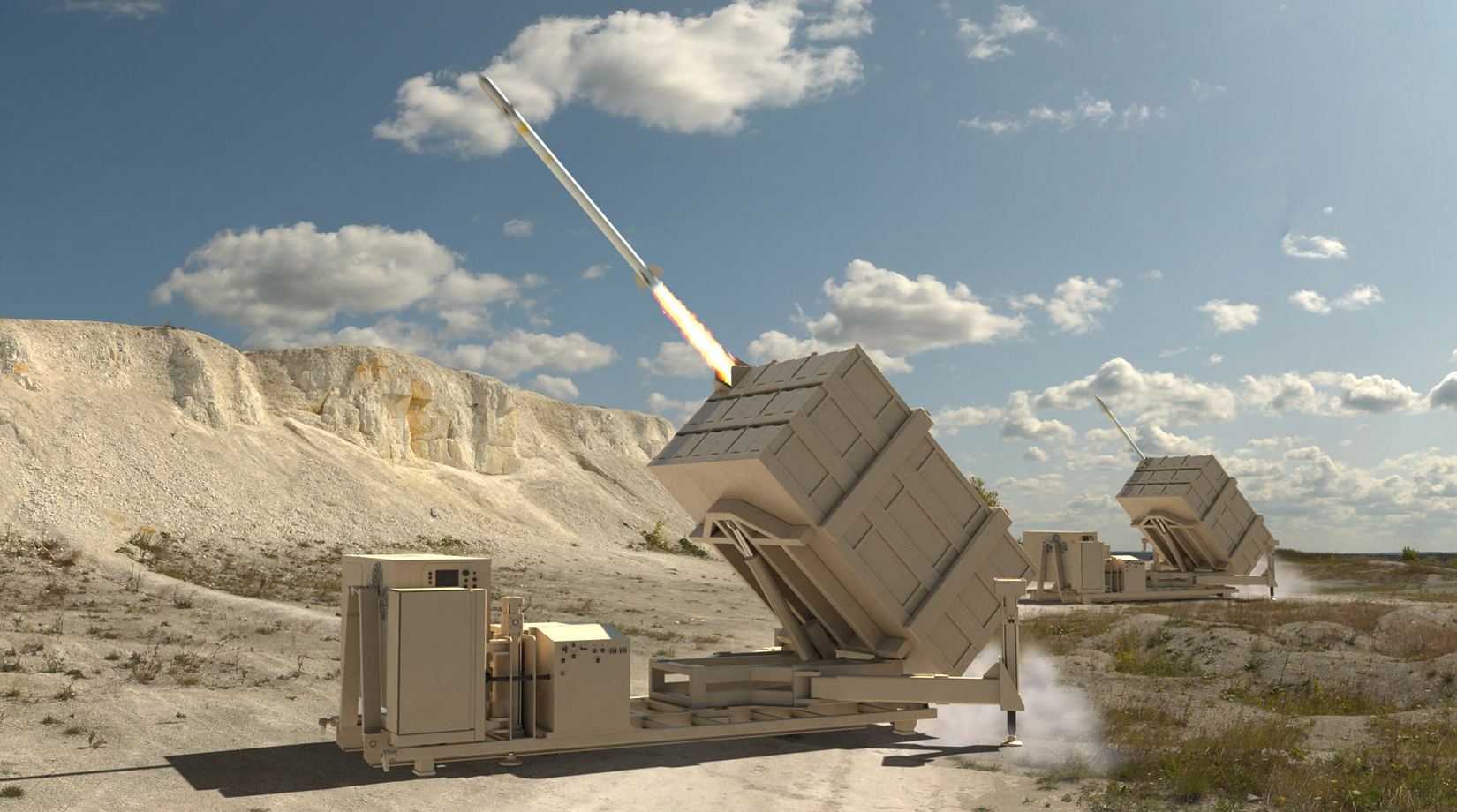
The US Air Force has issued a white paper request for the Counter-Air Missile Program (CAMP) to develop a ground-launched missile that could later evolve into a low-cost air-to-air system.
Unlike traditional programs that emphasize high-end performance, CAMP prioritizes affordability, modularity, and rapid production.
The announcement said that the service envisions producing between 1,000 and 3,500 missiles annually at a target cost below $500,000 per unit.
It would also leverage existing high technology readiness Level components to minimize new design work and achieve a first flight within nine months.
The program is described as a risk-reduction effort that will use ground-launched prototypes to test subsystems and integration approaches before committing to full-scale air-to-air variants.
CAMP also emphasizes open architectures, software APIs, and exportable design features to support allies, reflecting a strategic move toward scalable, adaptable missile systems.
The US Air Force is inviting nontraditional industry partnerships, seeking innovative approaches to requirements, integration, and testing rather than relying solely on established prime contractors.
Phased Approach to Development
CAMP is structured around a phased, iterative development model.
Phase 1 focuses on delivering a ground-launched system prototype, integrating existing components to achieve minimum viable capabilities while allowing incremental upgrades.
The goal of this phase is to demonstrate flight performance, range, and speed within 24 months of contract award.
Meanwhile, phase 2 envisions transitioning the ground-launched system into a Program of Record for research, development, testing, and eventual production.
Subsequent phases are expected to evolve the initial ground-launched missile into an air-to-air variant, while maintaining affordability, modularity, and producibility.
This phased strategy allows the US Air Force to test and refine components and subsystems in relevant environments before committing to full-scale production, reducing risk and accelerating deployment.
Broader Efforts to Modernize US Air-Combat Capabilities
CAMP fits into a larger US effort to modernize air‑combat capabilities.
One of the most prominent developments is the AIM‑260 Joint Advanced Tactical Missile (JATM), set to replace the AIM‑120 AMRAAM.
The US Navy is scheduled to begin procurement of the AIM‑260 in 2026, allocating nearly $309 million for its acquisition. Testing of the JATM has been ongoing, with live‑fire trials conducted by the US Navy’s Test and Evaluation Squadron VX‑31.
The AIM‑260 is designed for long‑range air‑to‑air engagements, greater range and performance than the current AMRAAM, and integration onto next‑generation platforms.
Meanwhile, at the short‑range/within‑visual‑range end of the spectrum, the AIM‑9X Sidewinder remains central. Its Block II variant is under heavy investment, with the US Navy awarding a $736-million contract modification to Raytheon for production of the AIM‑9X Block II family.
This contract is expected to raise annual production to about 2,500 missiles per year. The enhancements include a lock‑on‑after‑launch capability, datalink updates, an improved seeker and agility.