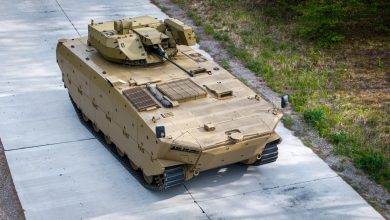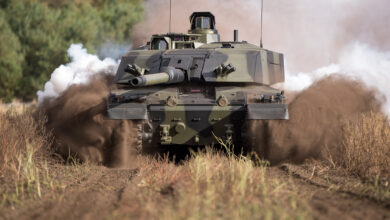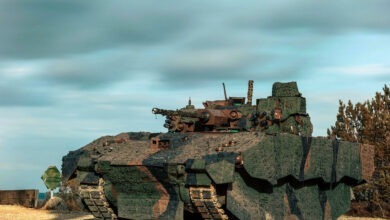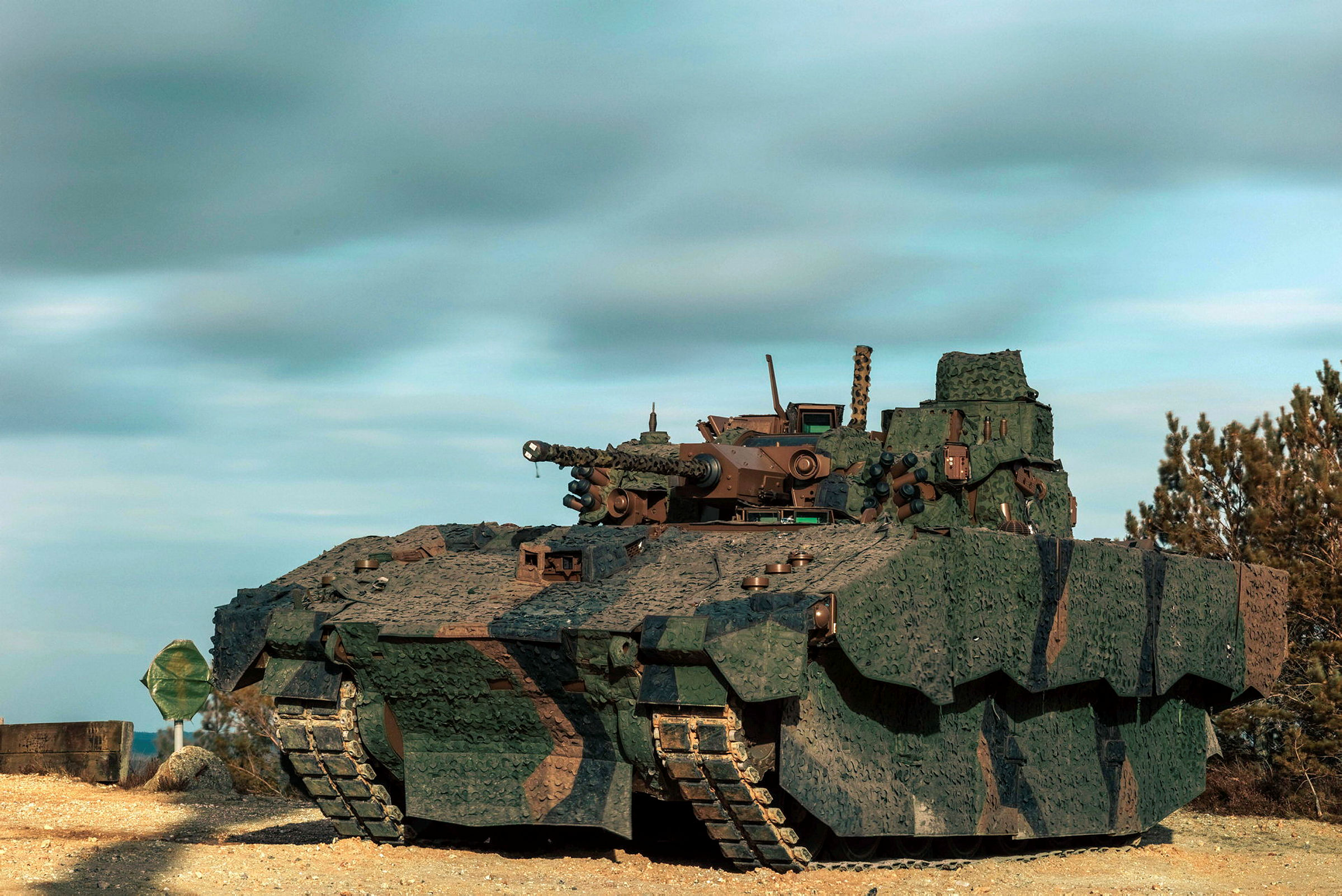
The British Army’s long-delayed Ajax system has reached initial operating capability, marking the first new armored fighting vehicle to enter service in nearly three decades.
Built by General Dynamics in Merthyr Tydfil, the 6.3-billion-pound ($8.2 billion) program will deliver 589 vehicles across six variants and support more than 4,100 jobs through a nationwide supply chain.
“Ajax has overcome significant challenges, but importantly, we can say it has left its troubles behind,” Defence Minister for Readiness and Industry Luke Pollard said in a speech, according to South Wales Guardian.
“We have more than a full squadron ready to go, ready to fight, ready to win, with more in the pipeline.”
Eight-Year Delay
The Ajax program is part of a broader 41-billion-pound ($53.6 billion) investment to modernize the UK’s ground forces amid growing global threats.
Originally meant for service in 2017, the vehicle initiative faced major setbacks after noise and vibration issues injured soldiers during testing.
Pollard emphasized that those problems “are firmly in the past,” saying that the vehicle would not be deployed if unsafe. He added that the Ajax demonstrates how “defence is an engine for growth,” with export potential already being explored.
Modern Ground Capability
Upon commissioning, the Ajax will replace the British Army’s retired Combat Vehicle Reconnaissance – Tracked, designed in the 1960s.
The 8-meter (26-foot) Ajax features a 40-millimeter cased telescope autocannon, a 7.62-millimeter chain gun, a Javelin anti-tank system, modular armor, and advanced sensors for digital connectivity and awareness in all directions.
It is powered by an 800-horsepower MTU V8 engine and a RENK six-speed transmission for a top speed of 70 kilometers (43 miles) per hour and a range of approximately 500 kilometers (311 miles).
“Driving Ajax is a really noticeable step change from the previous generation of [armored fighting vehicles],” said Capt. John Hutton of the Household Cavalry Regiment, the British Army’s designated Ajax operator.
“The control mechanism, the responsiveness of the vehicle and the situational awareness granted to a driver is unlike anything I have driven before.”
“This gives the driver unparalleled awareness of their surroundings and far greater ease in controlling the vehicle across ground; 360 vision, previously the monopoly of the commander in the turret, is now granted to all crew positions.”