I’ve worked around America’s defense system for nearly three decades. What alarms me most today isn’t the quality of our troops — it’s the fragility of the system that equips them.
Tanks, jets, and ships all depend on vast supply chains that are breaking down. A fighter jet isn’t just one machine; it’s tens of thousands of parts requiring precision manufacturing, assembly, and quality assurance. A modern jet engine alone can contain 45,000 components.
For years, Washington let jobs and factories go overseas in the name of efficiency, hollowing out our industrial base.
Hollowed-Out Industrial Base
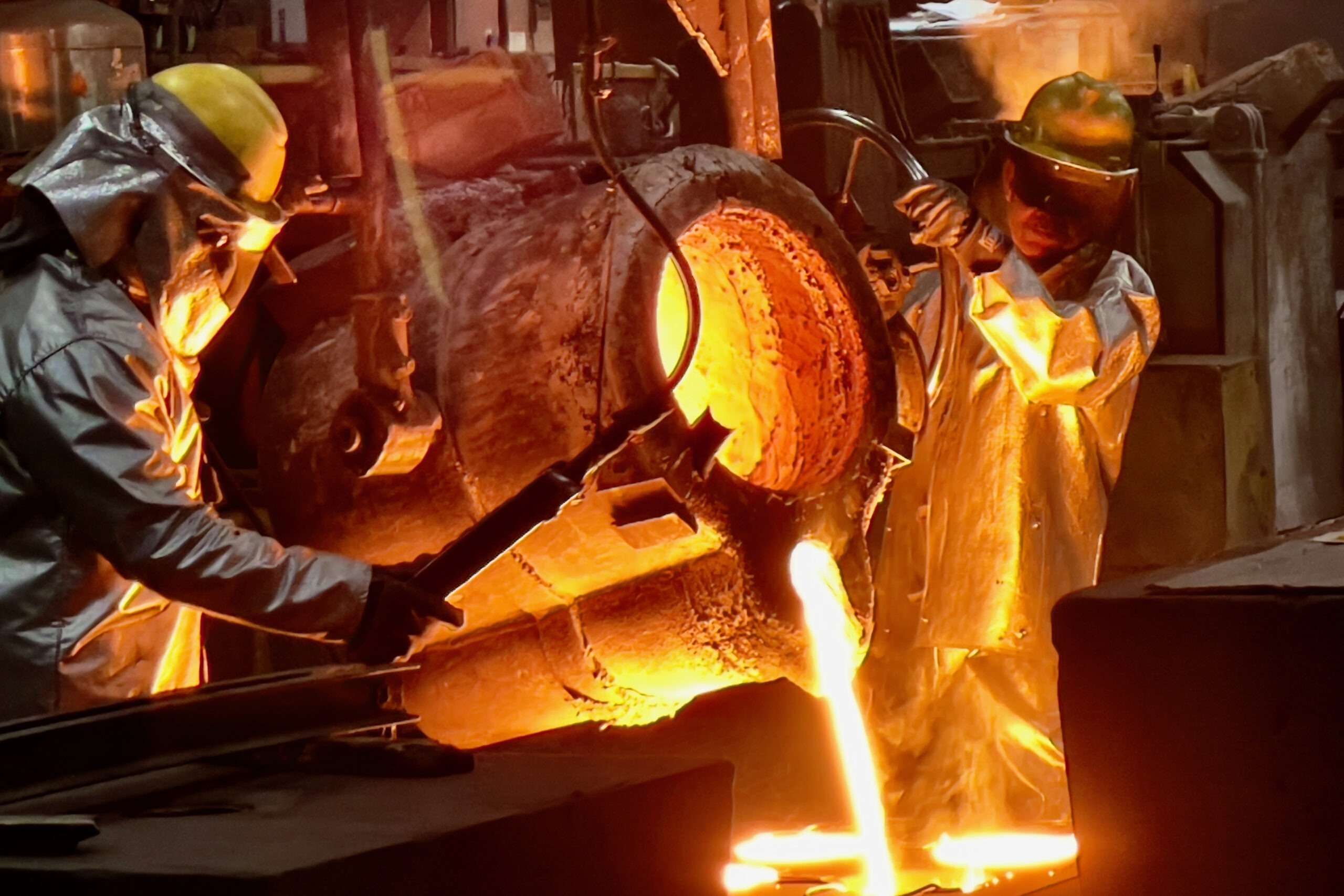
Today, our military strength depends on supply chains we don’t control. Since 2000, two-thirds of US foundries have disappeared. Casting plants fell from nearly 3,000 to under 2,000. More than 20,000 forging jobs vanished, and skilled workers are retiring faster than they are being replaced.
Critical materials like rare earths are still largely produced in China, which is tightening export controls. Beginning in late 2025, foreign manufacturers must obtain licenses to use Chinese-derived rare earths, a move that could disrupt global supply chains.
Meanwhile, Beijing is advancing in propulsion and jet engine technologies, closing gaps in areas once uniquely American.

Fragile Supply Chains, Real Consequences
The consequences are tangible.
In 2024, Lockheed Martin delivered all 110 F-35 Joint Strike Fighters behind schedule — some by nearly 240 days. Delays came largely from suppliers, pushing engine production back by months.
Pratt & Whitney has invested billions to improve quality and expand production, including assembly of its next-generation XA103 adaptive engine. Yet even their efforts can’t fully offset stretched global supply lines.
Our NATO allies are pledging more purchases, but US capacity isn’t keeping pace. The July 2025 US-EU trade deal will drive demand higher, with Germany, Denmark, and the UK expanding F-35 orders. Tariffs on aluminum and steel, however, are raising costs and tightening supplies. Without new investment, bottlenecks will only worsen.
Regulations Gone Wrong
It isn’t just globalization.
Washington’s own rules are stifling defense manufacturing. Federal Acquisition Regulations stretch over 2,000 pages. No startup or small manufacturer can navigate that bureaucracy and still turn a profit.
The Pentagon favors defense-specific components over dual-use parts already produced at scale. Fixed-price contracts discourage innovation. Cybersecurity standards impose expensive burdens small businesses struggle to meet.
Washington must rethink its relationship with industry. Sharing risk, adopting contracts that reward savings, and embracing dual-use technology would bring in more firms and speed production.
If America wants to remain the arsenal of democracy, it must treat manufacturers like partners, not afterthoughts.

A New Defense Industrial Policy
We need a defense version of the CHIPS Act. That law spurred billions in semiconductor investment. A similar program could revive foundries, expand production lines, and train the next generation of aerospace workers.
Pratt & Whitney’s $2 billion investment in domestic plants — creating over 700 jobs in Connecticut, Georgia, North Carolina, and Florida — is a start.
With government support, hundreds of smaller firms could follow.
America’s military strength must be backed by industrial strength. Beijing’s progress in jet engines is a warning: Chinese programs now rival the F135 engine used in the F-35, with advances in adaptive cycle technology and composite materials.
Meanwhile, domestic producers of precision forgings, high-temperature alloys, and ceramic matrix composites have consolidated or closed.
Government support can close these gaps. A “Propulsion Innovation Act” could incentivize domestic production of advanced materials, expand workforce training, and restore the industrial depth that made American engines the envy of the world.
Congress should embed multi-year propulsion investments into the NDAA’s research, development, test, and evaluation accounts, ensuring continuity beyond annual appropriations.
Without bold investment now, America’s military power will be measured not by its weapons, but by the fragility of the factories that build them.

Jason Forrester has worked in the Washington, DC, policy community since the late 1990s.
He’s been a senior staffer in the US Senate, a Deputy Assistant Secretary of Defense, and has worked for the Brookings Institution, the Center for Strategic and International Studies, and the Carnegie Endowment for International Peace.
He’s a life member of the Council on Foreign Relations.
The views and opinions expressed here are those of the author and do not necessarily reflect the editorial position of The Defense Post.
The Defense Post aims to publish a wide range of high-quality opinion and analysis from a diverse array of people – do you want to send us yours? Click here to submit an op-ed.