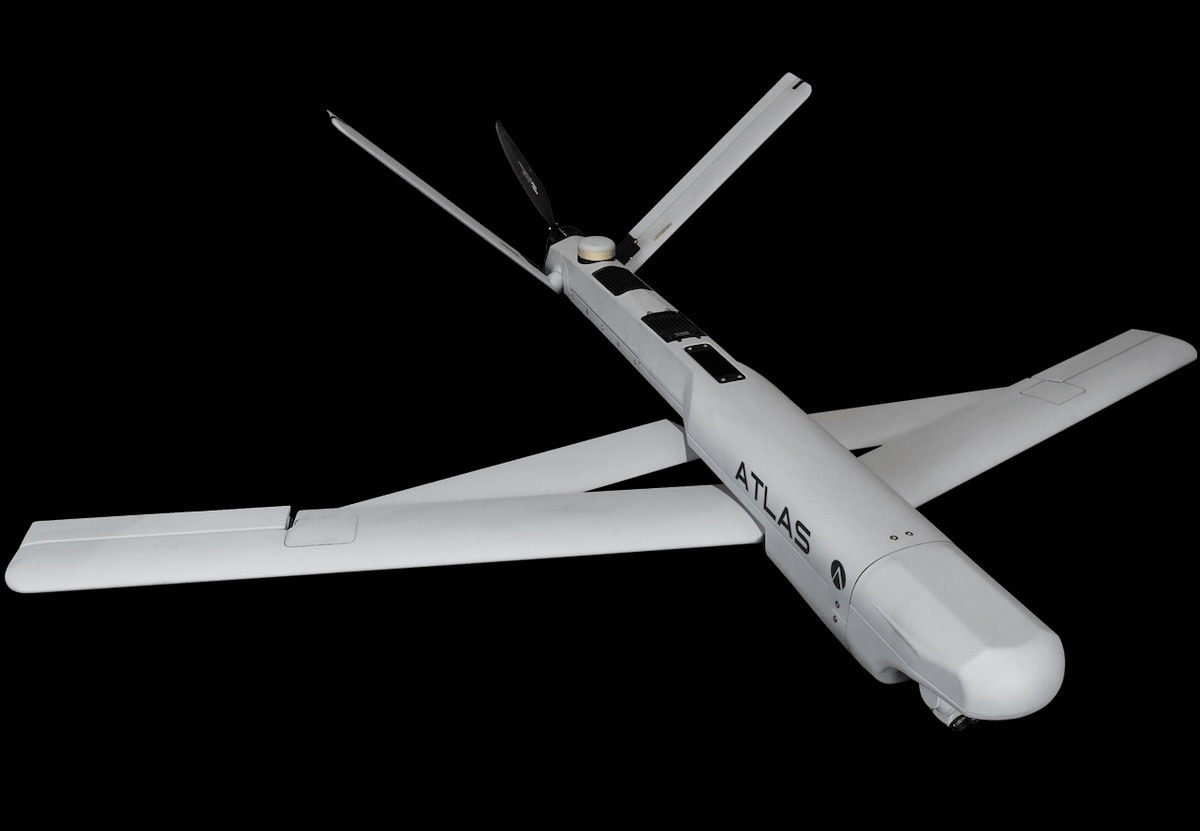
The US Army has chosen AEVEX’s Atlas Precision Strike System for its initial Launched Effects–Short Range (LE-SR) fielding.
It follows a series of special demonstrations — which involved other systems, such as Raytheon’s Coyote Block 3 and Anduril’s Altius 600 — that validated performance and collected soldier feedback.
Atlas was selected because it was production-ready and could be rapidly fielded, supporting the army’s goal to field initial LE-SR capabilities to all active-duty divisions by the end of 2026, according to Program Executive Officer for Aviation, Brig. Gen. David Phillips.
Meanwhile, AEVEX President Roger Wells said that the company is working with the service “to advance the next generation of launched effects,” small, expendable, or attritable systems launched from a larger platform like a helicopter, aircraft, ground vehicle, or ship.
They are designed to extend the reach of the launching platform — gathering intelligence, jamming enemy sensors, acting as decoys, or striking targets — without putting the main platform at risk.
The Atlas
AEVEX built the Atlas for rapid deployment and ease of use, featuring an open architecture and an advanced navigation suite for reliable performance, even in denied or contested environments.
The system employs a mesh radio network, a hardened Global Navigation Satellite System (GNSS) solution, and visual navigation with alternate PNT (Positioning, Navigation, and Timing) capability for jam-resistant operation and autonomous guidance.
Made to be launched and operated by a small team with minimal setup, the lightweight, Group II precision-strike platform measures 55 inches (140 centimeters) long with a 75.5-inch (192-centimeter) wingspan and weighs about 34 pounds (15.4 kilograms).
Atlas can loiter for over 70 minutes and cover distances beyond 130 kilometers (81 miles). It cruises at 65 knots (120 kilometers/75 miles per hour) and can dash above 80 knots (148 kilometers/92 miles per hour) during high-speed maneuvers.
It carries a 7.5-pound (3.4-kilogram) payload and can be fitted with either a fragmentation or penetrator munition, or with optional sensors for reconnaissance and targeting support.