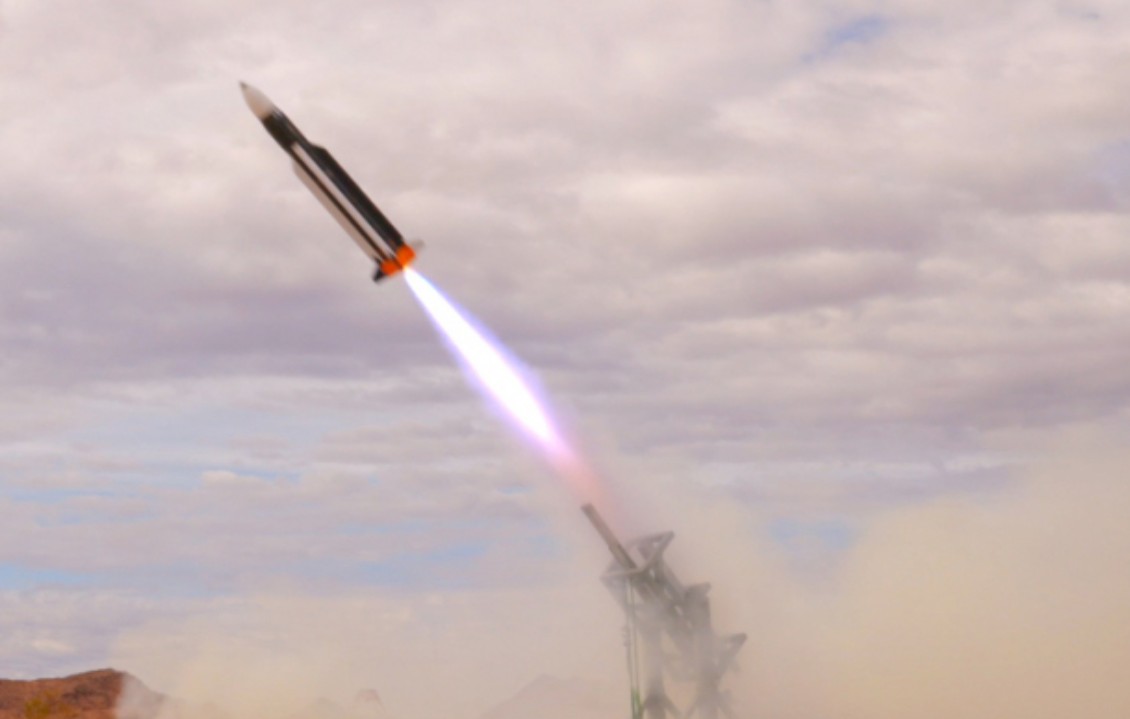
The US Army has awarded AeroVironment (AV) a $95.9-million contract to produce and deliver the Freedom Eagle (FE-1), a next-generation kinetic interceptor designed to counter emerging unmanned aerial threats.
The initiative is part of the Long-Range Kinetic Interceptor program, managed by the US Army’s Combat Capabilities Development Command Aviation & Missile Center through the Aviation & Missile Technology Consortium.
AV reported that the FE-1 has completed several development milestones, including live-fire tests, controlled test vehicle launches, and warhead evaluations, indicating it is fully developed and carries reduced risk ahead of field deployment.
To meet rapid design and production goals, AV partnered with several industry specialists, including Applied Systems Engineering, a provider of avionics and engineering solutions.
“We’re ready to transition this disruptive technology from research and development to the battlefield and focused on ramping up manufacturing to deliver with scale and speed,” stated Daniel Noland, Senior Director of Strategic Capture for AV, noting that counter-drone capabilities are required, as drones represent the “toughest aerial threats” facing the US.
Freedom Eagle
The FE-1 is designed to intercept and destroy Group 2 and Group 3 unmanned aerial systems, which include medium-sized tactical drones commonly used for surveillance, targeting, or light-strike missions.
It is intended to fit into layered air-defense architectures, providing a kinetic hard-kill capability when non-kinetic tools like jamming or directed energy are insufficient or ineffective.
The missile is powered by a dual-thrust solid rocket motor that supports rapid initial acceleration and a sustained-burn phase for extended-range engagement.
AV described the FE-1 as a relatively low-cost, high-performance interceptor engineered for quick launch and scalable production.