US Army Seeks Fire-and-Forget Drone Munitions

The US Army is seeking unmanned aircraft systems capable of launching multiple fire-and-forget strikes under its new Symbiotic UAS Delivery System effort.
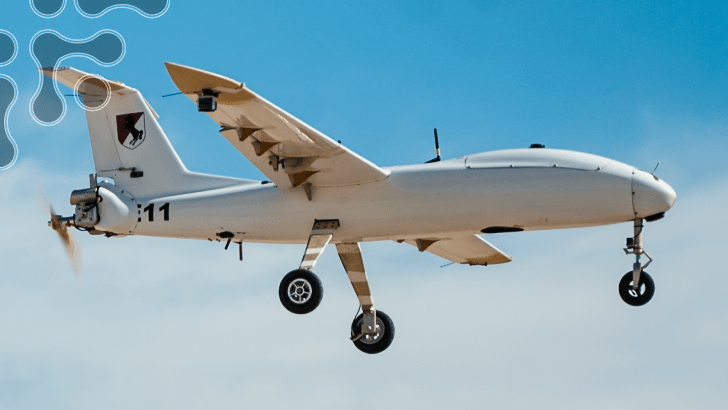
The Symbiotic UAS Delivery System (SCBDS) solicitation under the Small Business Innovation Research program calls for munitions that can be deployed from Group 2 or Group 3 drones and travel more than four kilometers (2.4 miles).
They should also be able to strike targets without further input from the operator, even in GPS-denied or contested environments.
The weapon must be self-propelled, reach at least 100 kilometers (62 miles) per hour, and not rely on a post-launch data link to complete its mission. It must also not damage the launching airframe when deployed.
The solicitation sets a tight size and weight ceiling — the complete munition, including payload, must weigh no more than five pounds (2.26 kilograms) — and emphasizes navigation that combines low-SWaP inertial measurement with computer vision or pixel-lock guidance.
SCBDS Program Stages
The SCBDS solicitation outlines a three-phase development process designed to transition the concept from feasibility studies to field-ready applications.
Phase I focuses on a feasibility study to determine the most practical and technologically achievable approach to meet the army’s requirements.
This includes assessing sensor integration, autonomy software, and delivery mechanisms suitable for small drones.
In Phase II, selected developers will build and demonstrate a prototype system on a Group 2 or Group 3 drone, or a simulated platform if real integration is cost-prohibitive.
While the prototype will not use live munitions, it must demonstrate all key performance criteria. These include launch stability, precision targeting, and autonomous flight behavior using inert payloads.
Phase III will focus on commercialization and dual-use potential. The army expects technologies developed under SCBDS to have applications in commercial drone delivery, infrastructure inspection, and chemical, biological, radiological, and nuclear monitoring.
Expanding US Drone Warfare Capabilities
The SCBDS program is part of a broader series of the US Army and Special Operations Command (SOCOM) initiatives to enhance the lethality and versatility of unmanned systems.
SOCOM previously issued a request for drone-launched missiles that could operate as loitering or swarm munitions, extending the reach of small tactical UAS in combat.
Other ongoing army solicitations include projects like AI-powered drone swarm detection, which seeks systems capable of identifying and classifying multiple aerial threats simultaneously, and ground-based drone launcher concepts for deploying small munitions directly from tactical vehicles.
The army has also integrated drone-launched precision munitions in field experiments through programs such as Future Tactical Uncrewed Aircraft Systems and Air Launched Effects, which combine reconnaissance, electronic attack, and kinetic strike functions.