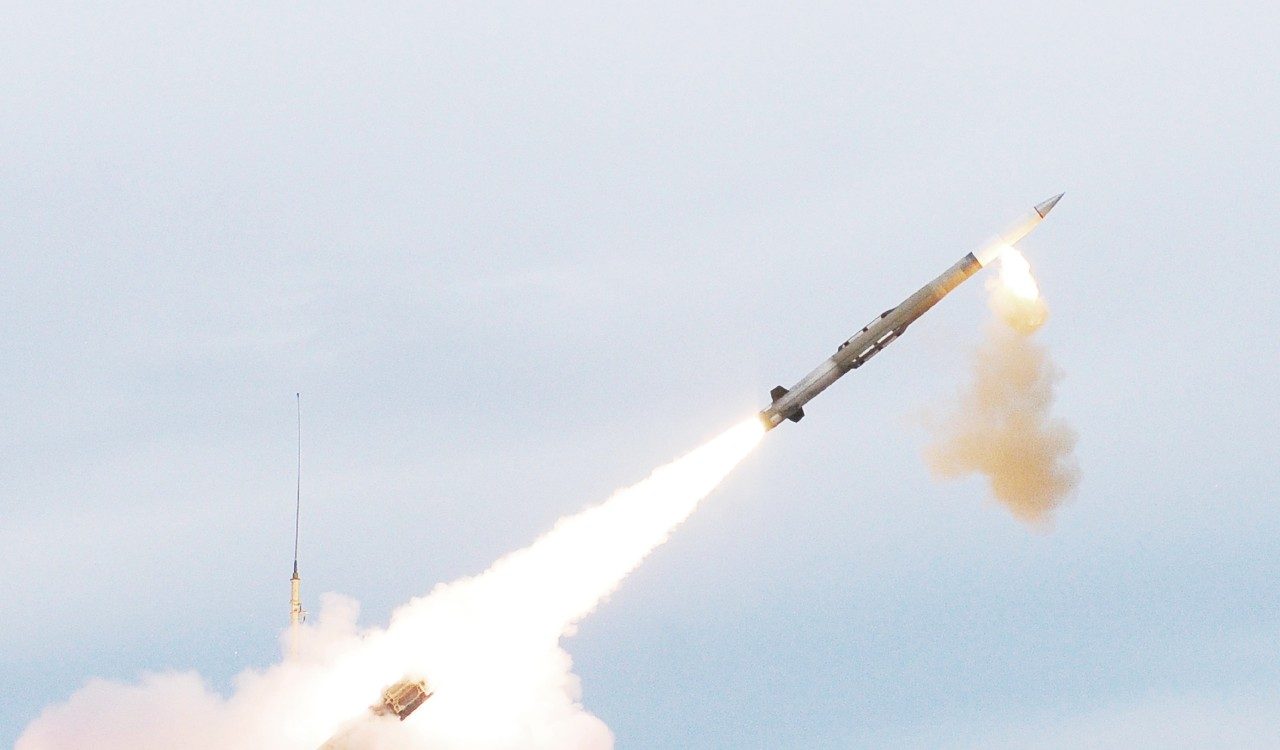
Lockheed Martin and Germany’s Diehl Defence have agreed to expand cooperation on the global supply chain for the PAC-3 Missile Segment Enhancement interceptor to strengthen production resilience.
The two companies have signed a memorandum of understanding to explore opportunities for joint research and development, industrial coordination, and expanded manufacturing operations in Europe and beyond.
The agreement comes as the US and its partners continue to increase air and missile defense production to respond to rising global security demands.
The memorandum sets out a framework for cooperation and signals a broader shift toward diversifying production and reducing reliance on single-source suppliers.
Diehl Defence Senior Vice President Torsten Cook said the partnership reflects efforts to ensure that Europe-based production can support the shared defense needs of allied nations.
“The rapidly changing security situation is posing new demands to defense industries,” he said. “Cohesion and resilience need also to be reflected by the defence industries.”
The PAC-3 MSE Global Supply Chain
The PAC-3 Missile Segment Enhancement is an advanced interceptor used in the Patriot air and missile defense system. It improves on earlier Patriot interceptors with a dual-pulse rocket motor, greater maneuverability, and enhanced hit-to-kill accuracy against ballistic, cruise, and hypersonic threats.
The interceptor is currently fielded by 17 nations and plays a central role in the US and NATO’s layered air defense architecture.
Lockheed Martin has been ramping up production under a contract worth $9.8 billion to deliver nearly 2,000 PAC-3 MSE interceptors for the US Army. The partnership with Diehl builds on earlier agreements with European firms, including Spanish companies Sener and Oesía-Tecnobit for component production, and Poland’s WZE for attitude control systems.
The US Army continues to integrate the PAC-3 MSE into newer command systems such as the Integrated Air and Missile Defense Battle Command System, which connects different sensors and interceptors into one network.
A related program, the Medium Extended Air Defense System, is being developed by the US, Germany, and Italy to combine modern sensors and interceptors into a more flexible ground-based air defense architecture.