Lockheed Martin has begun testing the AN/SPY-7(V)1 radar system for Japan’s Aegis System Equipped Vessel program.
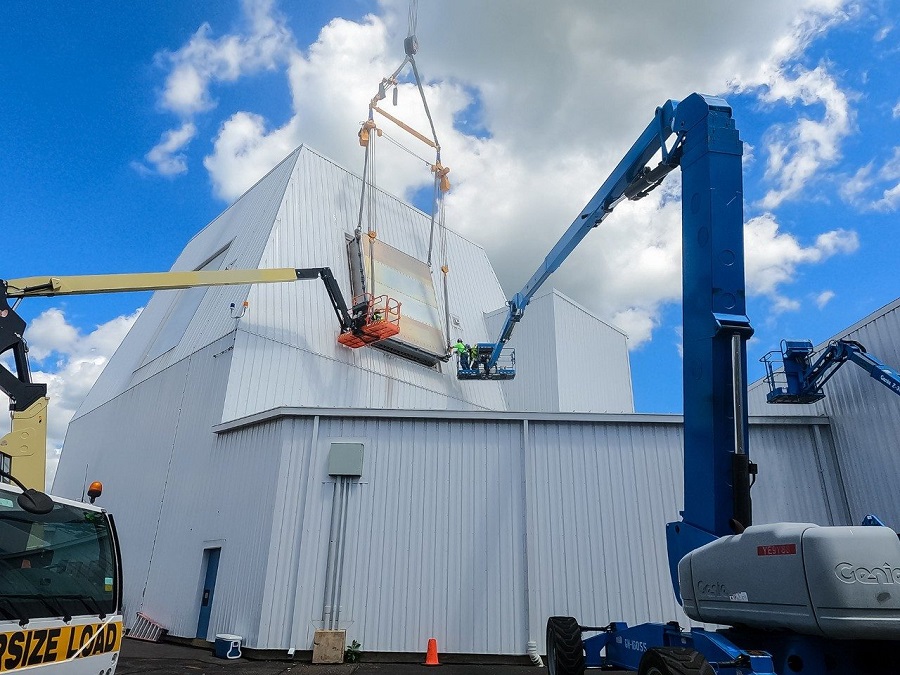
The initial light-off test took place at the company’s Production and Test Center in Moorestown, New Jersey, in collaboration with Japan’s Ministry of Defense (JMOD) and the US Missile Defense Agency.
Marking the start of a critical testing phase, the effort focused on verifying radar performance and its integration with the Aegis system to ensure it meets Japan’s operational requirements.
The first radar unit will undergo additional target-tracking tests before being delivered to Japan next year, while a second system is scheduled to begin testing and verification under JMOD oversight.
“By testing the complete SPY-7 radar system in a land-based facility, we’re able to verify the SPY-7 radar’s Ballistic Missile Defense and Integrated Air and Missile Defense capabilities meet warfighter needs ahead of shipboard installation, significantly reducing program deployment risk,” said Chandra Marshall, VP and general manager at Lockheed Martin.
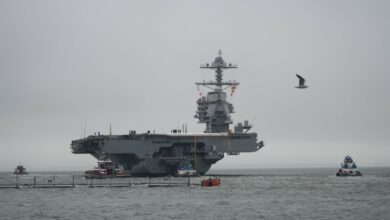
Tokyo is developing two Aegis System Equipped Vessels, with the first built by Mitsubishi Heavy Industries and the second by Japan Marine United Corporation.
The ships are expected to enter service in 2028 and 2029.
In June, the Asian country received its first set of four AN/SPY-7(V)1 radar antennas from Lockheed Martin, which are still undergoing testing at the company’s facility.
The Radar System
The AN/SPY-7(V)1 is designed to detect, track, and engage advanced ballistic missile and air threats, capable of simultaneously handling multiple targets.
The system can be configured for a range of ship sizes, from smaller vessels to large platforms.
Because the radar’s architecture is software-driven, new capabilities and responses to emerging threats can be added without major hardware changes.
Built for interoperability, the SPY-7 is used by both US and international customers, including the US Missile Defense Agency’s Long-Range Discrimination Radar, the Spanish Navy’s F-110 frigates, and the Canadian Surface Combatant program.