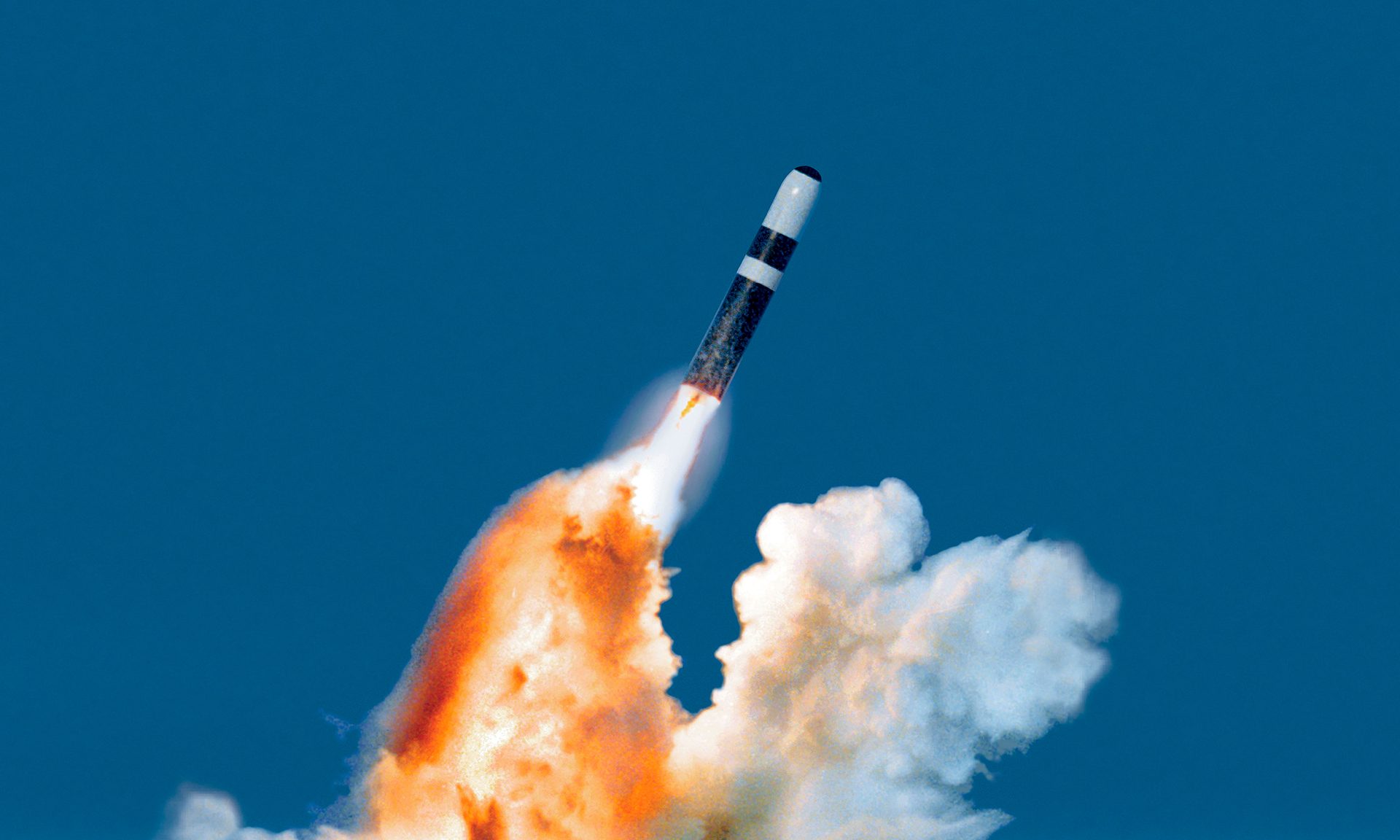
Lockheed Martin Space has received a $647-million contract modification to continue production and sustainment of the Trident II D5 submarine-launched ballistic missile for the US.
The hybrid agreement, which combines fixed-price incentive and cost-plus elements, covers both missile production and deployed systems support.
The Trident II D5 forms the backbone of the US and UK sea-based nuclear deterrent. First deployed in 1990, the missile is capable of carrying multiple independently targetable reentry vehicles with a range of over 7,000 kilometers (4,300 miles).
It is known for its high accuracy, which has been steadily improved through upgrades in guidance, propulsion, and reentry systems. Lockheed Martin has served as the prime contractor for the program since its inception.
Work under the contract will be carried out across multiple US sites, with the largest share in Utah at 23 percent. Completion is expected by September 30, 2030.
The Pentagon said that $120 million in fiscal 2025 Navy weapons procurement funds will be obligated immediately under this award. The agreement was issued on a sole-source basis, as Lockheed Martin is the only company with the capability to produce and sustain the missile system.
The contract includes options that could raise its value to $745 million. The award also supports a foreign military sale to the United Kingdom, which fields the Trident II D5 aboard its Vanguard-class submarines.
Importance of Trident II
Continued investment in the Trident II program underscores its central role in long-term deterrence planning.
The US Navy intends to keep the missile in service through the 2040s, timed to the arrival of the Columbia-class submarines. The UK is taking a similar path and is preparing to deploy the D5 aboard its upcoming Dreadnought-class boats later this decade.
Lockheed has long been tapped by the US for the Trident II missile. It previously signed a contract in 2022 to supply and sustain the system, which has been tested more than 190 times since entering service, with a high success rate.
Its longevity also shows how the US and UK have chosen to modernize existing systems rather than replace them outright, extending the missile’s service life through incremental upgrades.
The program also reinforces the close defense ties between Washington and London. The shared use of Trident II, along with joint support arrangements, is a cornerstone of the UK’s Continuous At-Sea Deterrent and a symbol of NATO’s nuclear burden-sharing.