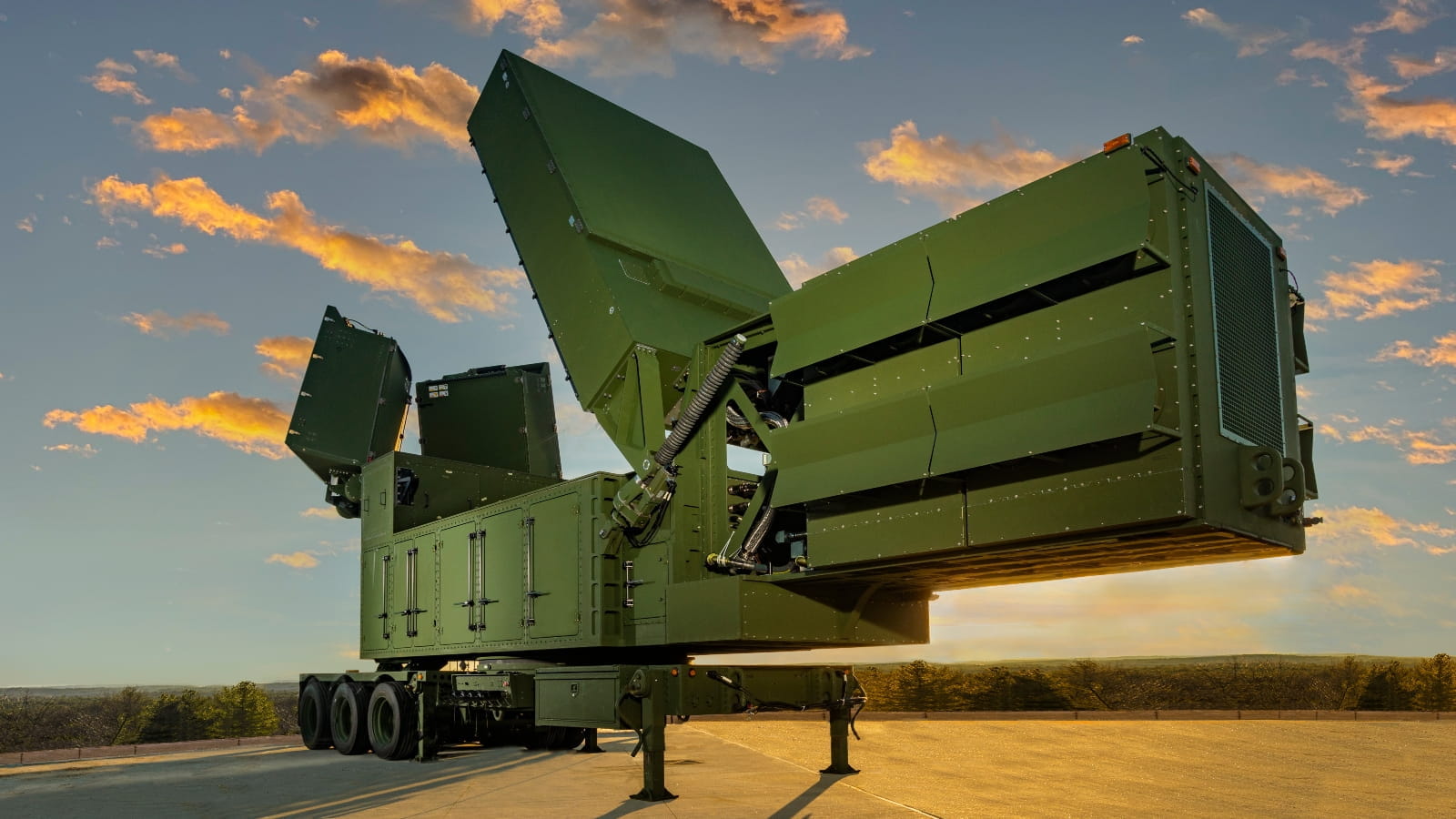
Raytheon has signed an agreement with Poland’s Military Electronic Works (WZE) to produce energy storage assembly modules for the Lower Tier Air and Missile Defense Sensor (LTAMDS).
The subcontract makes Warsaw’s state-owned enterprise the first international supplier for the radar program, which is designed to provide the US Army with enhanced airborne sensing coverage.
The arrangement also extends Poland’s industrial role in the separate WISŁA air and missile defense program, under which Warsaw is acquiring systems based on America’s Patriot and its related technologies.
Raytheon previously cooperated with the Polish industry during WISŁA Phase 1. The new agreement now supports Phase 2, which adds LTAMDS radars to Poland’s defense network.
In August 2024, the US Army awarded Raytheon a contract worth over $2 billion to deliver LTAMDS radars to both the US and Poland. That deal made Poland the first international customer to incorporate the system into its air and missile defense architecture.
“This agreement is a big step toward establishing LTAMDS’ global supply chain,” Raytheon Land & Air Defense Systems President Tom Laliberty stated.
“Poland is the first international country to complement the combat-proven Patriot with LTAMDS, providing extended-range and full, 360-degree coverage to detect and defend against complex, highly coordinated, multi-threat attack scenarios.”
The LTAMDS
Raytheon’s LTAMDS is the next-generation solution designed to replace legacy radars in the US Army’s Patriot systems.
Built with gallium nitride semiconductors, the radar generates more than twice the power of its predecessor, improving detection range, accuracy, and energy efficiency.
While the exact data is not publicized, reports suggest that LTAMDS can detect and follow targets at distances exceeding 300 kilometers (186 miles), or double that of the older radar.
The system is designed to counter advanced threats, including hypersonic weapons traveling at speeds above Mach 5 (6,174 kilometers/3,836 miles per hour), as well as ballistic missiles, cruise missiles, drones, and aircraft.