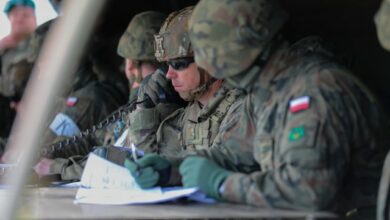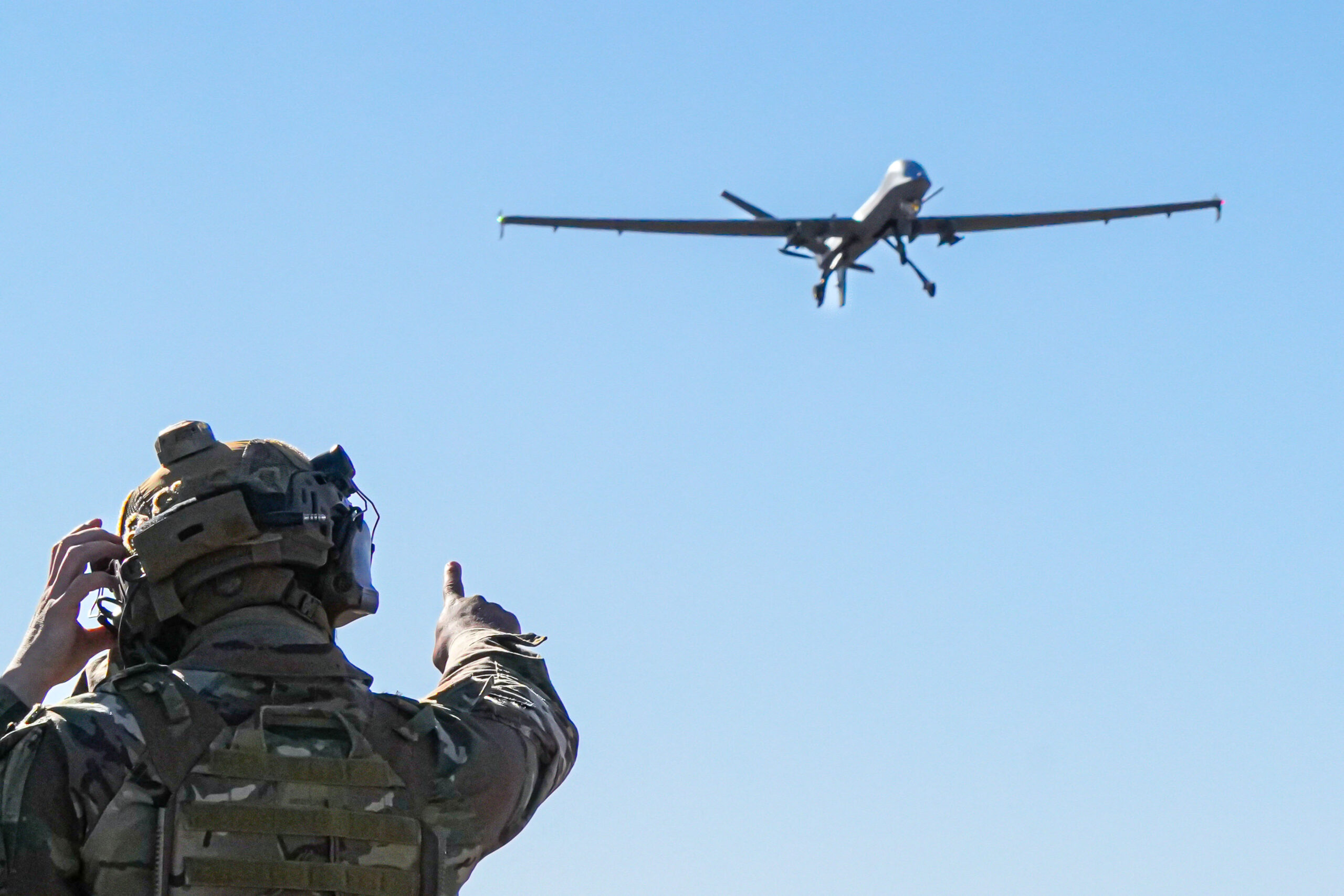
Republic of Korea Air Force (ROKAF) personnel trained with an MQ-9 Reaper from the California Air National Guard’s 163rd Attack Wing during a month-long integration exercise in July and early August.
The training included using surveillance data in joint operations and familiarizing South Korean crews with flightline issues encountered during extended missions.
Additionally, ROKAF’s 1st Fighter Wing planning division worked with US personnel on launch operations, air traffic control, and ground support.
As part of the exercise, a US Marine Corps KC-130J Super Hercules conducted an air refueling mission with the MQ-9 over Gwangju in southwest South Korea near the Yellow Sea coast.
US Marine Corps personnel said the mission centered on cooperation across branches, including active and reserve units, as well as allied airspace, with refueling being just the final step in a broader partnership.
The operation was part of the US Air Force (USAF)’s Agile Combat Employment (ACE) approach, which focuses on adaptability, dispersed, and rapid deployment of aircraft.
“The ACE concept ensures our force remains flexible, mobile, and able to launch aircraft no matter what,” said Major Andrew Kincaide, a 163rd Attack Squadron MQ-9 pilot and the mission lead for the Gwangju operation.
“With the help of ROK air traffic control, ground support and USAF personnel stationed here, plus our Marine refueling team; we can stay in the air longer and more reliably than ever before.”
MQ-9 Reaper
The MQ-9 Reaper is a remotely piloted aircraft designed for intelligence, surveillance, and reconnaissance as well as precision strike missions.
It can fly for up to 27 hours, reach 50,000 feet (15,240 meters), and cover around 1,150 miles (1,850 kilometers).
It includes a ground control station, satellite links, mission crews, and maintenance support.
The US Air Force is reportedly planning to deploy MQ-9 Reapers to Gunsan Air Base, located on South Korea’s west coast, for a three-month rotation starting in September.
The deployment would mark the first extended MQ-9 presence on the Korean Peninsula.