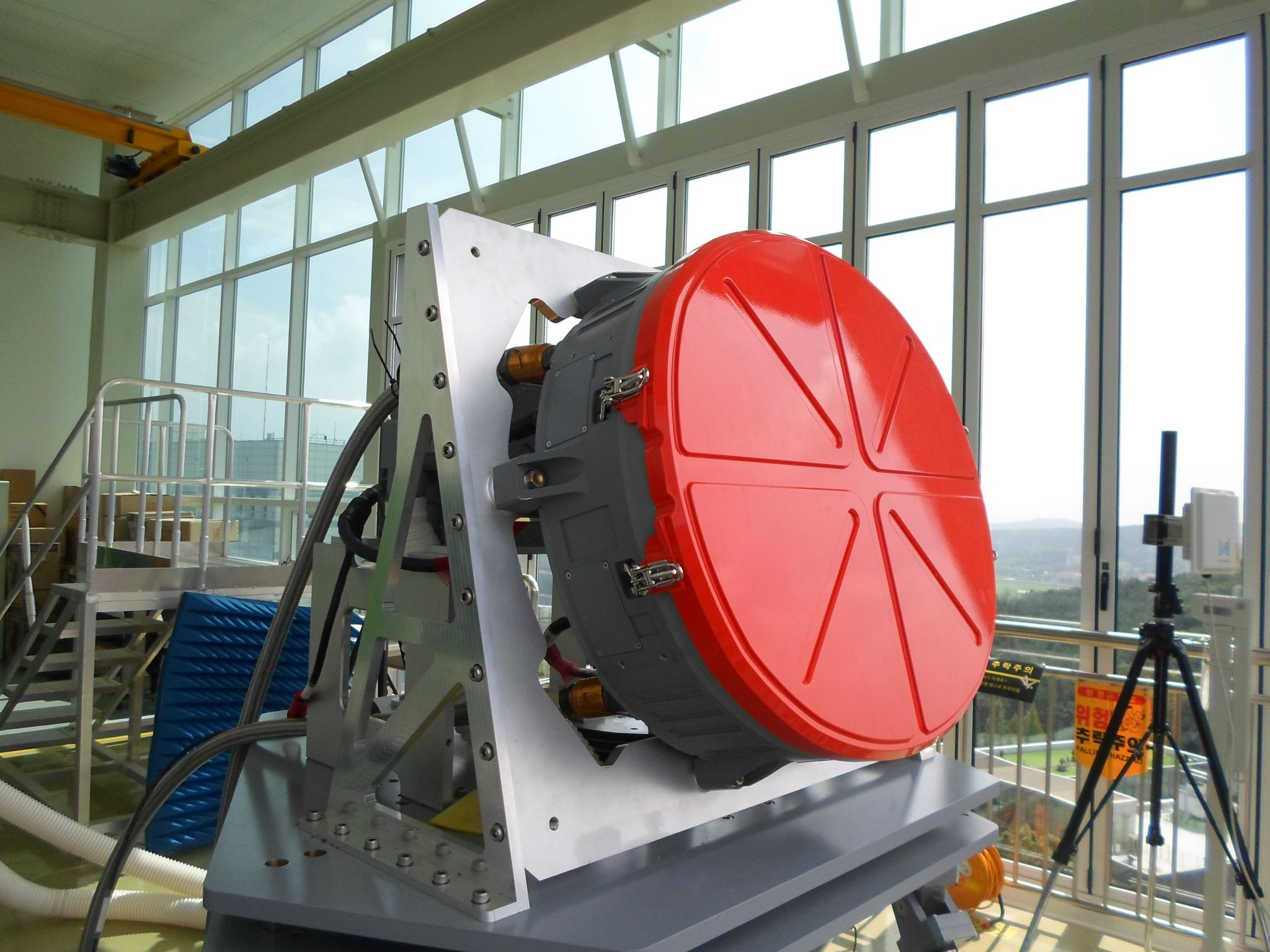
Hanwha Systems has introduced its first active electronically scanned array (AESA) radar for mass production in support of the Republic of Korea Air Force’s KF-21 combat aircraft.
Held at the company’s experimentation hub in Yongin, Gyeonggi, the event serves as a key step in Seoul’s push to develop advanced avionics for its homegrown next-generation fighter jet.
It builds on a contract signed by the East Asian government for up to 40 AESA radar units, scheduled for delivery in 2028, all intended for integration into the future KF-21 fleet being developed by Korea Aerospace Industries.
The firm’s Yongin site, established in 2024, features a Near-Field Chamber that can simultaneously test up to four airborne radar systems and assess critical performance metrics of AESA antenna arrays.
“Hanwha Systems is the one and only company in Korea to successfully develop, mass-produce, and export AESA radar systems,” Business Korea quoted Hanwha Systems Defense Electronics Division Head Park Hyuk as saying.
“We are expanding our global reach with scalable radar solutions tailored to a wide range of platforms – from light fighters to unmanned aerial vehicles.”
AESA radars, also known as the “eyes” of an aircraft, use about 1,000 modules to transmit and receive signals.
Unlike older mechanical radars, AESA systems steer their beams electronically by adjusting signal timing, rather than using moving parts.
This allows them to scan vast areas quickly and track multiple targets across air, land, and sea, offering faster target acquisition, broader coverage, and enhanced survivability.
Indigenous Air Combat Fleet by 2030
The Gyeonggi roll-out followed South Korea’s completion of key evaluations for the sixth KF-21 Boramae testbed in July 2025, with the trials focusing on combat readiness and flight control systems.
So far, the program has recorded more than 1,300 sorties, or about 70 percent of the flight tests planned for the effort’s Block 1 prototyping phase.
Seoul plans to employ up to 120 KF-21s by the early 2030s, with the first batch of about 20 jets expected to be delivered between 2026 and 2027.
Once fielded, the domestically built aircraft will replace aging fleets of American-made F-4 and F-5 fighters, boosting the country’s airpower and reducing its dependence on foreign platforms.