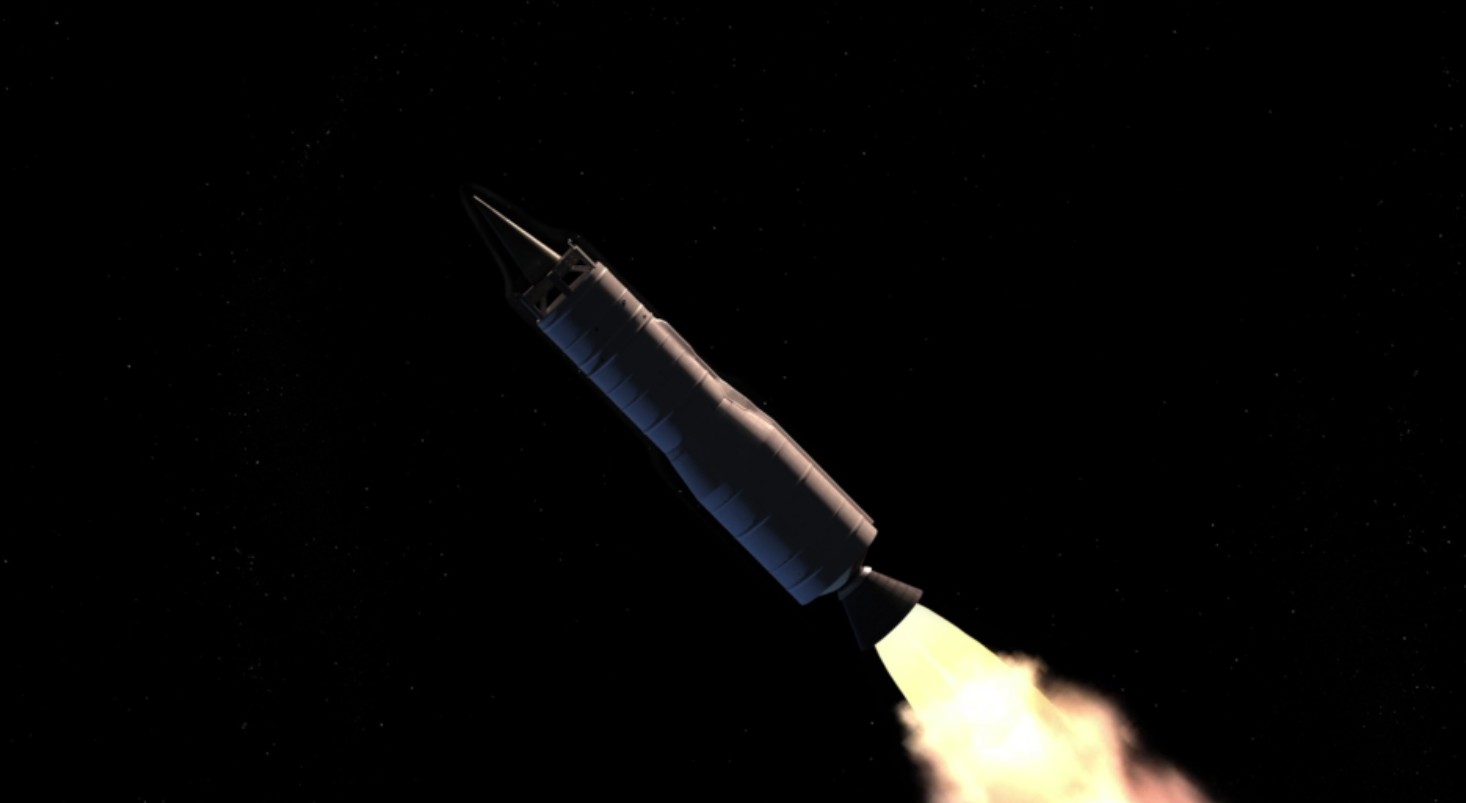
Northrop Grumman and the US Air Force have completed the first qualification test of the stage-two solid rocket motor for the Sentinel intercontinental ballistic missile (ICBM).
The test was conducted in a vacuum chamber at the Arnold Engineering Development Complex in Tennessee, simulating flight conditions and evaluating both the stage-two motor and its Thrust Vector Control system.
Engineers used digital modeling to design the system, enabling direct comparison between test data and simulated performance to support faster and more efficient design updates.
“This test reflects our disciplined digital engineering approach and the continued momentum behind the Sentinel program,” said Brig. Gen. William S. Rogers, Air Force program executive officer for ICBMs and director of the ICBM Systems Directorate, Air Force Nuclear Weapons Center.
“We’re not just testing hardware — we’re proving that our models are accurate, our development timeline is achievable and the system will be ready to deliver when called upon.”
Testing Campaigns
The stage-two motor is the middle segment of the three-stage Sentinel missile.
The recent test is part of a series of demonstrations, each focusing on specific components for validating digital models and finalizing the design of the stage-two motor.
Building on earlier tests of the stage-one and development motors, the initiative provides critical data for ongoing missile development and support.
Sentinel ICBM Program
Meanwhile, testing continues on various elements of the Sentinel system, including command and control, communications, and support infrastructure.
The Sentinel program is part of the US Air Force’s effort to replace the aging LGM-30 Minuteman III ICBM with the LGM-35A Sentinel, which aims to modernize the land-based leg of the nuclear deterrent.
Sentinel will replace 400 Minuteman III missiles deployed at three Air Force bases in Wyoming, Montana, and North Dakota.
The program includes upgrading or replacing launch facilities, communication systems, and support infrastructure.
Decommissioning the Minuteman III will involve demilitarization and disposal.