Skydweller Solar Drone Completes Endurance Flight in US Navy Test

Skydweller Aero has completed a solar-powered autonomous flight of its proprietary unmanned aerial system (UAS) for the US Navy.
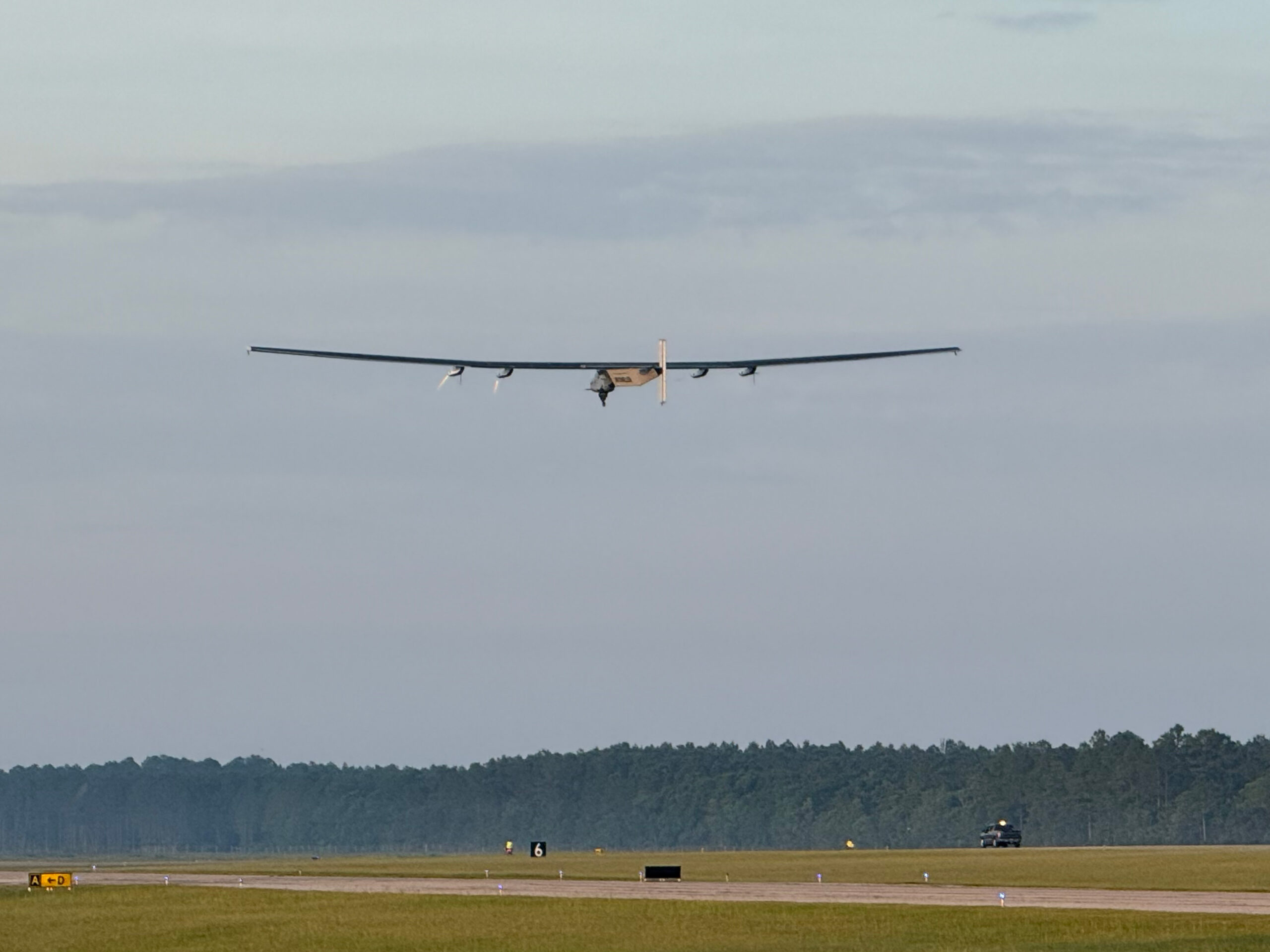
The three-day event saw the aircraft complete an endurance flight using the unconventional energy source over Stennis, Mississippi, proving the drone’s potential on maritime intelligence, surveillance, and reconnaissance (ISR) missions.
The drone completed 73 hours of live testing, culminating in the aircraft meeting energy balance parameters for extended flight operations.
Evaluations also assessed communication links, unsupported real-time decision-making, and performance in turbulent weather.
Next-Gen ISR System
According to the Naval Air Warfare Center Aircraft Division (NAWCAD), flight test coordinator of the military’s naval aviation systems, assessment of the Oklahoma-based company’s solar-powered platform began in 2020 to aid the US Southern Command in its mission sets, including border security and drug interdiction.
NAWCAD said it will continue testing the Skydweller later this summer in the command’s area of responsibility, which includes parts of Central and South America, as well as the Caribbean region.
“Integrating Skydweller into the Navy’s ISR architecture creates a layered and resilient network that maximizes the capabilities of all our assets,” said Bill Macchione, special purpose UAS lead at NAWCAD.
“This collaborative approach ensures we have the right platform for the right mission, optimizing our resources and enhancing our overall maritime domain awareness.”
The Skydweller Drone
The Skydweller UAS measures 72 feet (22 meters) long, has a wingspan of 236 feet (72 meters), and weighs 5,620 pounds (2,549 kilograms).
It is built primarily from carbon fiber components and can carry up to 800 pounds (363 kilograms) of payload.
For power, it is equipped with solar panels and backup batteries to ensure consistent operability in nighttime and low-light conditions.
The aircraft has a maximum speed of 100 knots (115 miles/185 kilometers per hour) and a service ceiling of 45,000 feet (13,716 meters).