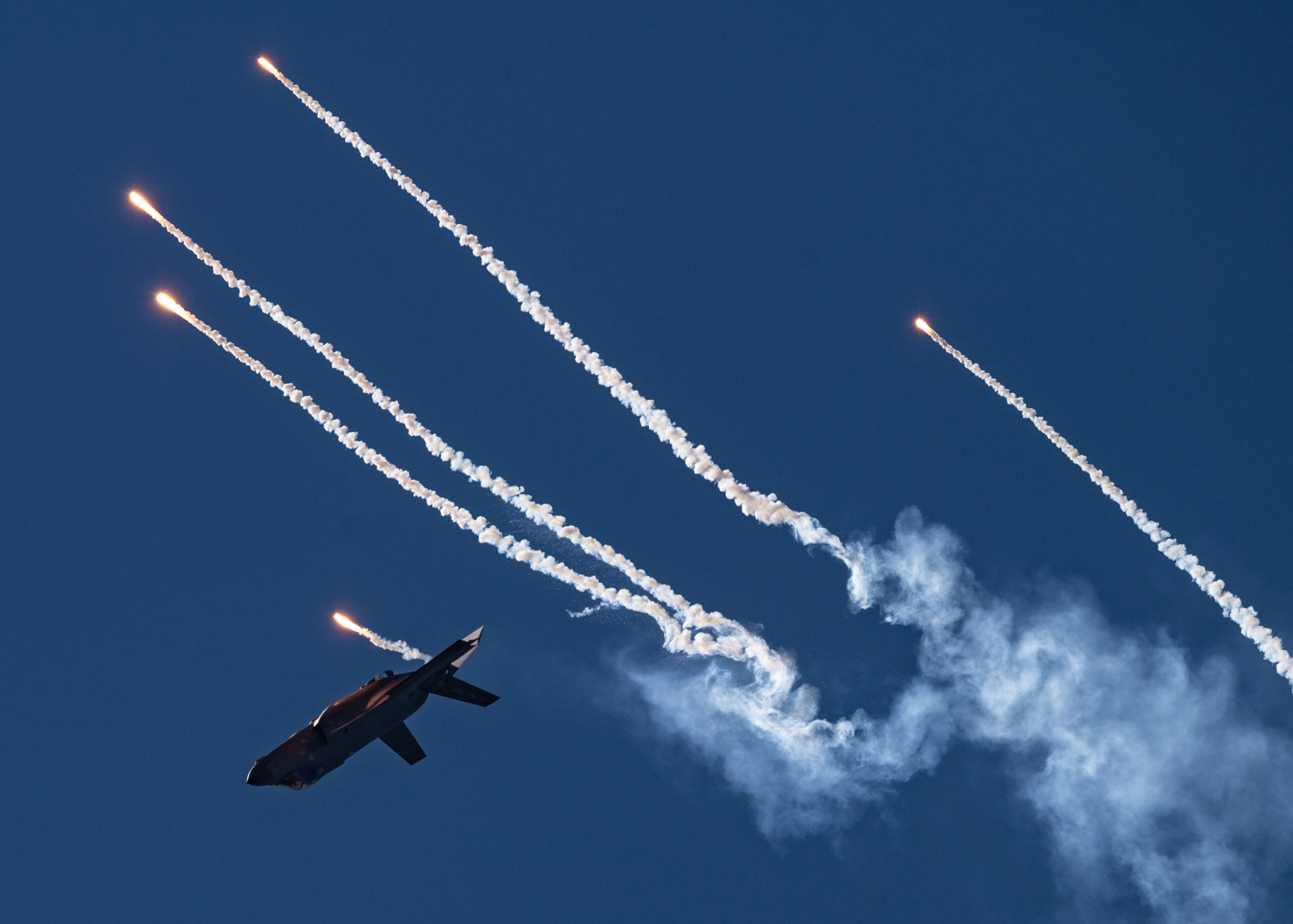
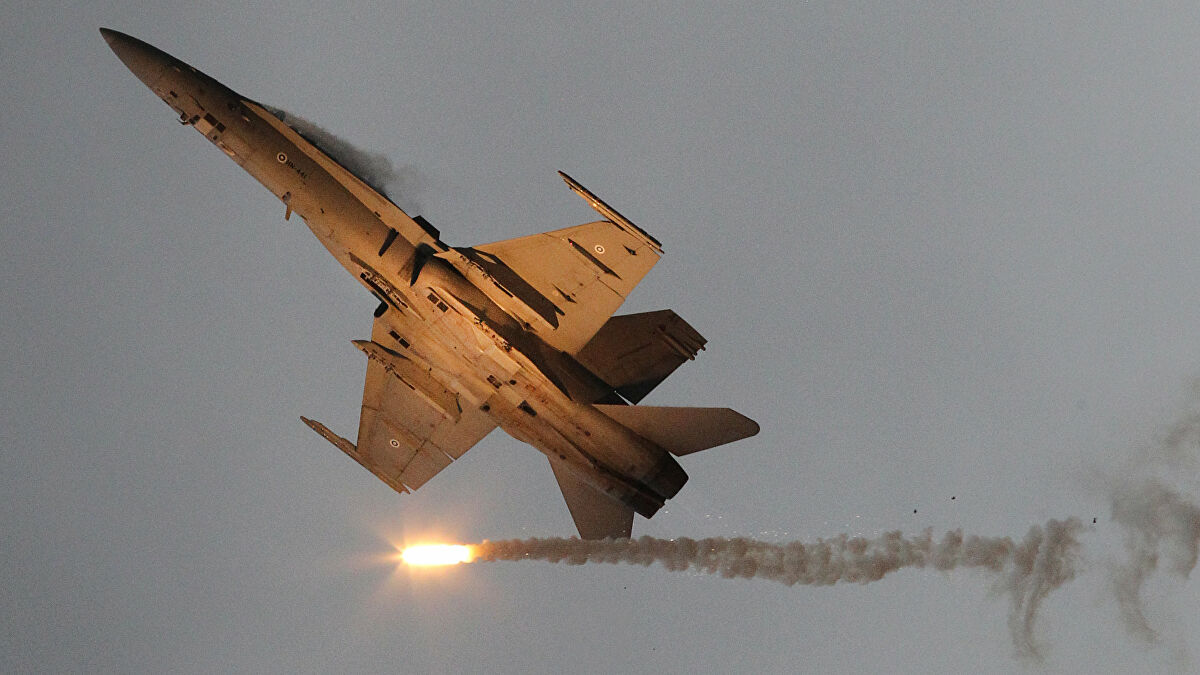
The US Navy plans to award Leonardo a contract to supply thousands of airborne countermeasures for the service’s F-35 and F-18 combat aircraft fleets.
A notice published by Naval Air Systems Command said that it “intends to negotiate and award” a fixed-price agreement, including associated materials, labor, overhead, and equipment to the company’s segment in the UK.
If signed, the project will see the production of 3,000 to 6,000 Active Expendable Decoys (AEDs) annually, spare impulse cartridges, support equipment and sustainment, and field service representatives.
The contract is set to be awarded by 2026 and will have a base year and four additional option years, with work running from 2027 until 2031.
Washington noted that Leonardo’s selection is based on the firm’s unique AED offering that matches the given benchmarks of the project.
“Leonardo is the only contractor who possesses the manufacturing technology, infrastructure, capacity, and platform qualifications to complete all requirements detailed,” the pre-solicitation document said.
“No other source has the technical qualifications and necessary resources to perform the work described herein, nor will any other supplies or services satisfy the Government’s requirements.”
Possibly ‘BriteCloud’
Among Leonardo’s AED products predicted to be included in the project is the BriteCloud expandable active decoy, which features a self-contained, battery-powered radio frequency architecture for passive or preventive security.
It is currently offered in a round variant with a 55-millimeter (2.1-inch) diameter and a weight of 1.1 kilograms (2.4 pounds), as well as a rectangular variant measuring 155 millimeters (6.1 inches) long and weighing 0.5 kilograms (1.1 pounds).
The compact decoy is currently operational in British fighter planes and some American F-16 Fighting Falcons.
In December 2024, Janes reported that the US Navy invested $32.9 million to equip its F-35s with the BriteCloud AED.
Five months earlier, Leonardo revealed that it is under a testing project to validate the technology’s capability aboard the F-18E/F Super Hornet and EA-18G Growler.