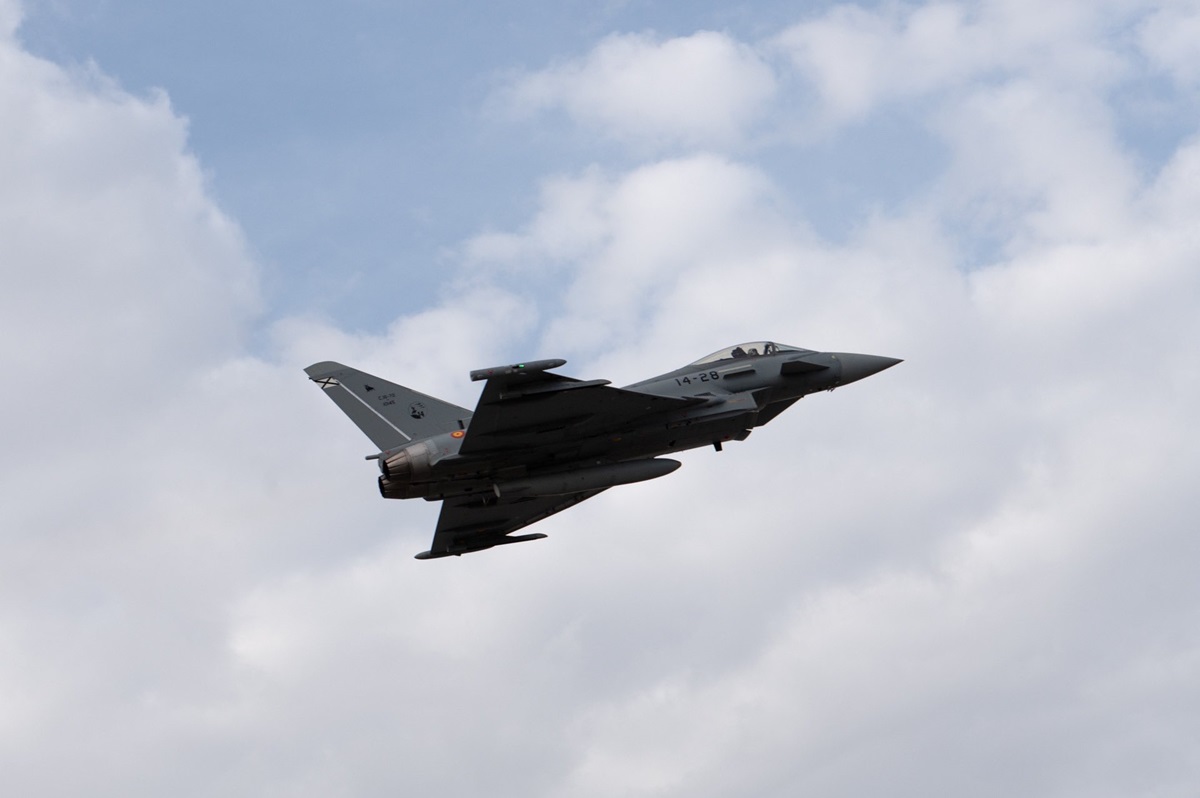
Hensoldt and Indra have completed production of the first Eurofighter ECRS Mk1 radar units featuring the new Processor and Antenna Power Supply & Control (APSC) subsystems.
The first radars with upgraded APSC subsystems were completed in under 13 months and are now undergoing advanced qualification and flight testing, including performance demonstrations in Germany’s ATRA Flying Testbed.
The radar’s new hardware enables faster mode switching, real-time mission adaptability, and supports future autonomous and artificial intelligence-assisted operations.
The processor architecture offers enhanced computing power and supports advanced signal processing.
Planned software upgrades will later expand the ECRS Mk1 functionality to include air-to-ground missions and electronic warfare, enabling task-based operations to reduce pilot workload and boost overall system performance.
The System
The ECRS Mk1 radar features a multi-channel receiver and broadband transmit-receive modules, providing high target recognition accuracy and fast response.
The radar supports advanced air-to-air operations, high-resolution air-to-ground imaging, and both passive and active electronic warfare missions.
Compared to conventional fixed AESA radars, the ECRS Mk1 offers 50 percent greater angular coverage, allowing it to detect and track targets across a wider area without requiring the aircraft to change course.
As part of ongoing advancements, the radar achieved key milestones last year.
In December 2024, a Spanish Eurofighter Typhoon carried out its first test flight with the ECRS E-Scan radar.
Germany and Spain also approved the integration of upgraded APSC subsystems for the ECRS Mk1 radar in April 2024.