The desert night of December 27, 1992, hung heavy over southern Iraq.
High above, a US Air Force F-16C Fighting Falcon, part of Operation Southern Watch, detected an inbound Iraqi MiG-25 Foxbat, notoriously fast and a significant threat.
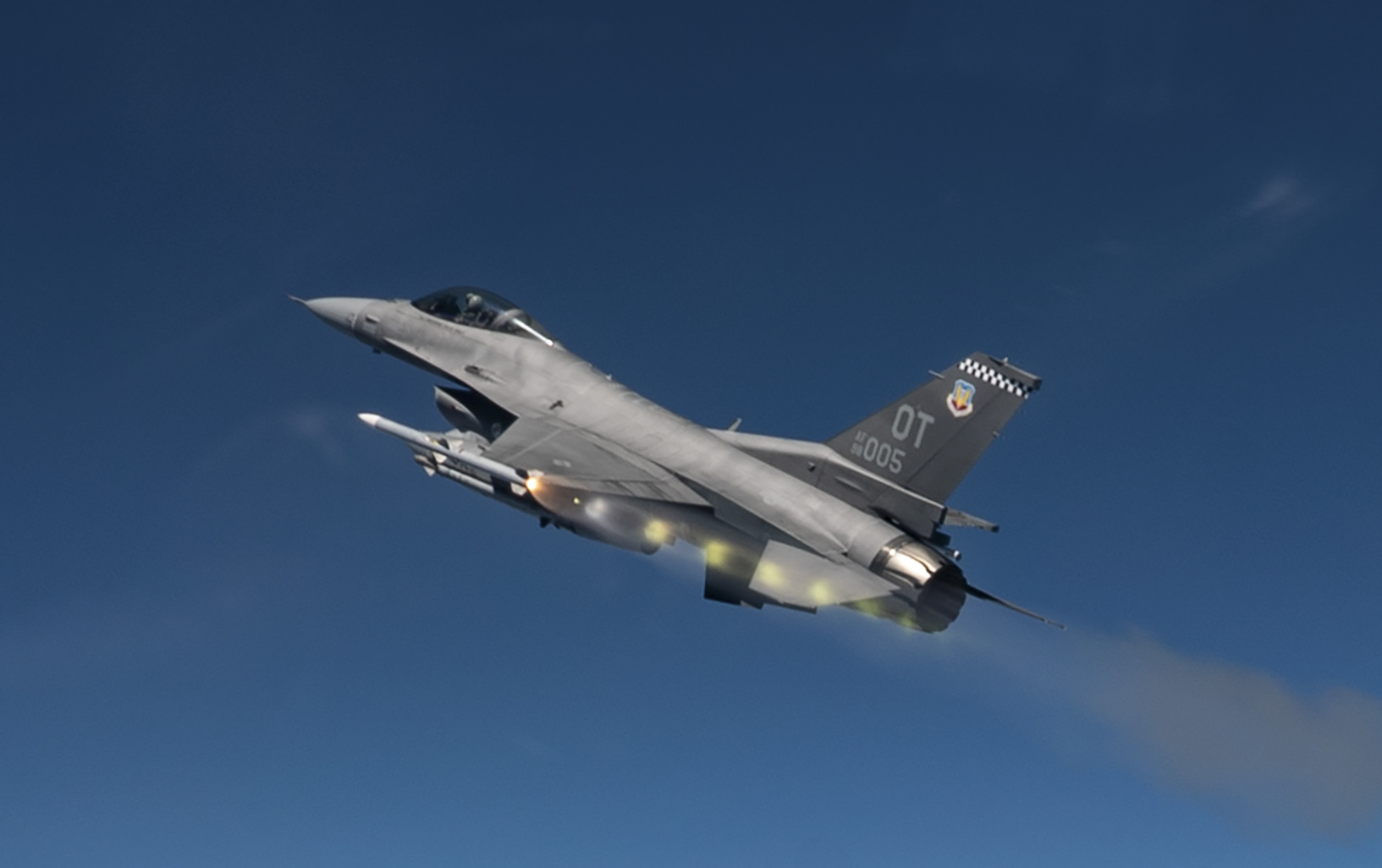
With a quick flick of a switch, the F-16 launched a new weapon, one that had only recently entered service: the AIM-120 Advanced Medium-Range Air-to-Air Missile, or AMRAAM.
Unlike its predecessors, this missile didn’t need the launching aircraft to continuously illuminate the target with radar. It was a true “fire-and-forget” weapon.
Moments later, the MiG-25 exploded, marking the AMRAAM’s first combat kill and forever changing the landscape of aerial warfare.
This single event heralded a new era of beyond-visual-range combat, where the pilot could launch a missile and immediately turn away, engaging another threat or escaping.
Welcome to the ultimate guide to the AMRAAM, a missile system that has dominated the skies for over three decades, continuously evolving to meet the most demanding threats.
What Is AMRAAM? The Foundation of Air Superiority
The AIM-120 AMRAAM is a modern, all-weather, beyond-visual-range air-to-air missile designed for air-to-air combat.
Developed as a joint program between the US Air Force and Navy, its primary role is air superiority, enabling fighter aircraft to engage and destroy enemy aircraft, including fighters, bombers, and even cruise missiles, from significant distances.
Its most revolutionary feature is its active radar seeker, which allows for “fire-and-forget” capability. This means that once launched, the missile guides itself to the target, freeing the launch aircraft to maneuver, engage other targets, or disengage from the fight.
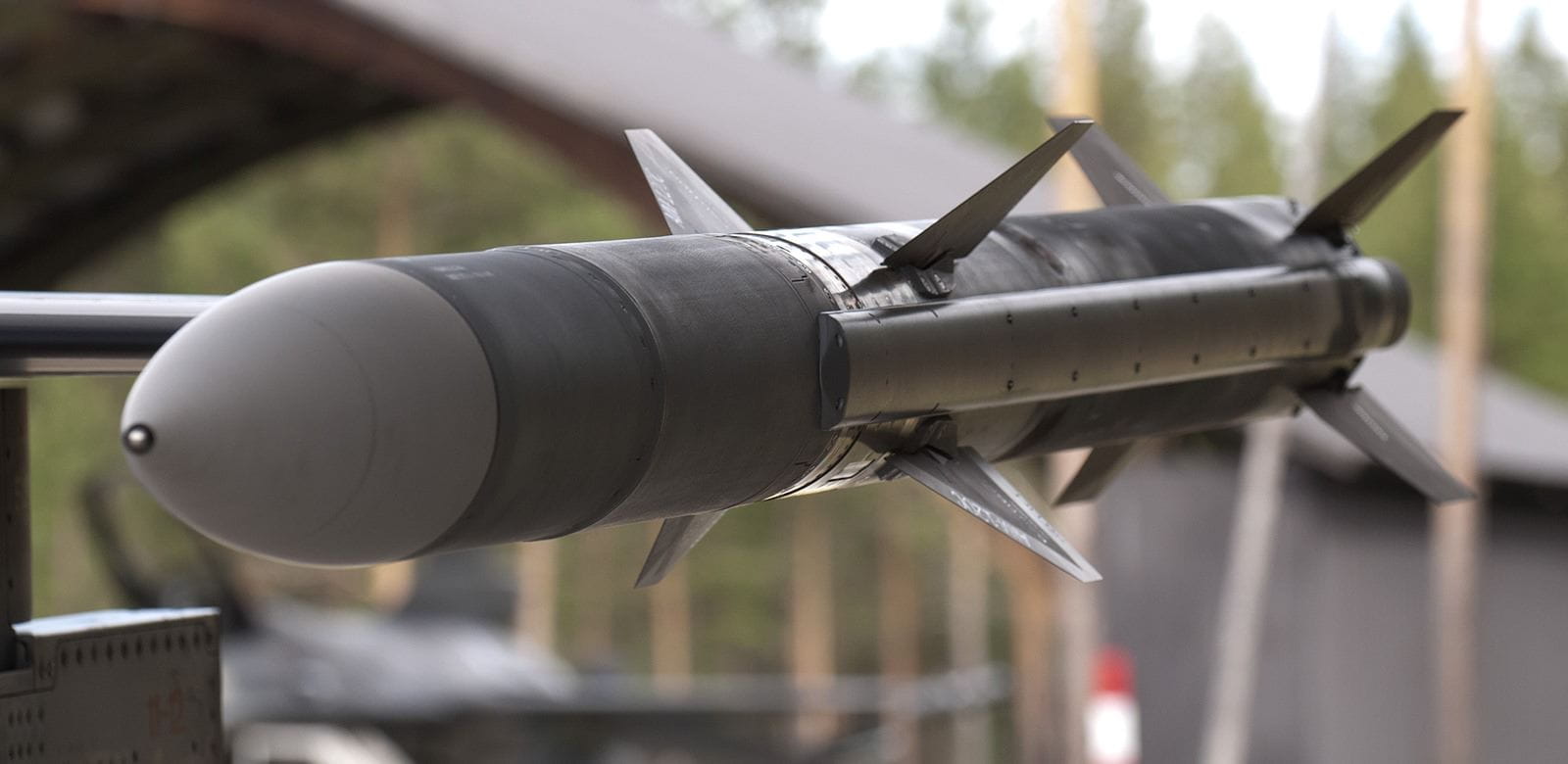
Key Features:
- Active Radar Seeker: Provides true fire-and-forget capability for the terminal phase of engagement.
- Inertial Navigation System: Guides the missile during the mid-course phase.
- Two-Way Datalink: Allows the launching aircraft or another platform to provide mid-course updates to the missile, enhancing accuracy, especially against maneuvering targets or when the target changes course. This also enables “silent” launches where the aircraft’s radar remains off until the missile’s terminal guidance phase.
- All-Weather Capability: Operates effectively day or night, in all weather conditions.
- Multiple Target Engagement: A single aircraft can launch multiple AMRAAMs at different targets simultaneously.
- Look-Down/Shoot-Down: Capable of engaging targets flying at lower altitudes.
Evolution of a Predator: AMRAAM Variants
The AMRAAM has undergone a continuous process of upgrades and improvements, leading to several key variants, each offering enhanced capabilities:
- AIM-120A/B: The initial production versions. The AIM-120A was the original, while the AIM-120B introduced reprogrammable memory, allowing for easier software upgrades. These variants typically have an operational range of around 40 nautical miles (46 miles/75 kilometers).
- AIM-120C Series (C-5, C-6, C-7, C-8): This series introduced significant improvements. The most notable change was the use of “clipped fins,” which allowed for internal carriage on stealth aircraft like the F-22 Raptor and F-35 Lightning II. Subsequent improvements in the C-series included enhanced range, better electronic counter-countermeasures (ECCM) capabilities, and improved accuracy. The AIM-120C-7, for instance, significantly extended its range to approximately 65 nautical miles (75 miles/120 kilometers) or more. The AIM-120C-8 (also known as System Improvement Program 3F or SIP-3F) further enhanced its capabilities.
- AIM-120D (D-3, D-4): The most advanced operational variant. The AIM-120D significantly extends the missile’s range to around 86 nautical miles (99 miles/160 kilometers) or potentially even beyond 100 nautical miles (115 miles/185 kilometers), depending on launch conditions and target profile. It incorporates a two-way datalink for improved target updates, enhanced GPS-aided inertial measurement unit, improved ECCM, and a more robust high-angle off-boresight capability. The D-3 (SIP-3F) and D-4 (SIP-4) are ongoing upgrade efforts focused on hardware and software enhancements to address evolving threats.
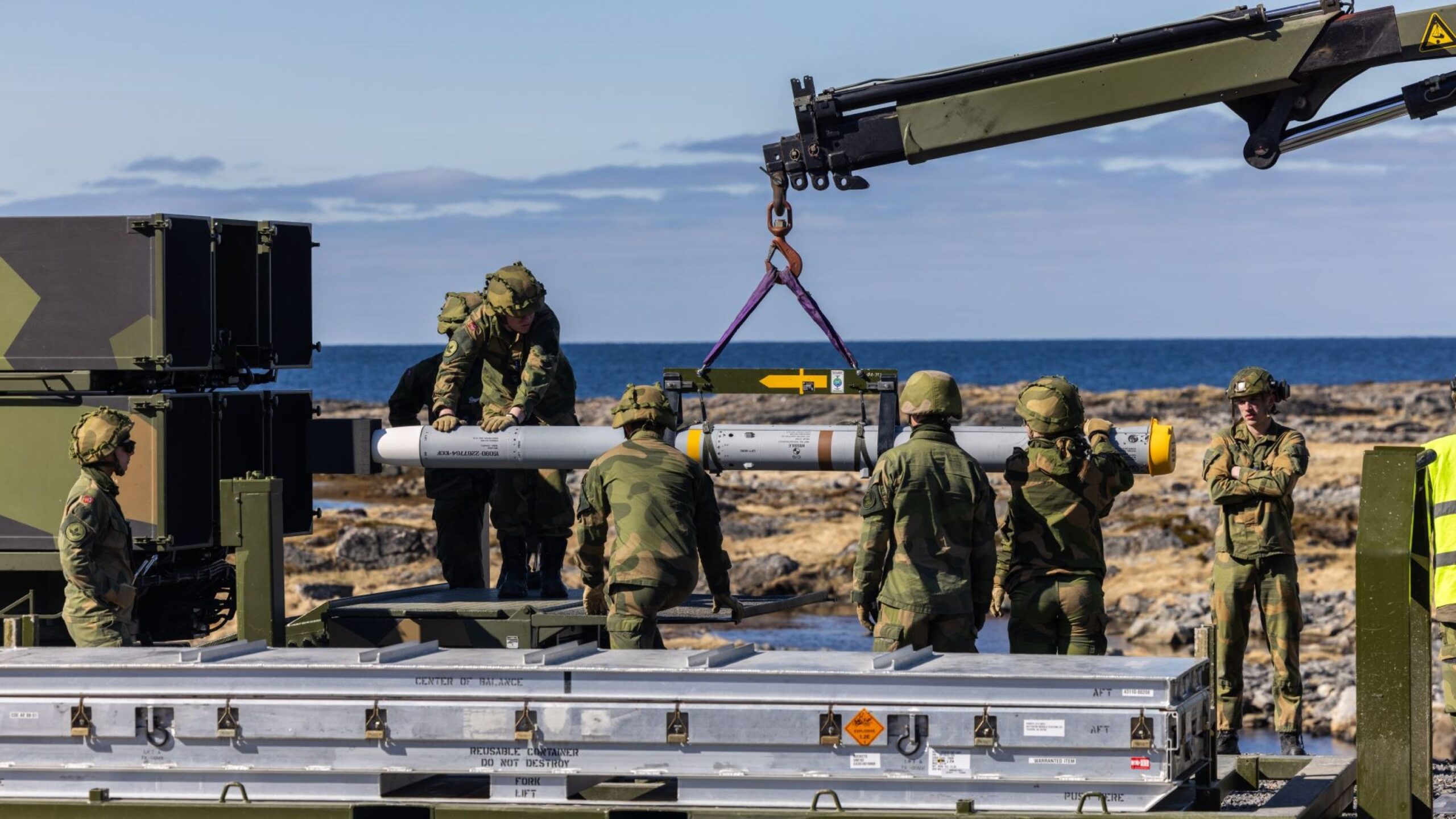
- AMRAAM-ER: While not an air-launched variant, the AMRAAM-ER (Extended Range) is a ground-launched derivative designed for air defense systems like NASAMS. It features a larger rocket motor for significantly increased range and altitude, transforming the air-to-air missile into a potent surface-to-air interceptor.
The Price of Air Superiority: AMRAAM Cost
The cost of an AMRAAM missile varies depending on the variant, the size of the production lot, and the year of procurement. However, publicly available figures provide a good estimate:
- AIM-120D: As of fiscal year 2019, the unit cost for an AIM-120D was approximately $1.09 million.
- AIM-120C-5: Around $1.3 million.
- AIM-120C-8: Approximately $1.9 million.
These figures reflect the complex technology, advanced guidance systems, and stringent quality control involved in their production.
Large multi-year contracts can be worth billions, covering thousands of missiles, spare parts, and support equipment for the US military and allied nations.
For example, recent contracts for AMRAAM production have been valued at over a billion dollars for multiple production lots, highlighting the continuous demand for this critical weapon.
Where AMRAAM Rules: Use Cases and Platforms
The AMRAAM is the cornerstone of air-to-air combat for numerous nations and is integrated onto a wide array of aircraft and ground-based systems:
Aircraft Platforms:
- US: F-15 Eagle/Strike Eagle/EX, F-16 Fighting Falcon, F/A-18 Hornet/Super Hornet, F-22 Raptor, F-35 Lightning II, EA-18G Growler.
- International: Eurofighter Typhoon, Saab Gripen, Panavia Tornado, F-4 Phantom II, and various other NATO and allied fighter aircraft.
Ground-Based Systems:
- National Advanced Surface-to-Air Missile System (NASAMS): Utilizes the AMRAAM, including the AMRAAM-ER, as its primary interceptor, providing a versatile medium-range air defense capability. This system has been widely adopted by numerous countries for point defense and homeland security.
Use Cases:
- Air-to-Air Combat: Its primary role is to engage and destroy enemy aircraft beyond visual range. Its fire-and-forget capability allows pilots to engage multiple targets and maintain situational awareness without being tied to a single target.
- Air Superiority: Essential for establishing and maintaining control of the airspace, protecting friendly forces, and enabling other air operations.
- Defense Against Cruise Missiles: Its speed and maneuverability make it effective against incoming cruise missiles, particularly when launched from ground-based systems like NASAMS.
- Combat Proven: The AMRAAM has seen extensive combat action since its first kill in 1992, including engagements in the Gulf War, Bosnian War, Kosovo War, Syrian Civil War, Russo-Ukrainian War, and Yemeni Civil War, consistently proving its effectiveness.
The Global Arena: AMRAAM in Comparison
The AMRAAM has long been the benchmark for air-to-air missile performance, but it faces increasingly sophisticated competitors. Here’s how it stacks up against its predecessors and contemporaries:
vs. AIM-7 Sparrow (Predecessor):
The AMRAAM was designed to replace the venerable AIM-7 Sparrow, and the comparison highlights AMRAAM’s revolutionary leap forward.
The Sparrow was a semi-active radar-homing missile, meaning the launching aircraft had to continuously illuminate the target with its radar until impact. This “hand-holding” left the launching aircraft vulnerable and limited its tactical options.
The AMRAAM, with its active radar seeker and fire-and-forget capability, completely eliminated this constraint, allowing pilots to launch and immediately break away, engage other targets, or take defensive maneuvers. This fundamental difference transformed air combat tactics.
vs. MBDA Meteor (European counterpart):
The Meteor is a formidable European beyond-visual-range air-to-air missile, primarily distinguished by its ramjet engine.
While the AIM-120D uses a traditional solid-propellant rocket motor, the Meteor’s ramjet allows it to sustain its high speed for a much longer portion of its flight. This translates to a significantly larger “No Escape Zone” — the area where a target cannot outrun or outmaneuver the missile — compared to a conventional rocket motor.
The Meteor’s sustained thrust makes it incredibly lethal at long ranges, maintaining high energy even in the terminal phase.
While AMRAAM continually improves its range and guidance, the Meteor’s propulsion provides a distinct kinematic advantage in sustained long-range engagements.
vs. PL-15 (Chinese counterpart):
China’s PL-15 is a long-range air-to-air missile that has garnered significant attention from Western militaries.
It reportedly features a dual-pulse solid rocket motor, allowing for extended range, and an Active Electronically Scanned Array radar seeker.
Unofficial estimates place its range at over 200 kilometers (124 miles), and potentially up to 300 kilometers (186 miles).
The PL-15’s considerable range is particularly concerning as it is designed to target high-value assets like airborne early warning and control aircraft and aerial tankers, which typically operate far from the front lines.
The development of the AIM-260 JATM by the US is a direct response to the perceived threat posed by the PL-15’s extended reach.
vs. R-77 (Russian counterpart):
The Russian R-77 (NATO reporting name AA-12 Adder), particularly its modernized R-77-1 variant, is Russia’s primary equivalent to the AMRAAM.
Like AMRAAM, it uses an active radar seeker and inertial guidance with datalink updates.
A distinctive feature of the R-77 is its unique lattice or “grid” fins, which provide excellent maneuverability, particularly at high angles of attack. However, these grid fins also generate significant drag, which can limit the missile’s energy retention and effective range, especially in the terminal phase against a maneuvering target, potentially giving the AMRAAM an advantage in terms of overall speed retention at long ranges.
Different R-77 variants also exist, with some research into ramjet propulsion (R-77-PD/M1), but their widespread operational deployment is less certain than AMRAAM or Meteor.
The Next Frontier: AIM-260 Joint Advanced Tactical Missile (JATM)
Even with continuous upgrades to the AIM-120D, the US is developing a next-generation air-to-air missile, the AIM-260 Joint Advanced Tactical Missile (JATM).
This highly classified program is a direct response to the long-range capabilities of competitors like the Chinese PL-15. JATM is designed to surpass the AIM-120D in range, with estimates suggesting it will exceed 200 kilometers (124 miles) and potentially reach Mach 5 or higher speeds.
A key design consideration for JATM is its form factor, which is similar enough to AMRAAM to allow for internal carriage in the weapons bays of stealth aircraft like the F-22 and F-35, maintaining their low observable characteristics.
Like the most advanced AMRAAMs, JATM will feature a sophisticated two-way datalink and advanced guidance systems.
Production of JATM is expected to ramp up and potentially surpass AMRAAM production volumes by 2026, signaling the dawn of a new era in air-to-air missile technology.
The AMRAAM’s journey from a revolutionary “fire-and-forget” concept to a continuously evolving, combat-proven weapon system is a testament to its foundational design and the relentless pursuit of air superiority.
While new threats emerge and new technologies push the boundaries of air combat, the legacy of the AMRAAM as the silent hunter of the skies will undoubtedly endure.