The US Can’t Fight Two Wars in East Asia — and Should Stop Planning Like It Can
Instead of assuming full dual-front readiness, the US should focus on prioritizing one conflict, using flexible, asymmetric alliance roles and planning based on real-world limits.

The US and its allies aren’t ready for a war on two fronts, but we’re acting like we are.
A recent Atlantic Council report, A Rising Nuclear Double-Threat in East Asia, has rightly sparked debate on how to prepare for simultaneous conflicts with China and North Korea.
Based on tabletop exercises known as Guardian Tiger I and II, the report urges a sweeping overhaul of US command arrangements and alliance coordination. These are welcome discussions.
But as someone who’s interviewed more than 60 Japanese, American, and South Korean defense officials during my doctoral research, I believe the report’s prescriptions often rest on overly optimistic assumptions — about industrial capacity, alliance cohesion, and the feasibility of truly “integrated” responses.
Wishful Planning Meets Wartime Reality
Chief among the report’s recommendations is a call to revise the Unified Command Plan so the US can effectively coordinate simultaneous wars in Korea and around Taiwan.
But this assumes a level of military readiness that simply does not exist.
The US defense industrial base cannot currently replenish critical munitions — such as JASSMs, GMLRS, and Patriot interceptors — at rates needed to sustain even one prolonged, high-intensity conflict.
In a war with North Korea alone, stocks would be depleted rapidly. Add China to the equation, and the US risks an operational collapse.
Rather than assuming we can fight and win two wars at once, the US should adopt a more realistic strategy of sequenced escalation dominance: prioritizing one theater for immediate, full-spectrum support, while holding the line in the other until reinforcements or coalition partners can surge.
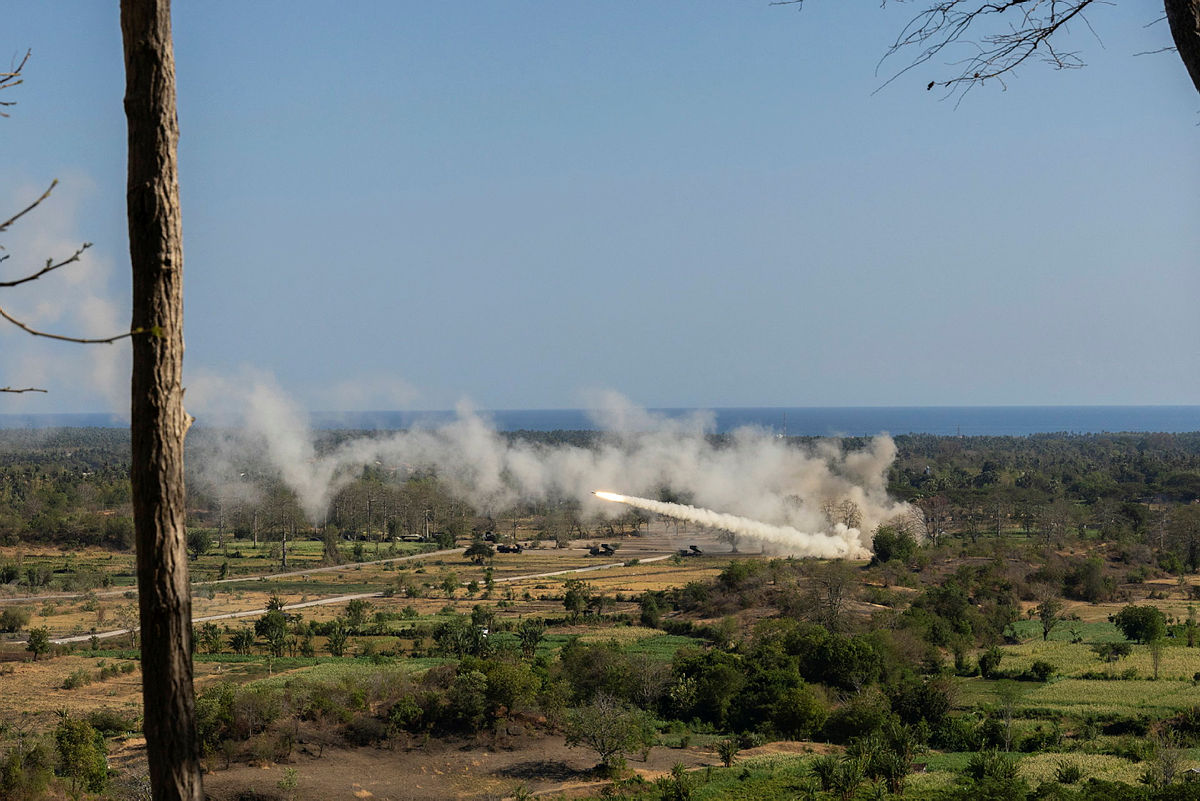
That means prepositioning assets like THAAD, HIMARS, and ISR platforms on the Korean Peninsula to ensure credible deterrence against Pyongyang, while maintaining deliberate strategic ambiguity around a Taiwan contingency to complicate Beijing’s calculus and buy time for allied response coordination.
The Limits of Alliance Integration
The Guardian Tiger report also assumes robust alliance coordination through new trilateral mechanisms like the 2023 Camp David principles and the Trilateral Security Cooperation Framework.
These are important steps. But as the simulations themselves reveal, key gaps remain.
In one scenario, South Korea refuses to allow US Forces Korea to support Taiwan operations — a move that reflects Seoul’s current strategic posture. Japan, meanwhile, may hesitate to engage deeply in a Korea-based contingency.
There is no integrated trilateral command. Missile defense coordination remains politically fraught. Intelligence sharing is patchy. Hoping for seamless integration risks paralyzing wartime decision-making.
A more realistic model would emphasize modular coordination, not full interoperability. Washington should invest in cross-posted liaison officers between USFK, USFJ, and INDOPACOM who can enable real-time crisis coordination without requiring legally or politically sensitive command agreements. This approach is more flexible and sustainable, and aligns better with the political realities in Tokyo and Seoul.
Rethinking Nuclear Response Options
The report commendably explores the dilemmas posed by North Korean nuclear escalation but stops short of identifying credible response options. Here, too, realism must guide strategy. Dual-capable aircraft are vulnerable to North Korean air defenses. Deploying nuclear weapons from allied territory could trigger domestic and diplomatic backlash. These constraints erode the credibility of US deterrence.
Instead of relying solely on low-yield nuclear options, the US should prioritize the development of non-nuclear decapitation capabilities — including cyber, electronic warfare, and hypersonic strike tools that can disrupt North Korea’s command-and-control in real time.
These options offer credible retaliation without immediately triggering full-scale escalation, preserving flexibility in scenarios where Pyongyang uses tactical nukes as a show of force or last-ditch deterrent.
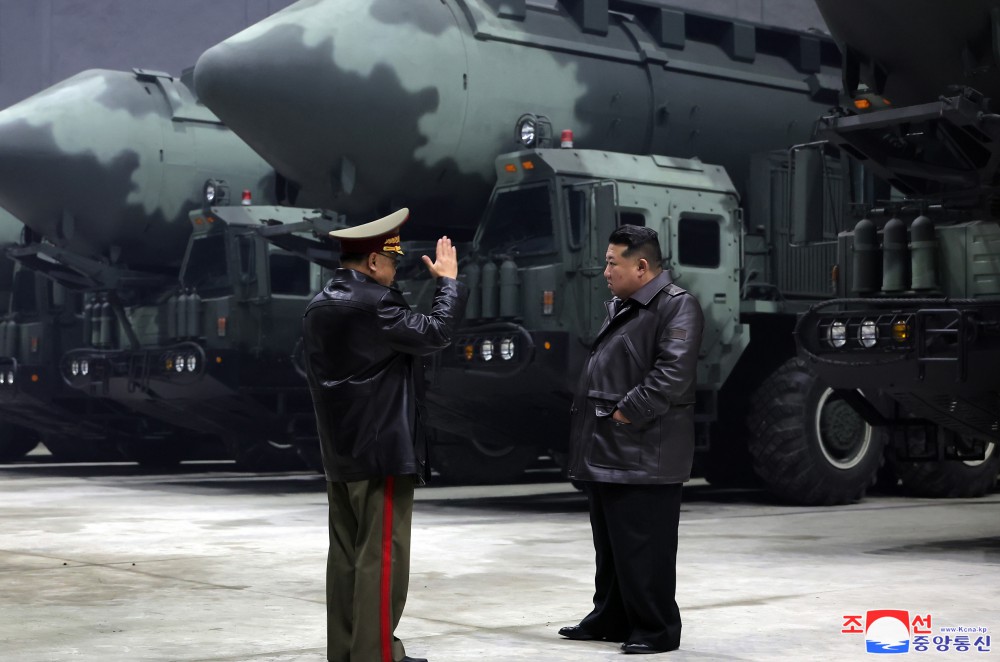
Embrace Asymmetry, Not Uniformity
Perhaps the greatest value of the Guardian Tiger exercises lies in their exposure of alliance frictions.
South Korea wants to focus on the North Korean threat. Japan is more concerned with China. Neither is eager to be dragged into the other’s war. This isn’t a failure; it’s a feature of democratic, independent allies with different geographies, histories, and threat perceptions.
Rather than expecting uniform participation, Washington should plan for asymmetric alliance roles. South Korea can remain focused on deterring and defeating DPRK aggression. Japan can contribute ISR, logistics, and basing support for Taiwan-related operations. Partners like Australia and the Philippines can help secure southern maritime routes.
This differentiated approach better reflects regional realities and allows each ally to contribute without overextending politically.
Don’t Forget the Information Front
The report also underplays a critical domain: information warfare. In any future contingency, shaping elite perceptions inside adversary regimes — especially North Korea — will be essential to deterring escalation and managing crisis stability.
The US should invest now in strategic digital influence operations, including external broadcasting, diaspora outreach, and targeted messaging channels that can sow doubt, encourage elite dissent, or signal resolve.
These tools will be indispensable in scenarios where rapid decision-making and psychological signaling can tip the balance between deterrence and disaster.
Simulations Are Only as Good as Their Assumptions
Guardian Tiger is a valuable exercise — but its insights are only useful if grounded in reality. The United States cannot afford to plan for 2030 using best-case assumptions about alliance politics, logistics, or industrial capacity. Dual contingencies may be unavoidable. But pretending we can fight both wars the same way, at the same time, risks strategic overreach and operational failure.
What’s needed is a strategy built on friction, not fantasy. That means planning for asymmetric contributions, modular coordination, constrained munitions, and non-nuclear options. Only by aligning war games with real-world limits can we build credible deterrence that holds up under pressure.
Dr. Ju Hyung Kim  currently serves as the President at the Security Management Institute, a defense think tank affiliated with the South Korean National Assembly.
He has been involved in numerous defense projects and has provided consultation to several key organizations, including the Republic of Korea Joint Chiefs of Staff, the Defense Acquisition Program Administration, the Ministry of National Defense, the Korea Institute for Defense Analysis, the Agency for Defense Development, and the Korea Research Institute for Defense Technology Planning and Advancement.
He holds a doctoral degree in international relations from the National Graduate Institute for Policy Studies (GRIPS) in Japan, a master’s degree in conflict management from the Johns Hopkins University School of Advanced International Studies (SAIS), and a degree in public policy from Seoul National University’s Graduate School of Public Administration (GSPA).
Dr. Kim has published extensively across leading international security and defense platforms, including The Diplomat, War on the Rocks, the Modern War Institute, 38 North, Asia Times, Small Wars Journal, RealClearDefense, Modern Diplomacy, the Lowy Institute, Global Security Review, the Geopolitics, and Global Defense Insight, among others.
The views and opinions expressed here are those of the author and do not necessarily reflect the editorial position of The Defense Post.
The Defense Post aims to publish a wide range of high-quality opinion and analysis from a diverse array of people – do you want to send us yours? Click here to submit an op-ed.