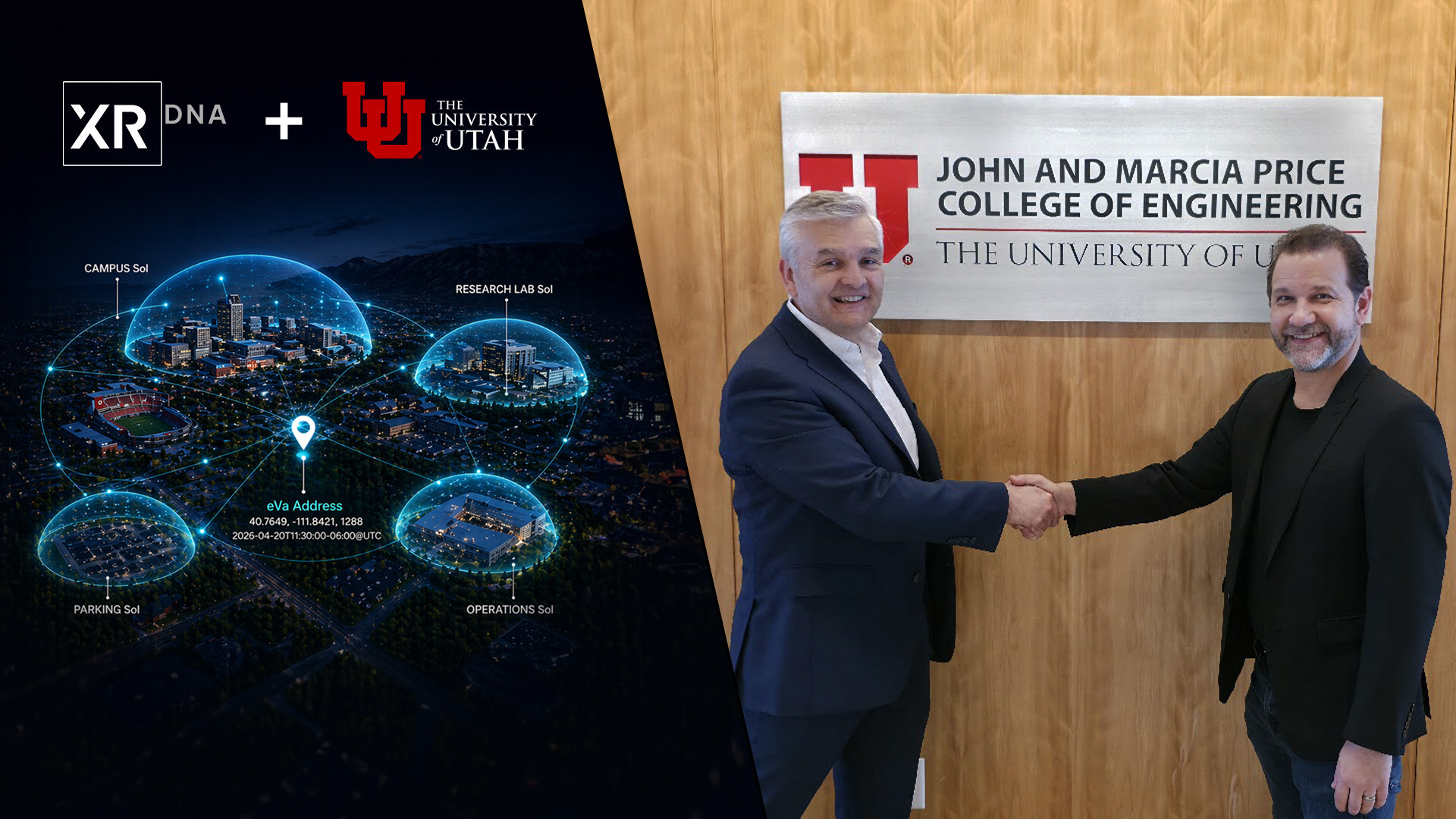
XRDNA and the University of Utah have launched a multi-year research partnership focused on developing operational systems for defense, aerospace, sensing, and digital infrastructure.
The agreement creates a framework for joint research projects between XRDNA and the university’s John and Marcia Price College of Engineering, allowing both sides to collaborate through shared resources, coordinated development programs, and targeted research initiatives.
Central to the partnership is XRDNA’s Mission Fabric platform, which the company describes as a real-time orchestration layer designed to connect infrastructure, data systems, sensors, and workflows into a unified environment.
The collaboration will focus on several areas, including adaptive mission networks, multimodal sensor systems, digital twins, advanced materials engineering, and executable research environments.
Under this partnership, faculty and students will have opportunities to work on systems-level defense and aerospace challenges.
The agreement includes provisions allowing both parties to retain ownership of existing intellectual property while establishing pathways for commercialization of jointly developed technologies.
XRDNA founder and CEO Charles Adelman said that this move “represents a fundamental shift in how innovation happens.”
“We are living through a period of rapid technological disruption, and engineering colleges have a responsibility to help shape that future rather than simply respond to it,” College dean Charles Musgrave said.
US Defense Taps Universities
Universities across the US have increasingly expanded work on defense-related solutions, often partnering with both the government and private companies.
In April, the US Air Force launched the Alpha Blue initiative to develop student-led counter-drone solutions that can be rapidly field-tested, particularly against small aerial threats that challenge existing defenses.
In March, Clemson University opened a National Security Institute focused on expanding defense research, workforce development, and collaboration with the US government and industry.
Earlier, in December, Auburn University’s Applied Research Institute began leading efforts to develop next-generation signals intelligence tools for operations in signal-denied environments.