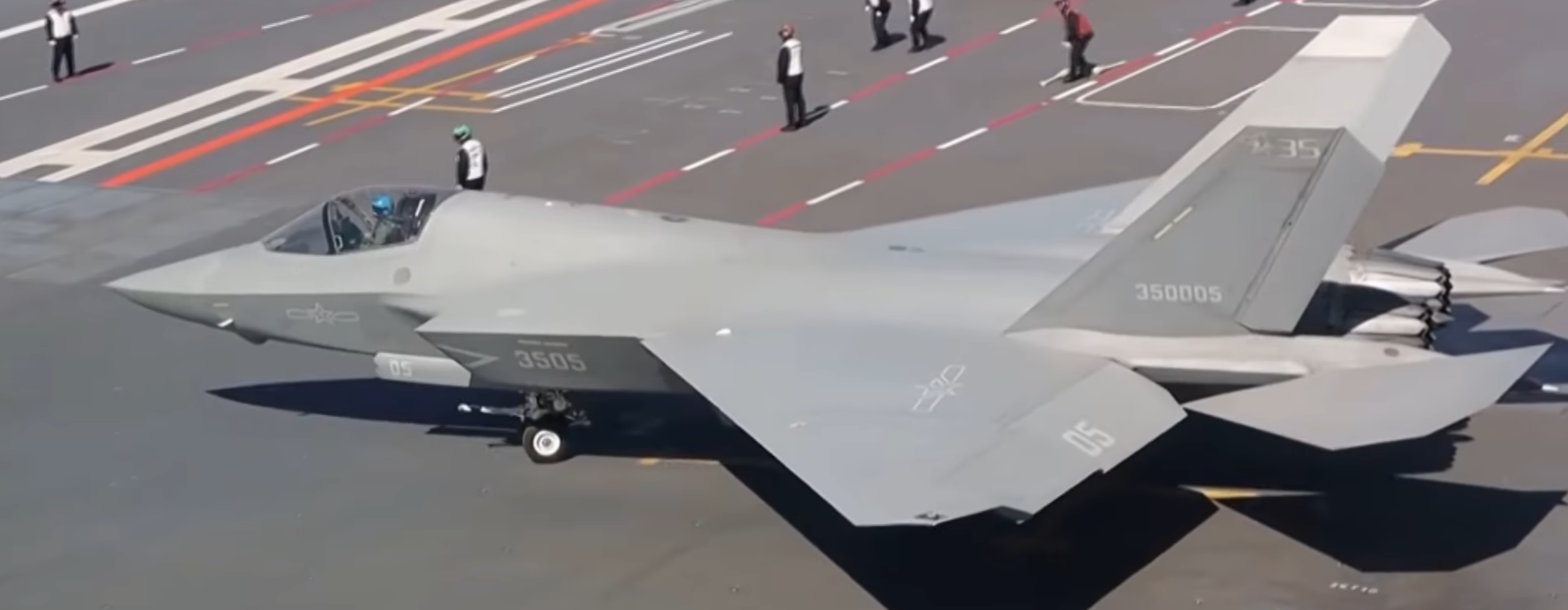
The Pakistan Air Force (PAF) has signed an “initial collaborative agreement” to acquire the Chinese Shenyang J-35 stealth fighter, a move seen as a potential shift in the regional air power equation and a challenge to future Indian Air Force (IAF) capability planning.
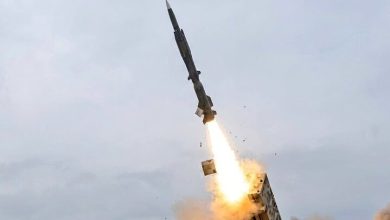
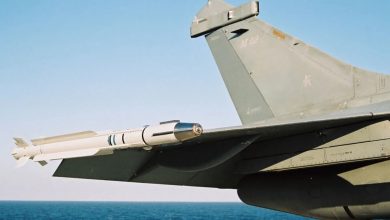
Announcing the development, PAF Deputy Chief of Air Staff Air Vice-Marshal Tariq Ghazi reportedly said that the country is also seeking to acquire long-range precision weapons, additional Chengdu J-10C jets, and “much upgraded” versions of the JF-17 Thunder.
Although no further details were disclosed, speculation is mounting that the initial batch of J-35s could be delivered as early as the end of this year, according to the South China Morning Post.
Stealth Aircraft
The J-35 is China’s twin-engine stealth fighter developed by the state-owned Shenyang Aircraft Corporation for both domestic and export markets.
Often compared to the US F-35 Lightning II due to its overall configuration, the J-35 is designed with low-observable features such as an internal weapons bay, diverterless supersonic inlets, and radar-absorbent materials to improve survivability against modern air defense systems.
The aircraft has not yet officially entered operational service. However, reports of a potential export variant emerged after a J-35 was filmed without the insignia of the Chinese People’s Liberation Army Air Force, fueling speculation that the aircraft featured was intended for foreign customers.
Islamabad disclosed in June last year that China had offered Pakistan a package that included 40 J-35 stealth fighters, KJ-500 airborne early warning aircraft, and HQ-19 air defense systems.
While the J-35 would represent a major leap beyond the PAF’s current generation 4+ fighters, the KJ-500 would significantly enhance airborne surveillance capabilities by enabling earlier detection of enemy aircraft — including stealth platforms.
Likewise, the HQ-19 would provide a substantial upgrade over Pakistan’s existing HQ-9 air defense system.
Challenge for IAF
Pakistan’s acquisition of the J-35 could further complicate the operational planning of the IAF during any potential air conflict, as stealth aircraft are far more difficult to detect using conventional ground-based radar systems.
The deployment of such aircraft in a future conflict could force the IAF to divert a larger share of its frontline assets toward air defense roles, potentially reducing its operational flexibility and eroding its numerical advantage.
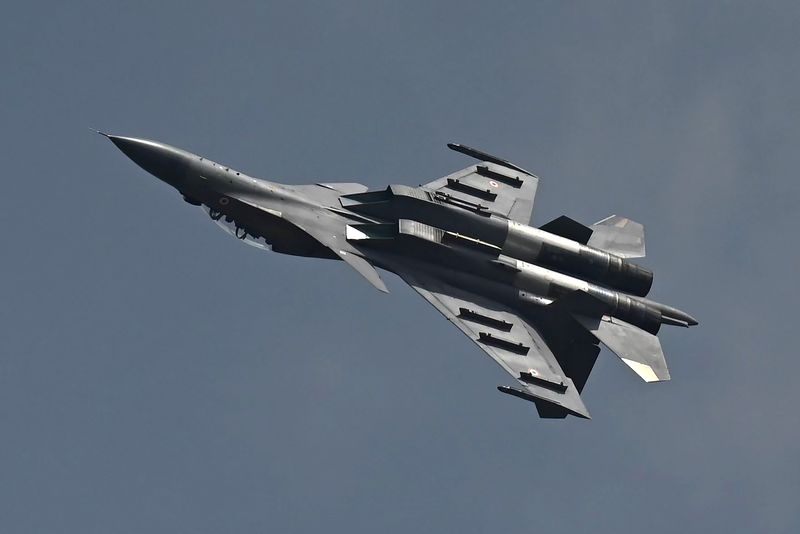
“The IAF will be forced to use a significant part of its Sukhoi Su-30MKI fleet for J-35 detection,” the South China Morning Post quoted retired IAF squadron leader and fighter pilot Vijainder K. Thakur as saying.
In operational terms, the acquisition would “certainly make the PAF a more dangerous adversary than it already is,” he added.
Future Fifth-Gen Planning
The development could also complicate New Delhi’s future fighter acquisition strategy, which currently centers on procuring additional 4.5-generation aircraft from Western suppliers — with the Dassault Rafale seen as the leading contender — while simultaneously pursuing the indigenous Advanced Medium Combat Aircraft (AMCA) fifth-generation fighter program.
Given the possibility of Pakistan acquiring the J-35 well before the AMCA enters service, India could consider an interim procurement of Russia’s Sukhoi Su-57 fighter, an aircraft New Delhi previously rejected in its earlier configuration over concerns that it did not meet the IAF’s stringent low-observability requirements.
Unlike many Western fifth-generation fighters that prioritize stealth above all else, the Su-57 combines reduced radar visibility with high maneuverability. The aircraft features internal weapons bays, composite materials, and 3D thrust-vectoring engines designed to balance agility and survivability.
To strengthen its offer, Moscow has reportedly proposed joint production arrangements and technology transfer packages that would allow the integration of indigenous Indian weapons and systems.
With India’s indigenous defense development “still miles off the target,” Pakistan’s procurements of fifth-generation fighters “may force India to build a new squadron or two consisting of Russian Su-57s,” the South China Morning Post quoted professor of international politics at Lancaster University Amalendu Misra as saying.