Indonesia Shows Where US Defense Partnerships Are Falling Short
The US partnership model is good at growing relationships, but not at turning them into the kind of deep, dependable security ties required for real strategic leverage.

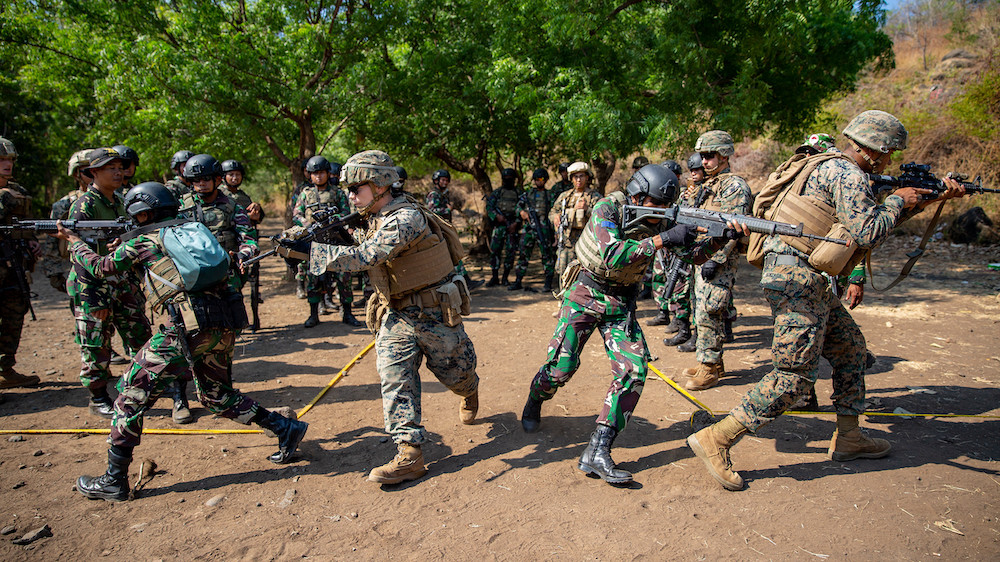
The United States has spent years building security ties across Southeast Asia without expanding its alliance system. The logic is straightforward: widen America’s regional footprint without forcing formal alignment.
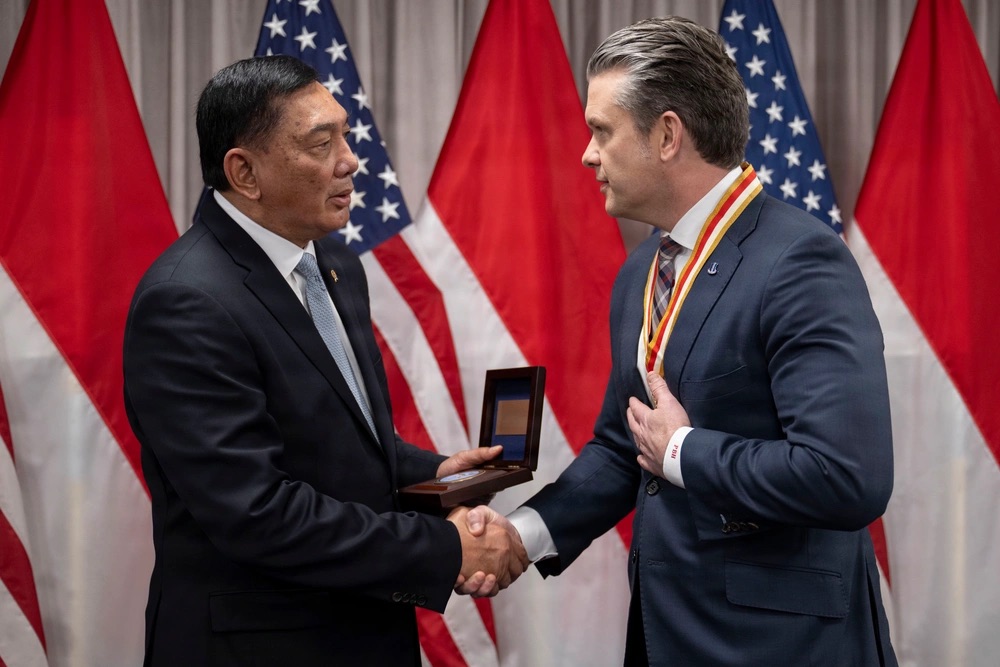
On paper, the new defense partnership with Indonesia, outlined in the Pentagon’s readout, looks like another success.
In practice, it is better read as a stress test of that strategy. It exposes the limits of building influence through cooperation alone, especially when Washington seeks deeper strategic access from states that are willing to cooperate but unwilling to align.
Many Southeast Asian states want US security support, but not alliance obligations. They want flexibility without entrapment, cooperation without visible alignment.
That is why the approach has worked relatively well in places like Singapore, where US forces operate through long-established facilities and institutional arrangements.
In such cases, cooperation has matured into something operationally reliable. But that success is context-specific.
Indonesia as the Limit Case
Indonesia is a different category of partner. It is larger, more politically independent, and shaped by its longstanding bebas-aktif (independent and active) foreign policy tradition, which prioritizes strategic autonomy and calibrated engagement over alignment.
That doctrine is not rhetorical. It sets real limits on how far defense cooperation can extend.
As reported by Reuters, even discussions around expanded overflight access triggered concern in Jakarta over sovereignty and perceptions of alignment with the United States against China. That reaction is not about a single proposal. It reflects a broader boundary that defines the relationship.
The agreement itself reflects those limits. The framework focuses on modernization, training, exercises, and maritime cooperation. That is meaningful, but also revealing: cooperation designed to stop short of integration.
Washington has become effective at building partnerships that are politically sustainable for non-aligned states. It has been less successful at turning those partnerships into deeper strategic access where it matters most.
Where the Strategy Plateaus
This is the tension at the core of the approach.
In smaller or more externally oriented states, cooperation can evolve into durable operational alignment. In larger, more autonomous states, it tends to plateau.
The countries Washington most wants to draw closer are often the ones least willing to let defense ties deepen beyond a certain point. This is not a diplomatic failure. It is a structural constraint the current approach is not designed to overcome.
Indonesia makes that constraint especially visible. It is not just another partner in the Indo-Pacific but a scale test of whether Washington’s partnership model can produce operational depth in the very states where that depth matters most.
What is viable in Singapore does not translate cleanly to a country that places far greater weight on sovereignty and strategic independence. In Indonesia, cooperation is acceptable. Moving beyond it becomes politically sensitive.
Leverage Without Alignment
This pattern is visible elsewhere, though less starkly.
In Vietnam, ties with the United States have expanded steadily but remain carefully bounded. Indonesia simply reveals the ceiling more clearly because of its size, autonomy, and regional weight.
That weight extends beyond security. Indonesia sits at the center of critical mineral supply chains, particularly nickel, copper, and cobalt, areas where US engagement has increased in parallel with strategic competition. This economic dimension strengthens Jakarta’s position.
Its role in global supply chains acts as a strategic buffer, ensuring continued US attention even as Indonesia resists deeper security concessions. The relationship can grow without requiring trade-offs that would alter Jakarta’s core strategic posture.
That is why the Indonesia agreement should not be read as a linear step forward. Because Indonesia can deepen cooperation while preserving its strategic autonomy, it shows how the partnership model can expand politically without necessarily deepening strategically.
It marks a transition point in the US approach. The first phase demonstrated that partnerships could expand outside a rigid alliance system. The second phase is harder: translating that network into meaningful strategic access in states that are unwilling to let defense ties deepen in visible ways.
A Model Reaching Its Limits
What this suggests is not that the strategy has failed, but that it is reaching its design limits.
If deeper integration remains politically constrained in cases like Indonesia, then Washington will need to prioritize forms of cooperation that work within those limits.
That likely means prioritizing sovereignty-enhancing capabilities, such as maritime domain awareness and intelligence sharing, that strengthen a partner’s ability to secure its own territory without forcing political choices it is unwilling to make. The challenge is no longer simply building partnerships. It is shaping them in ways that align with the constraints that define them.
If the United States cannot translate expanding partnerships into reliable access in key states like Indonesia, it risks building a regional security architecture that is broad but strategically thin.

Christian Cerne is a master’s candidate in International and Development Studies at the Geneva Graduate Institute, focusing on strategic material diplomacy and Indo-Pacific security, with a background in US energy policy and resource strategy.
The views and opinions expressed here are those of the author and do not necessarily reflect the editorial position of The Defense Post.
The Defense Post aims to publish a wide range of high-quality opinion and analysis from a diverse array of people – do you want to send us yours? Click here to submit an op-ed.